From the earliest known chess pieces carved in Central Asian ivory to the ornate export sets of colonial India. The material of kings and trade routes.
c. 700 AD
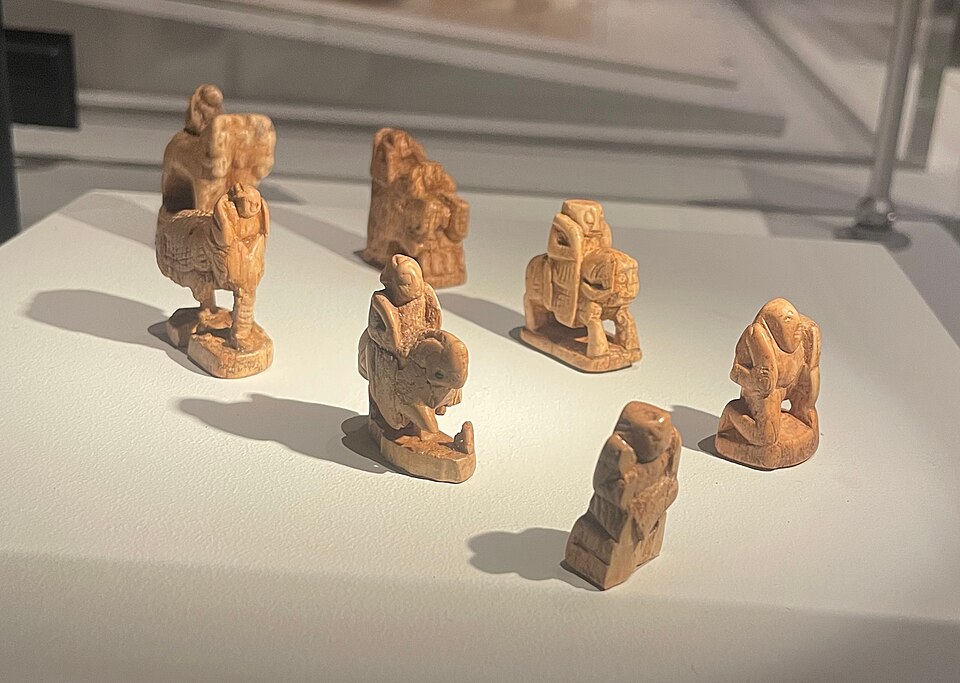
Afrasiab Chessmen
Unknown — Central Asian craftsmen
IvoryEarliest KnownSamarkand, Uzbekistan
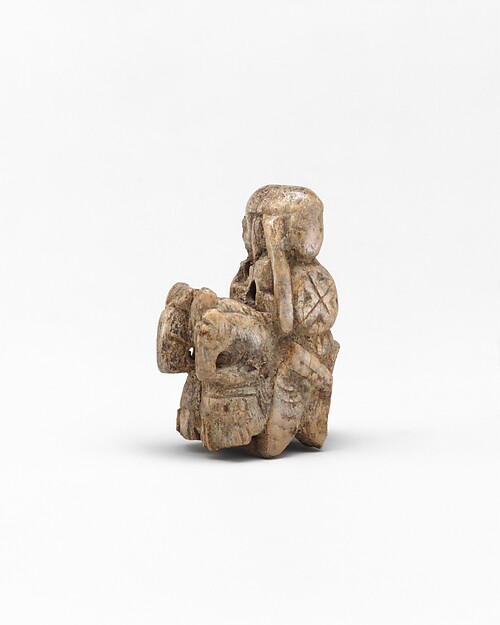
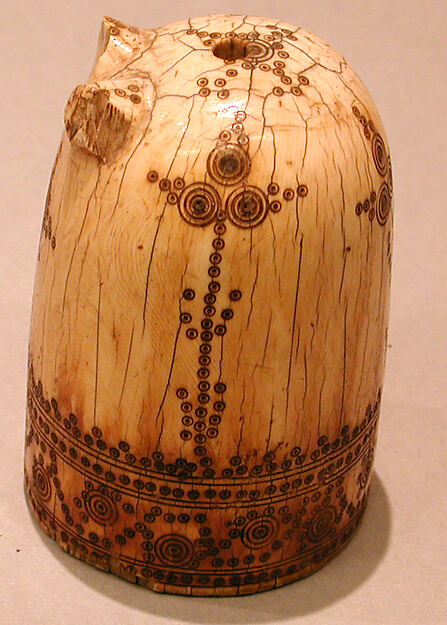
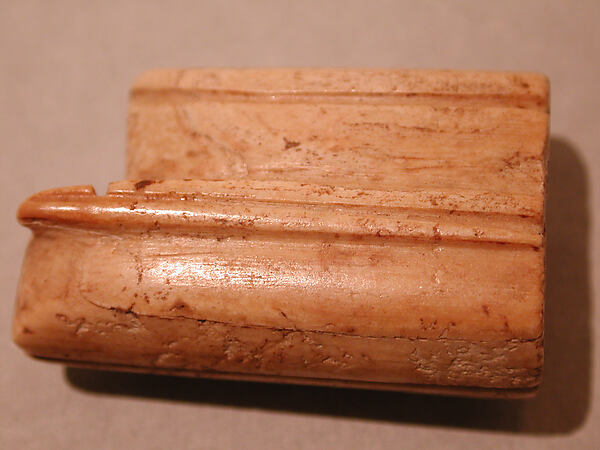
The oldest definitively identified chess pieces in the world. Seven small ivory figures — a king, chariot (rook), vizier (queen), horse (knight), elephant (bishop), and two soldiers (pawns) — discovered in 1977 by archaeologist Jurij F. Burjakov at the Afrasiab archaeological site near Samarkand. They represent the original Indian chatrang/shatranj form before European adaptation. Now at the State Museum of Samarkand.
Ivory pieces, State Museum of Samarkand
c. 1080–1120
Charlemagne Chessmen
Unknown — Southern Italian (Salerno) workshops
Elephant IvoryRomanesqueParis, France
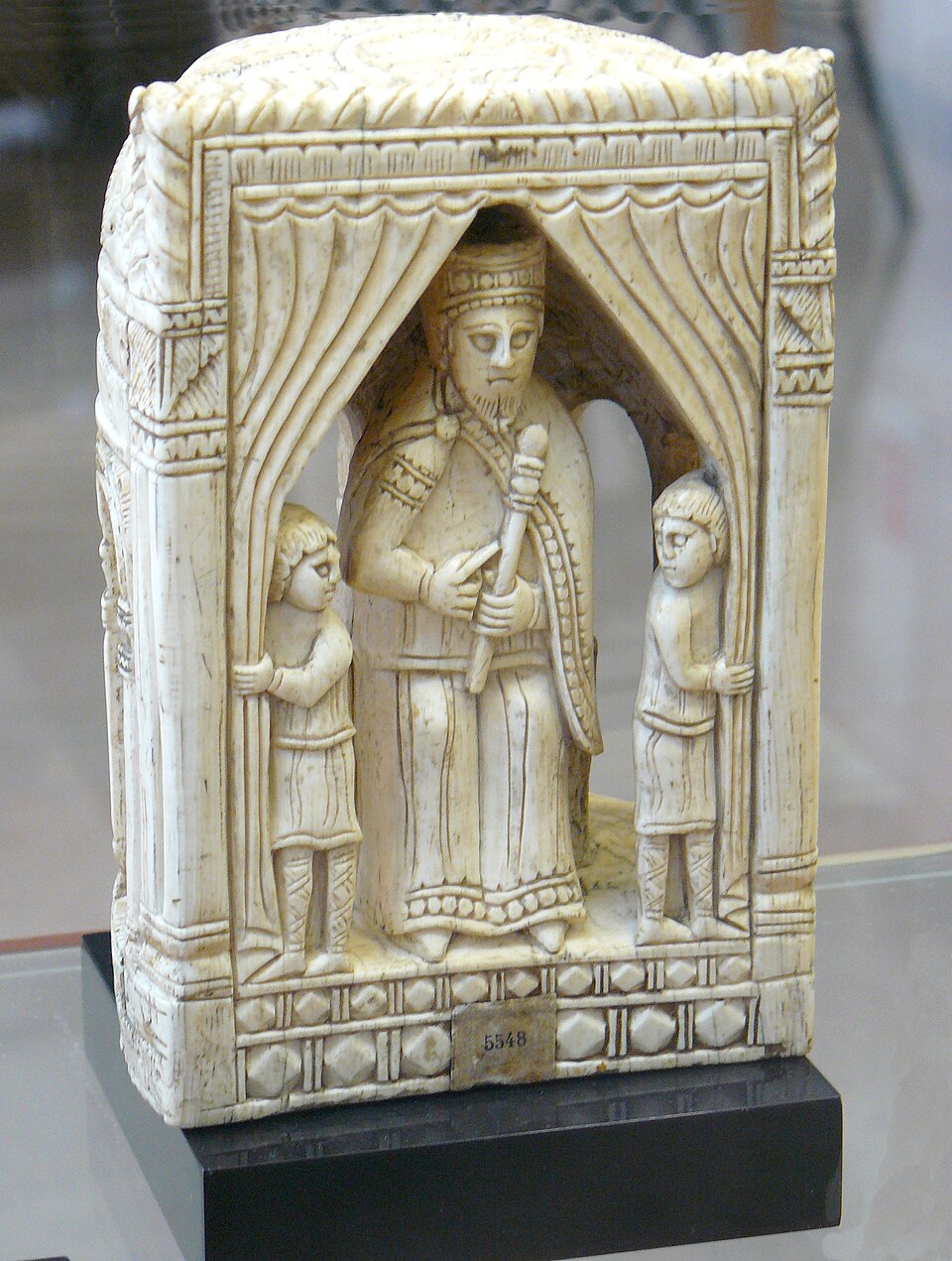
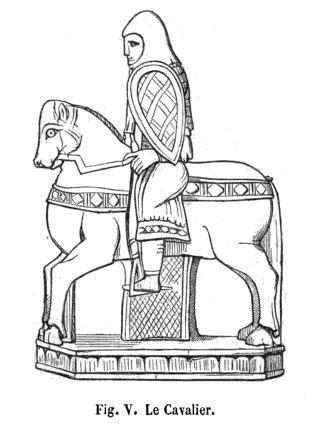
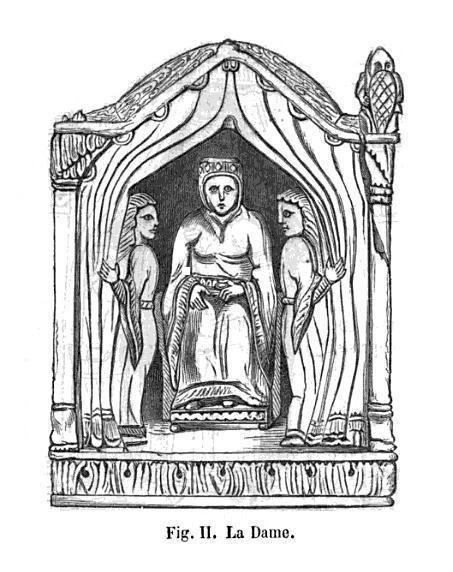
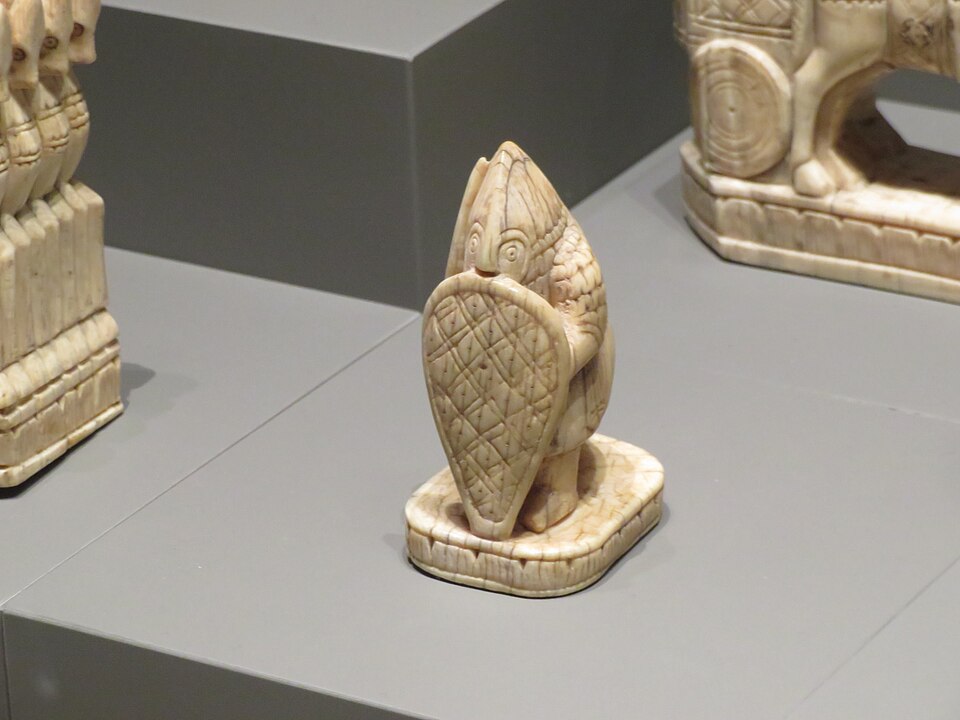
Sixteen surviving pieces from a set once believed to be a gift from Caliph Harun al-Rashid to Charlemagne. Actually carved in the 11th century in Salerno, southern Italy. The largest surviving medieval ivory chess pieces — the kings stand nearly 15 cm tall. Elaborately carved with mounted horsemen, war elephants, and foot soldiers in narrative battle scenes. Originally 30 pieces in 1598; reduced to 16 after the French Revolution. Held at the Cabinet des Médailles, Bibliothèque nationale de France.
King piece, BnF ParisKnight (cavalier)Queen piecePawn piece
c. 1050–1100
Ager Chessmen
Unknown — Iberian Peninsula workshops
Bone & Rock CrystalIslamic-RomanesqueCatalonia, Spain
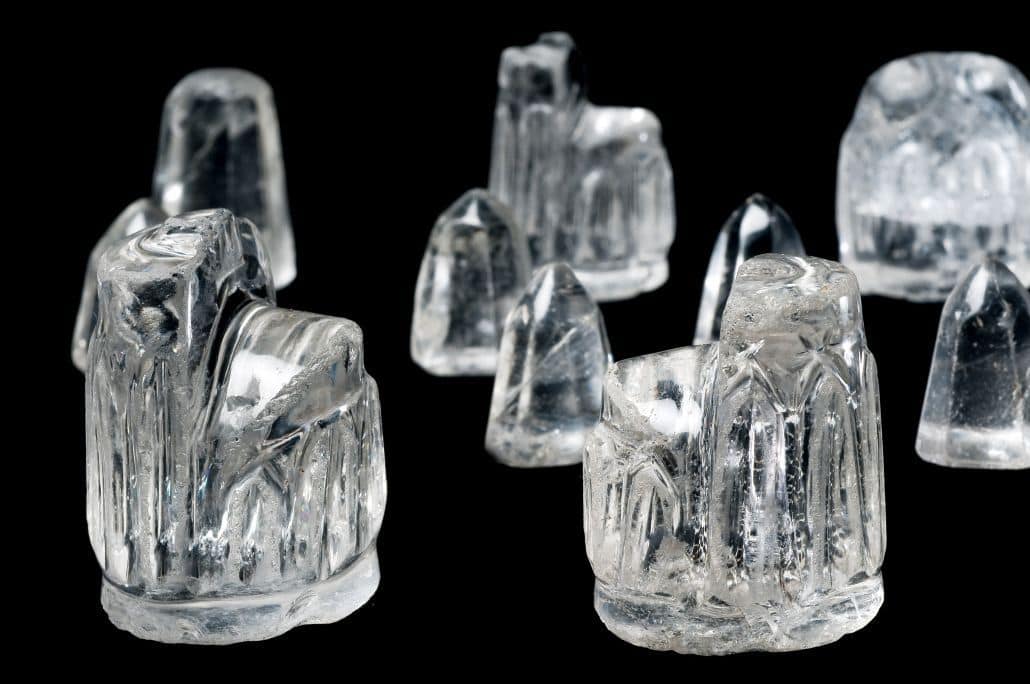
Discovered in Ager, Catalonia, these pieces represent the cultural intersection of Islamic and Christian chess traditions on the Iberian Peninsula. Carved from bone and rock crystal with simplified geometric forms influenced by Islamic aniconic traditions blended with Romanesque figural elements. Among the earliest European chess artifacts. Now at the Diocesan Museum of Lleida.
Rock crystal chess piece, V&A
c. 1150–1200
Lewis Chessmen
Unknown — Norwegian craftsmen (likely Trondheim)
Walrus IvoryWhale TeethNorse / RomanesqueIsle of Lewis, Scotland
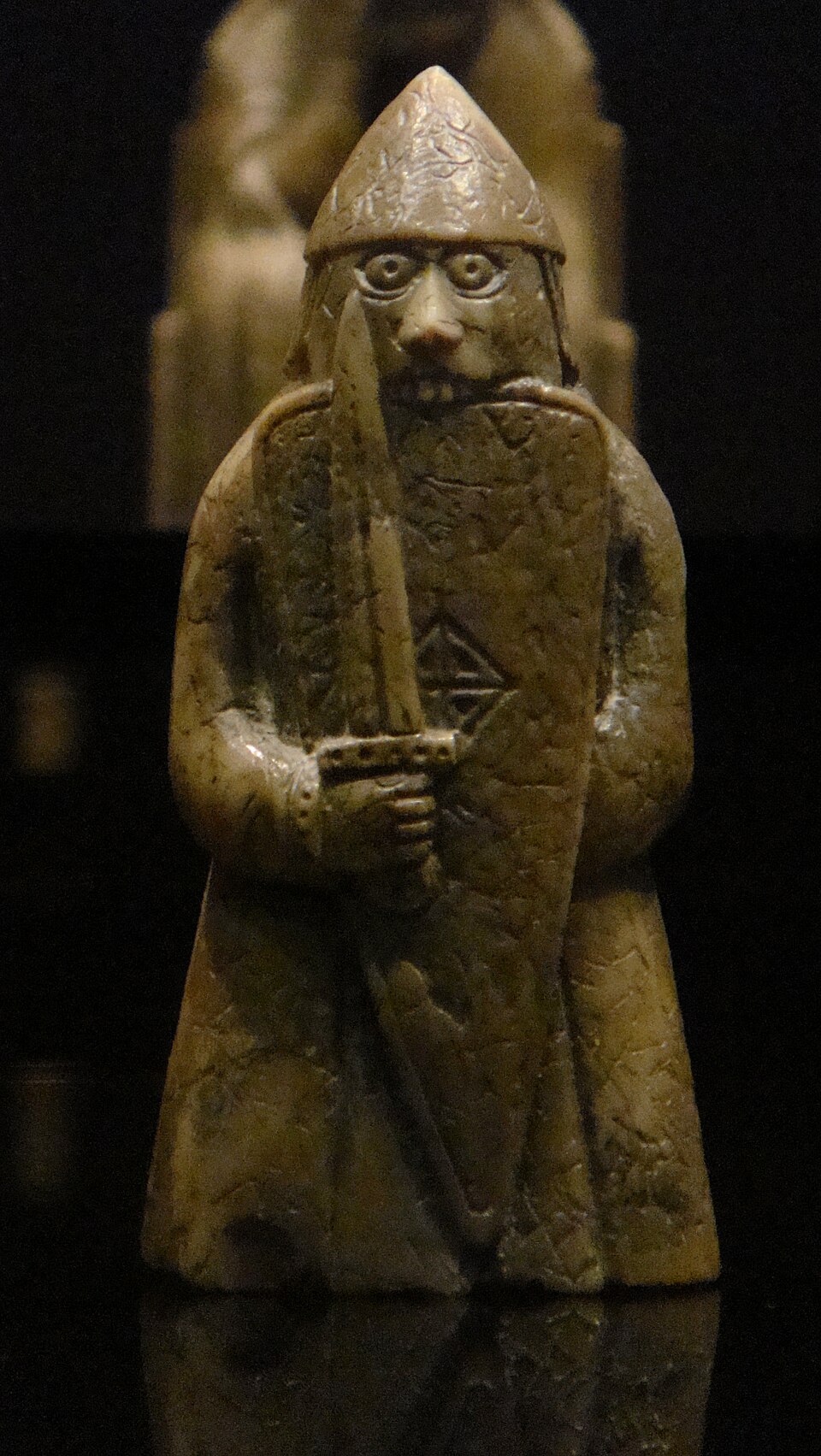
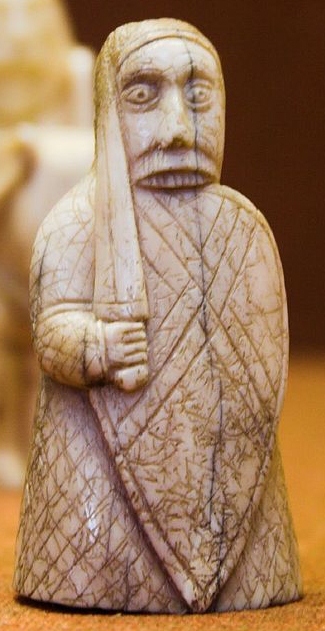
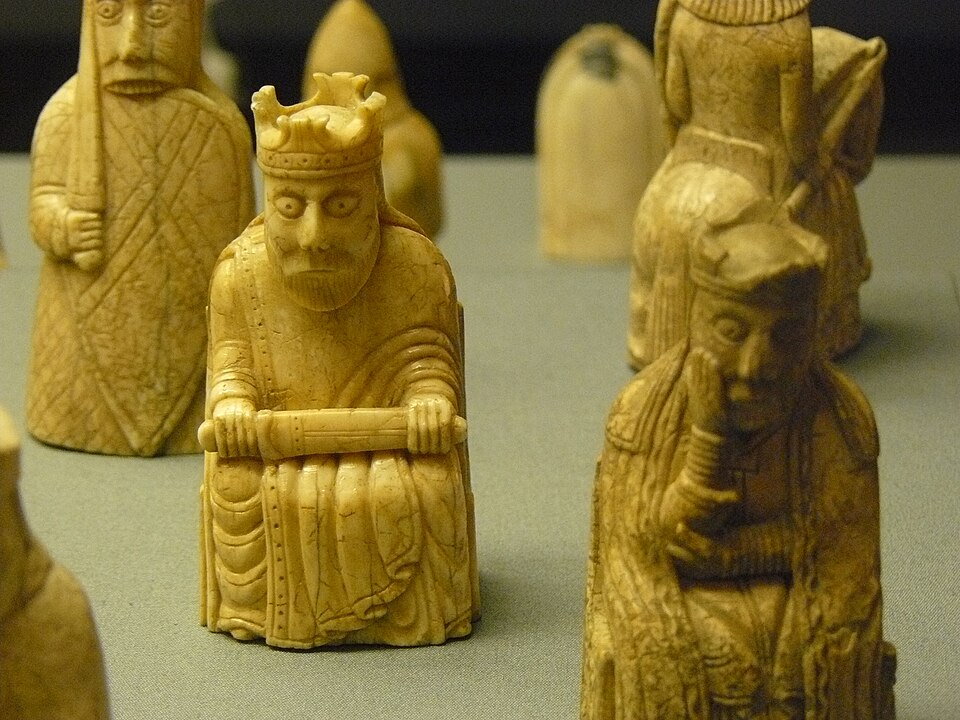
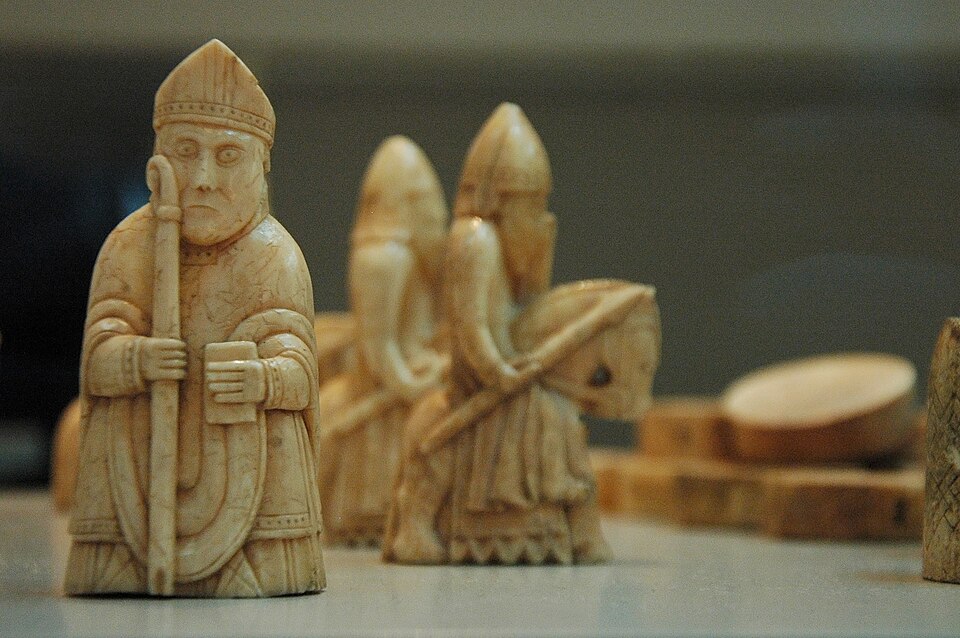
Perhaps the most famous chess set in history. 93 pieces discovered in 1831 on the Isle of Lewis, Outer Hebrides. Exquisitely carved seated kings and queens, mitred bishops (the earliest found in clerical dress), mounted knights, shield-biting berserker warders (rooks), and geometric pawns. A masterpiece of Romanesque art. In 2019, a single rediscovered Lewis piece sold at Sotheby's for nearly $1 million. 82 pieces at the British Museum; 11 at the National Museum of Scotland.
Warder (rook), British MuseumShield-biting berserkerSelection of piecesCollection at British Museum
c. 1750–1850
Vizagapatam Export Chess Sets
Indian ivory carvers — East India Company workshops
Indian IvoryColonial TradeVizagapatam, India
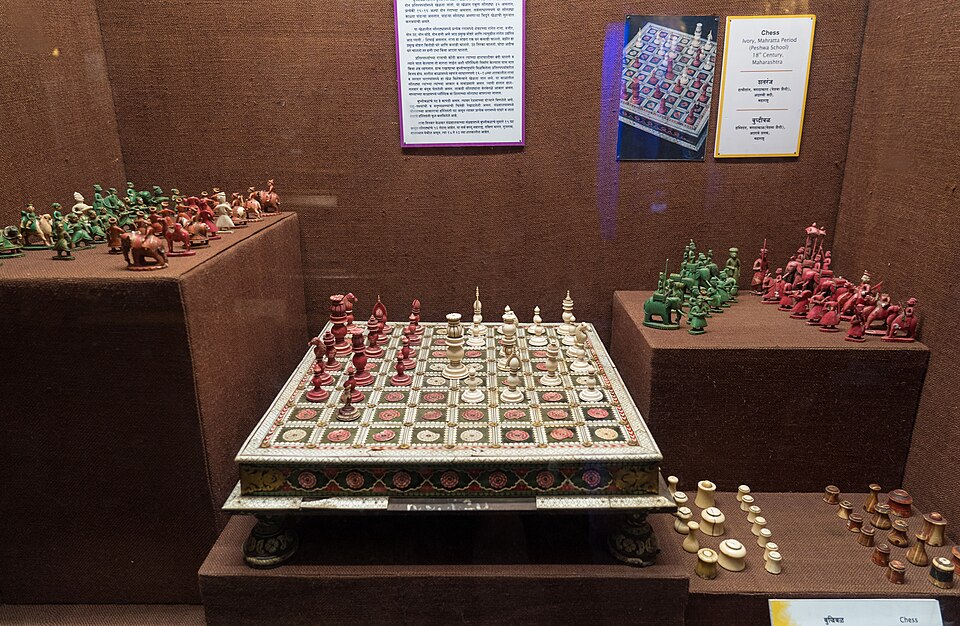
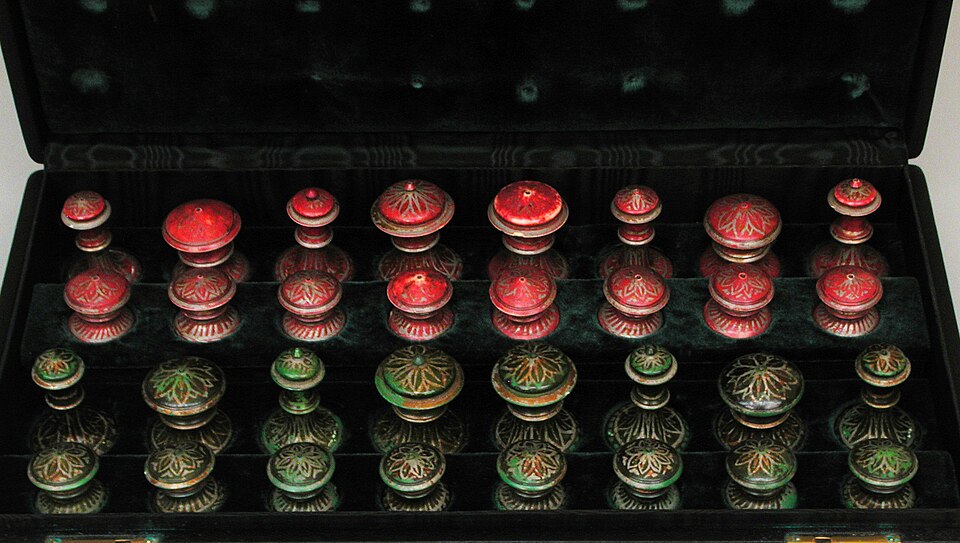
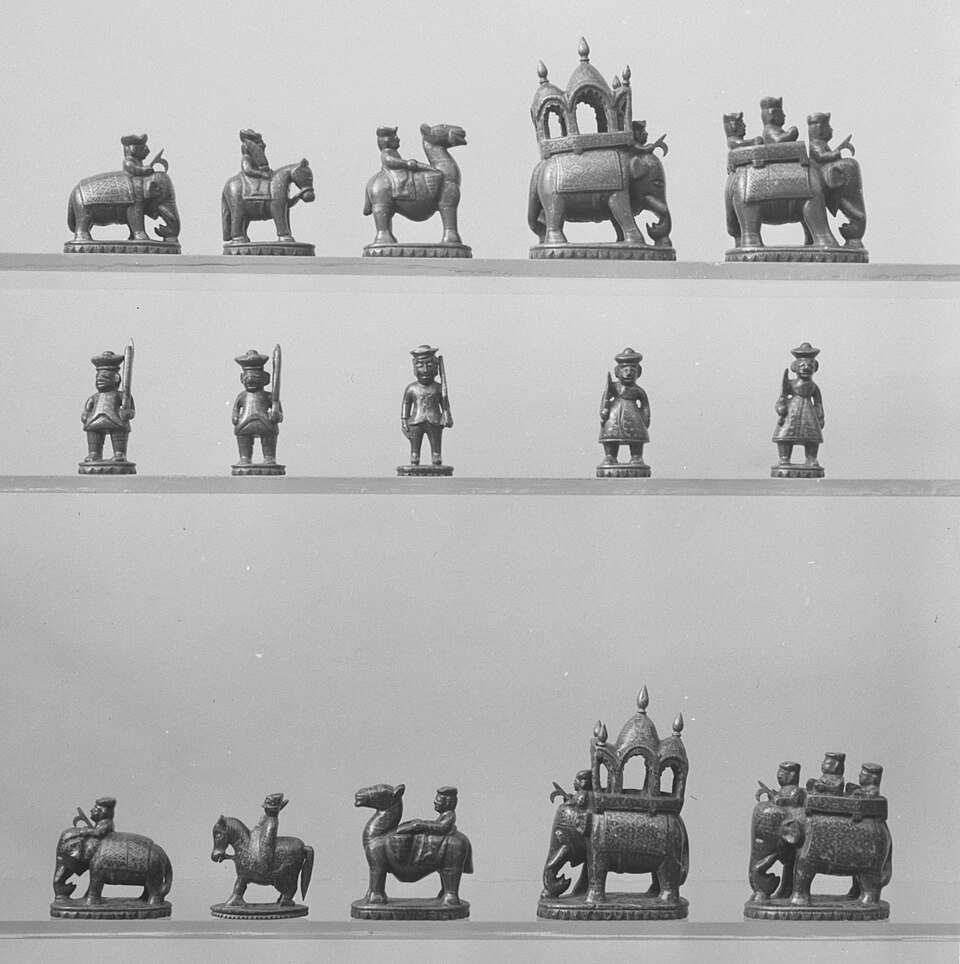
Luxury chess sets produced for the European export market in Vizagapatam (now Visakhapatnam), a city on India's Coromandel Coast. The workshop tradition was first established by the Dutch East India Company and later fostered by the British. Known as "John Company sets," these feature finely turned ivory pieces with elaborate foliate decoration, often one side stained green or red, the other left natural. Kings and queens bear extensive carving; bishops as flaming mitres; knights as horse heads. Early 18th-century examples are exceptionally refined; later 19th-century sets became more ornate.
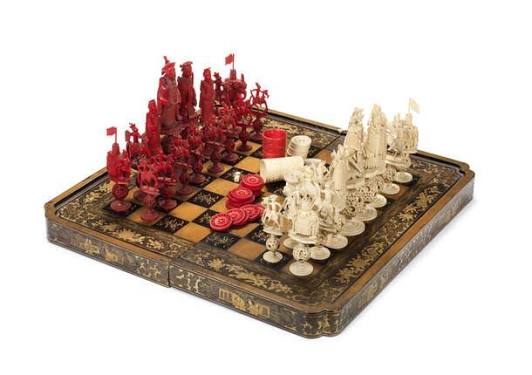
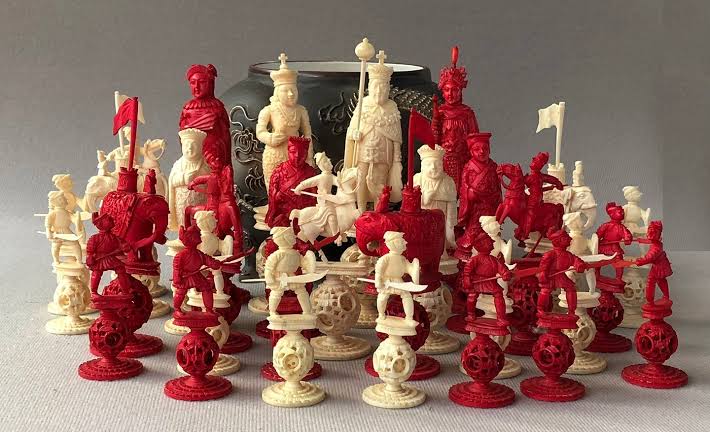
Extraordinary virtuoso ivory carving from Canton (Guangzhou) made exclusively for the European export market. In the 19th century, Chinese carvers began mounting chess pieces atop concentric "puzzle balls" — freely rotating nested spheres carved from the outside in using specialized L-shaped tools. Some kings feature five or more concentric balls spinning freely within the outer shell. Pieces typically depict Chinese court figures, warriors, and mandarins rather than Western chess forms.
Concentric sphere techniqueGeorge II period puzzle-ball set
Material Cluster
Wood
The workhorse of chess. From lathe-turned Baroque patterns to Bauhaus geometry to the tournament standard that unified the game.
1616
Selenus Pattern
Named after Duke Augustus of Brunswick-Lüneburg (“Gustavus Selenus”)
Lathe-Turned WoodBaroqueCentral Europe
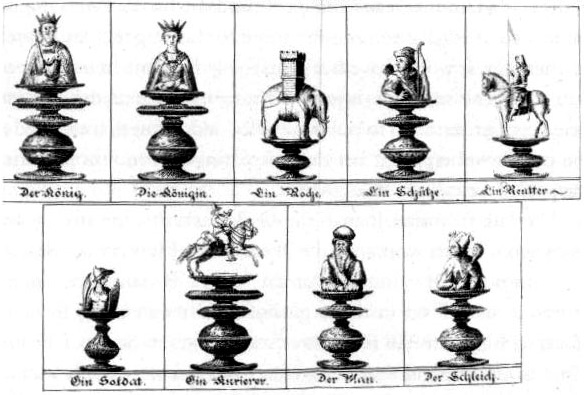
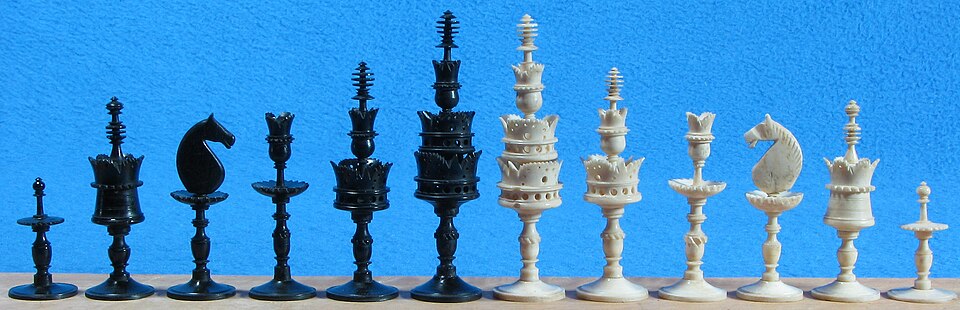
Named after the first German chess treatise, Das Schach- oder Königsspiel (1616). Delicate lathe-turned bases and shafts with tiered circlets resembling crowns. Also called "Garden" or "Tulip" sets because forms evoke formal flower gardens — kings and queens as fountains, pawns as flowers, rooks as civic towers. Dominated Germany and Central Europe until the Staunton revolution. Illustrated by engraver Jacob van der Heyden.
From Das Schach- oder KönigsspielLathe-turned Selenus pattern
c. 1715–1850
Régence Pattern
Anonymous French turners — Café de la Régence, Paris
Boxwood / FruitwoodFrench EnlightenmentParis
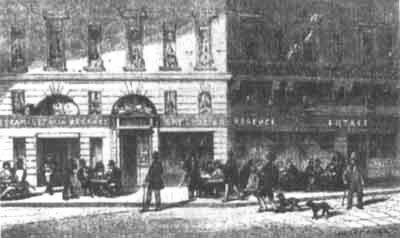
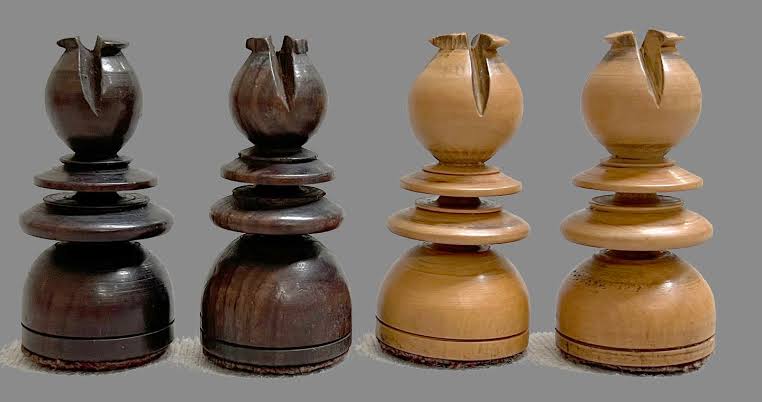
The dominant European chess set style before Staunton. Named after the legendary Café de la Régence where Voltaire, Rousseau, Benjamin Franklin, Napoleon, and Philidor played. Typically turned from boxwood with one side stained dark. Kings have urn-shaped bases with "Tulip Crown" finials; bishops feature cut-out collar sections symbolizing waning clergy influence during the Enlightenment. The elegance of French playing culture.
Café de la Régence, 19th century
1790
Calvert Pattern
John Calvert
Turned Wood / IvoryEarly StandardizationEngland
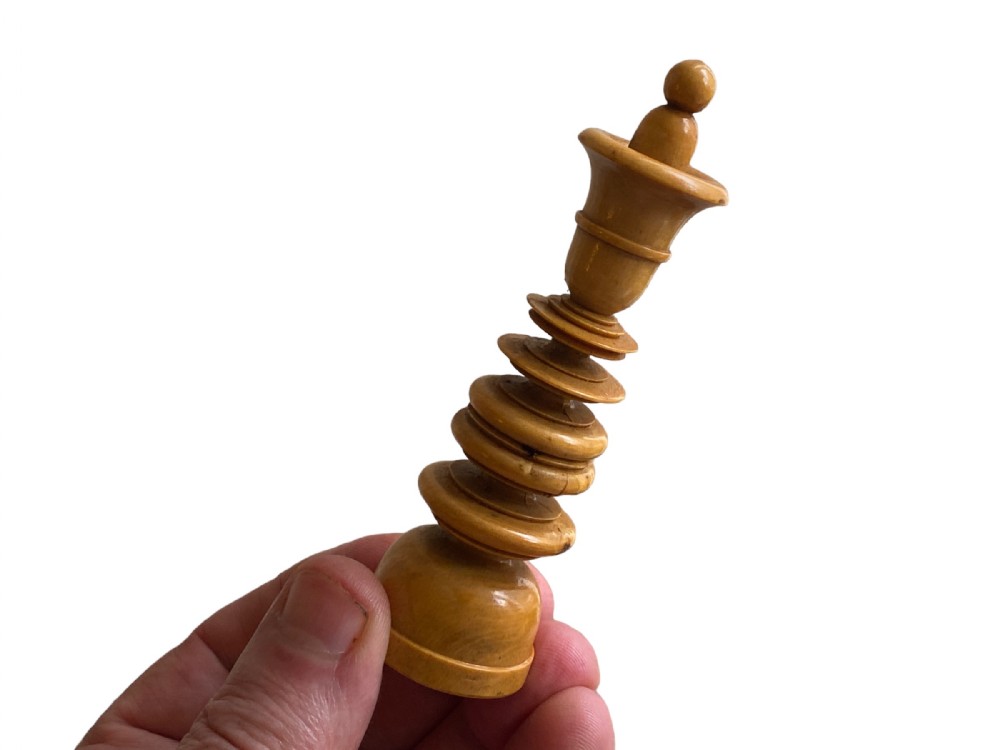
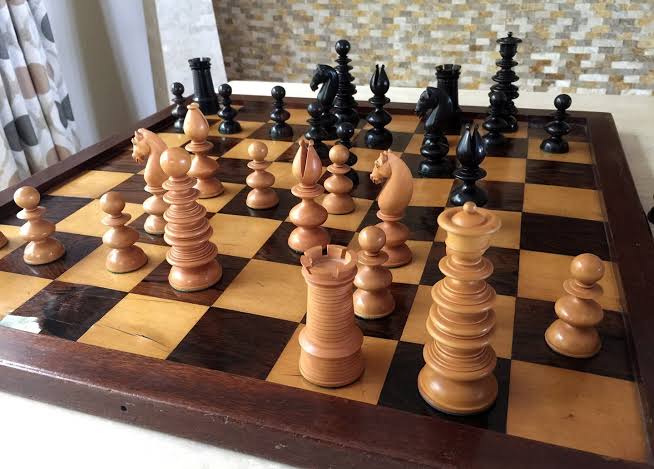
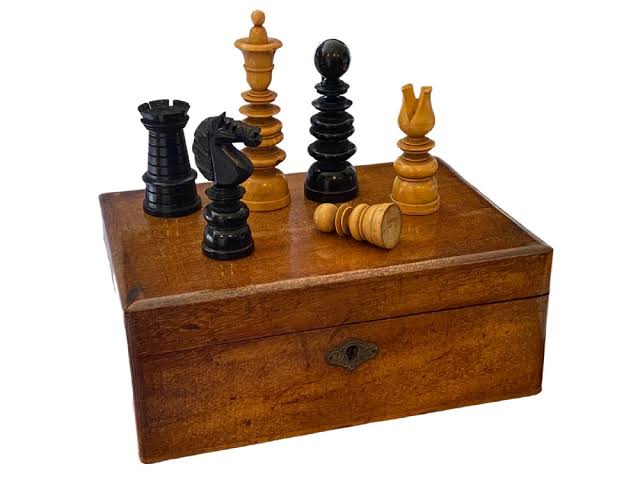
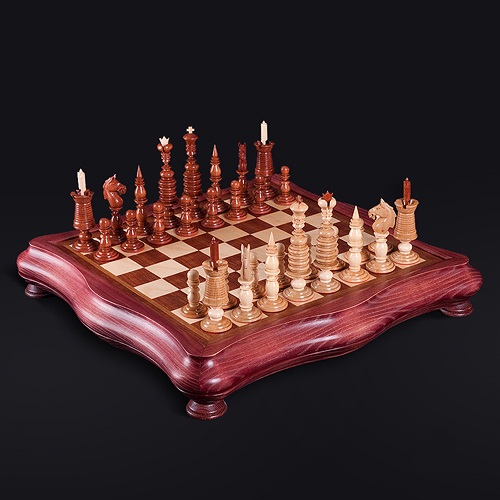
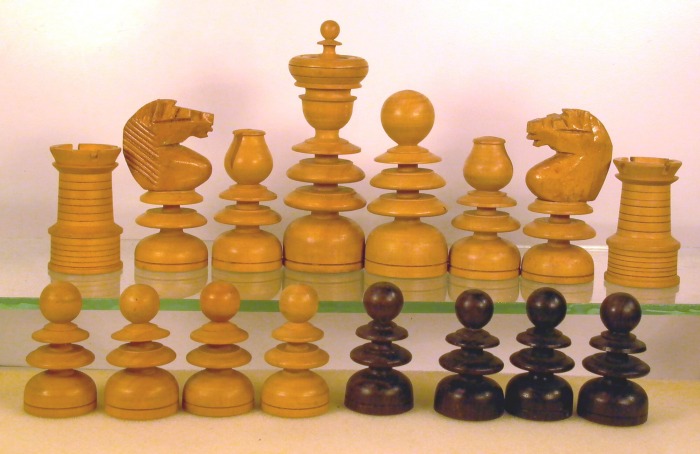
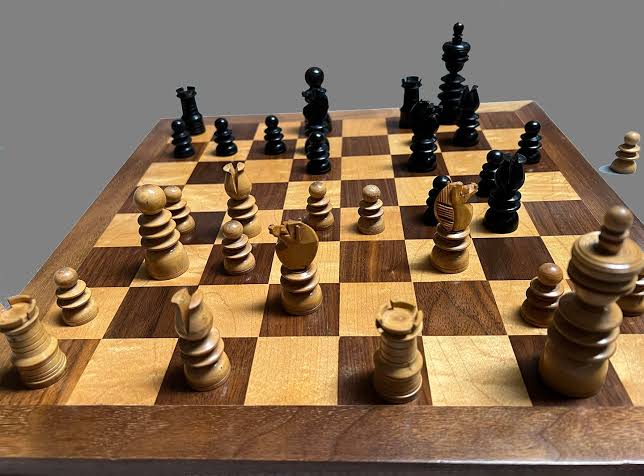
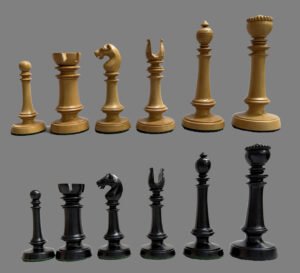
One of the first attempts at standardized chess piece design. The king and queen feature openwork crowns, the bishop has a deep clefted mitre, and the rook is a tower on a pedestal. A key predecessor to the Staunton pattern, establishing the formal vocabulary that would later be refined and universalized.
Openwork crown and mitre formsCalvert chessmenComplete set on board19th-century Calvert pattern
c. 1800–1849
Barleycorn Pattern
English turners — various workshops
Turned Wood / IvoryRegency EnglandEngland
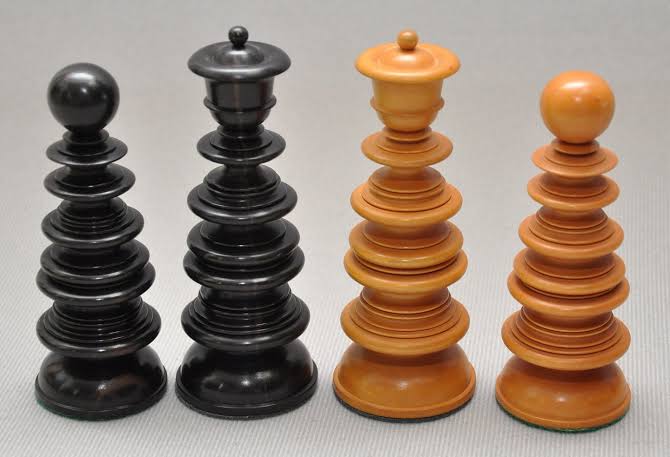
Named for the decorative barley-twist carving on the barrels of the king and queen. Captures the ornate decorative energy of early 19th-century England. Well-carved knights and bishops with vertical split mitres. Popular alongside St. George and Lund patterns before the Staunton set displaced them all.
Characteristic carved barrels
c. 1820–1850
St. George Pattern
Named after the St. George Chess Club, London
Boxwood / IvoryGeorgian EnglandLondon
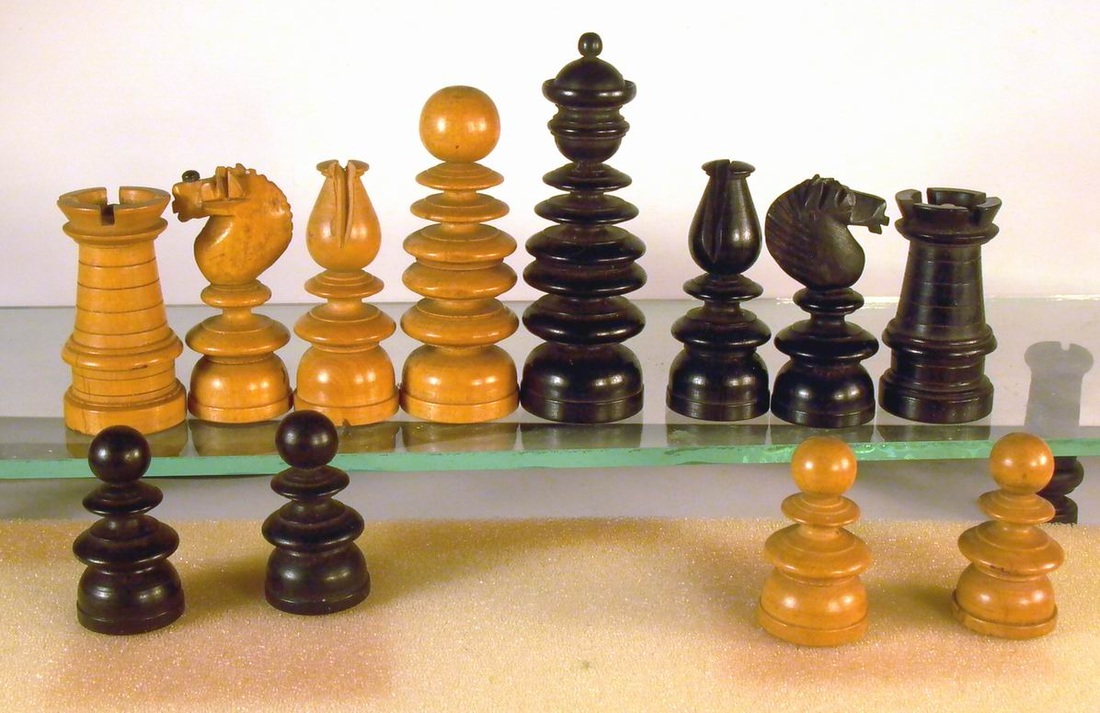
The standard British chess design before Staunton. Named after the St. George Chess Club in London. Tall, elegant pieces with slender profiles. The most commonly used design in Britain until it was almost universally replaced by the Staunton in the 1850s. The Lund and Merrifield patterns are closely related variants.
Standard British pre-Staunton formSt. George chessmenSt. George style variantTall elegant profile
c. 1840–1860
Edinburgh / Northern Upright Pattern
Lord John Hay — marketed by Jaques of London
Ivory / Boxwood & EbonyScottishEdinburgh
Designed by Lord John Hay around 1840, marketed primarily for the Scottish market by Jaques of London. Characterized by tall posts on each piece, exquisitely turned with attractively carved knights identical to the better St. George sets. Available in red-stained and natural ivory or boxwood and ebony. Believed to have contributed design inspiration for the Staunton pattern. Quite rare today.
Tall post characteristic formSlender variant
1849
Staunton Chess Set
Nathaniel Cooke — manufactured by Jaques of London
Boxwood & EbonyLead-WeightedFIDE StandardLondon
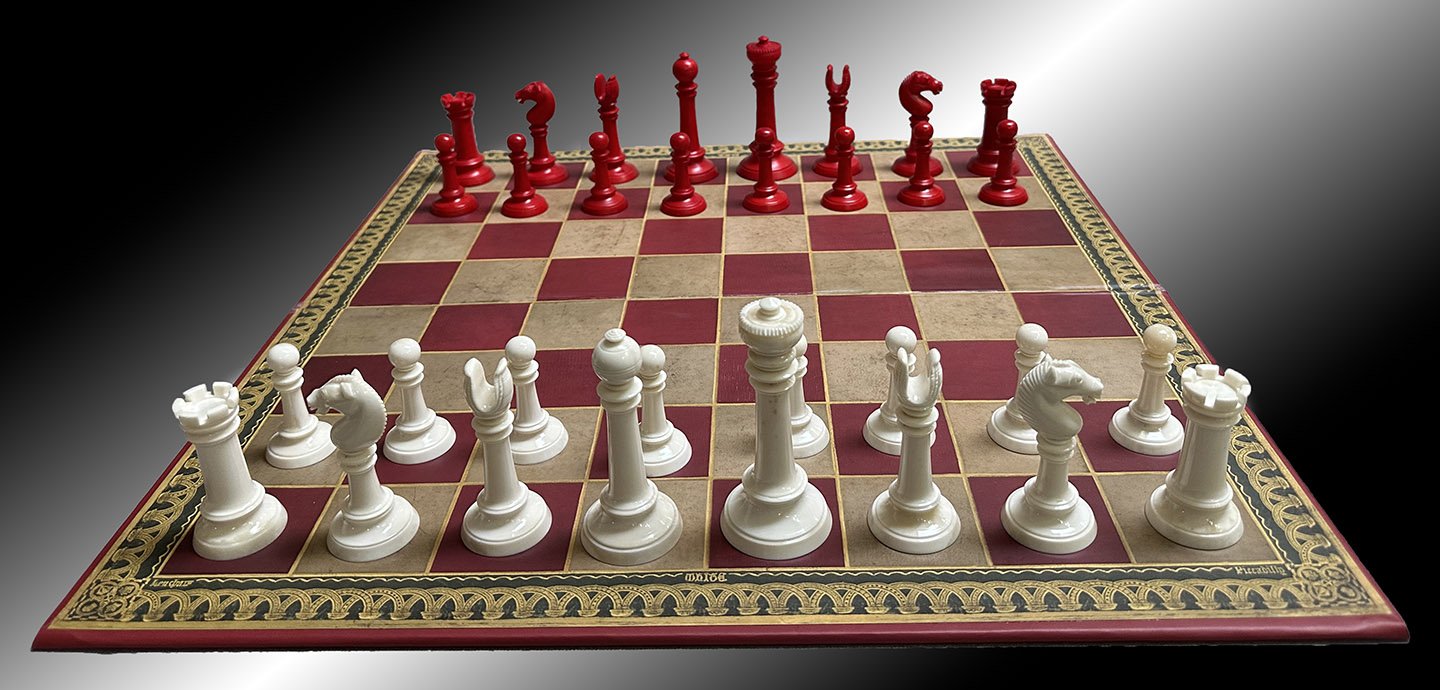
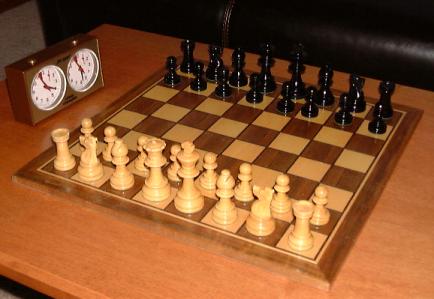
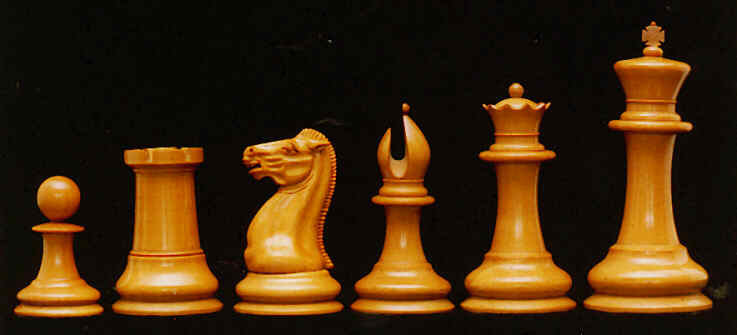
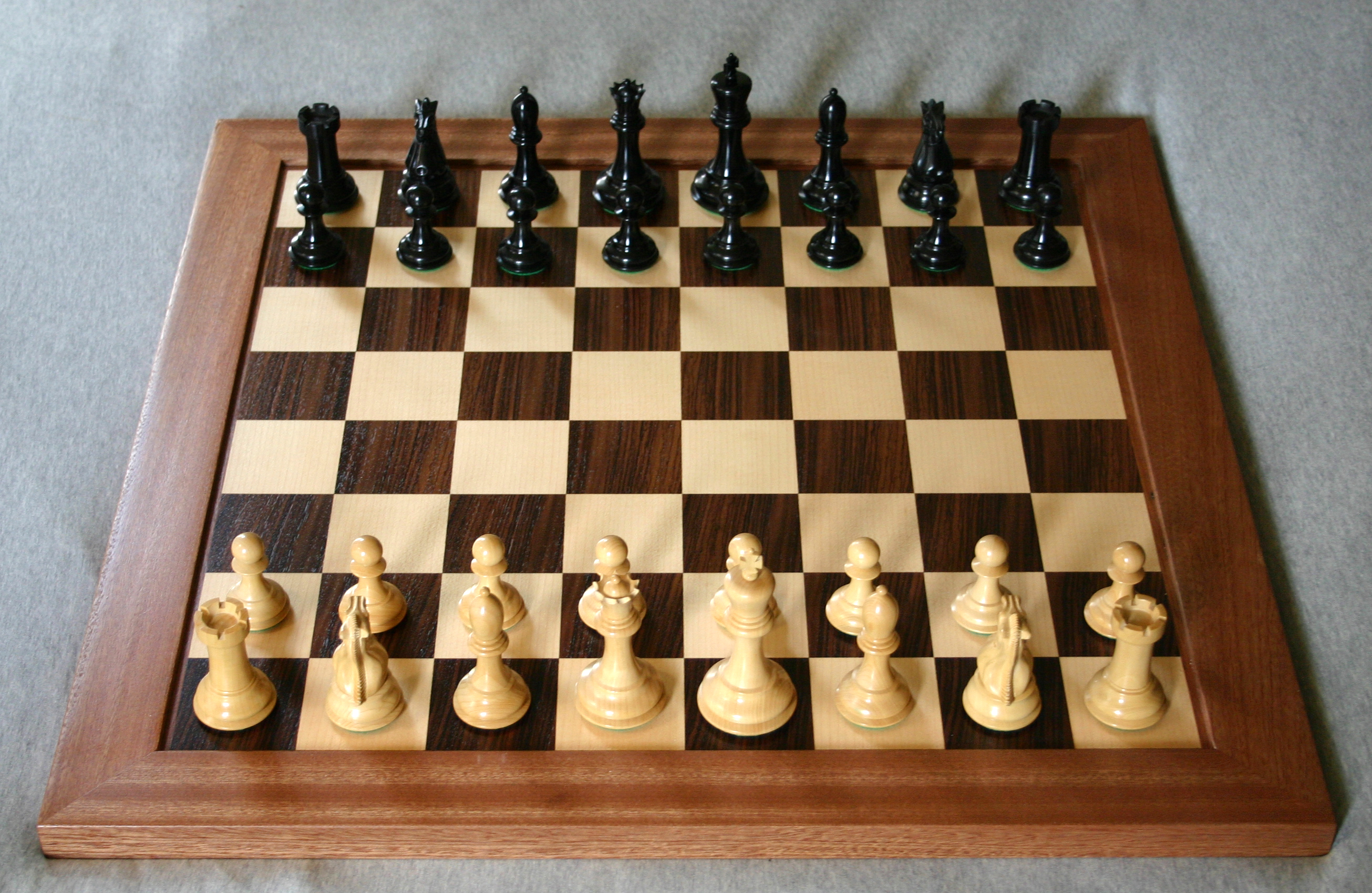
The most important chess set design in history. Registered March 1, 1849 (patent no. 58607) by Nathaniel Cooke, possibly conceived by his brother-in-law John Jaques. Endorsed by chess champion Howard Staunton in his Illustrated London News column. Distilled common traits of earlier sets into clean, stable, universally recognizable forms. The knight head was inspired by the Parthenon's Elgin Marbles. Pieces are lead-weighted and felted. The king features a distinctive Maltese-cross finial. Adopted by FIDE as the official tournament standard. One of the earliest examples of celebrity product endorsement.
Classic Staunton patternOriginal Jaques/Cooke 1849Opening position
1924
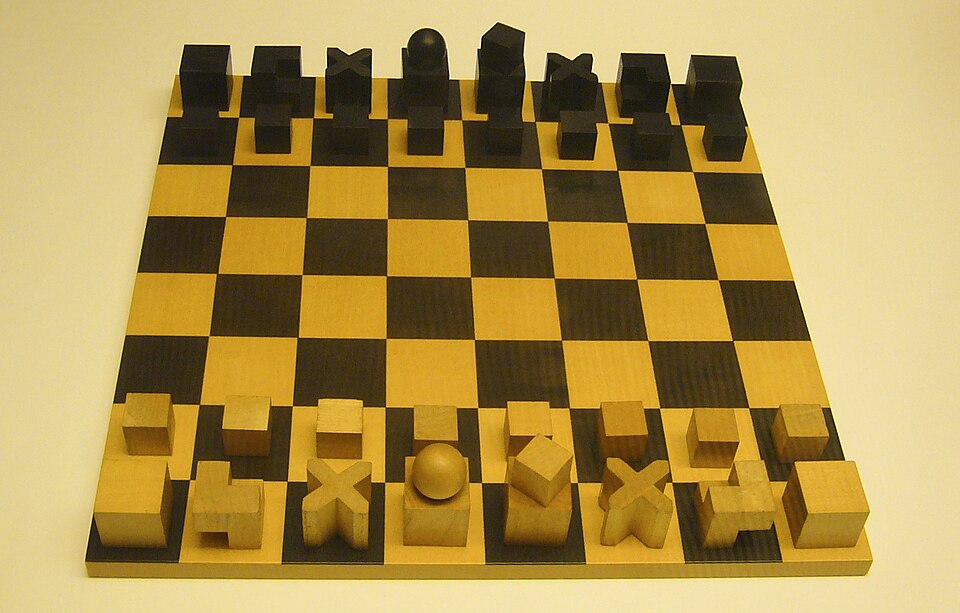
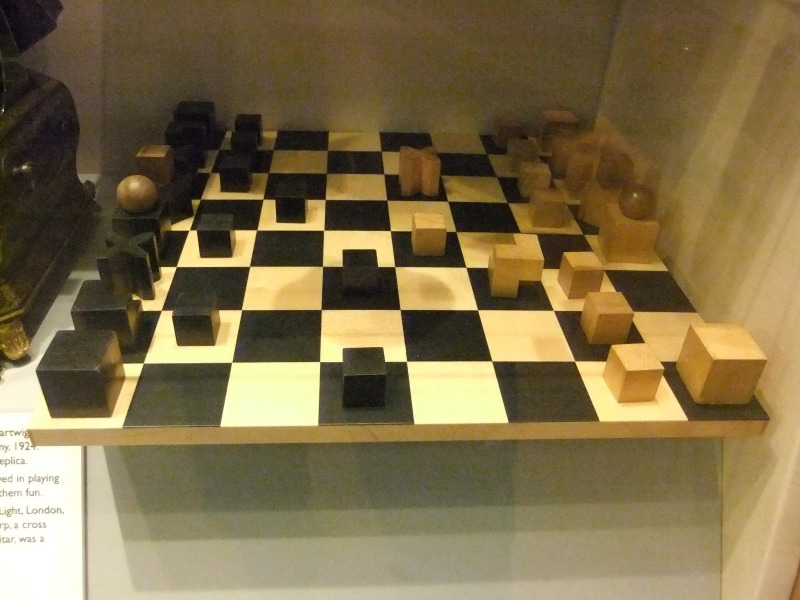
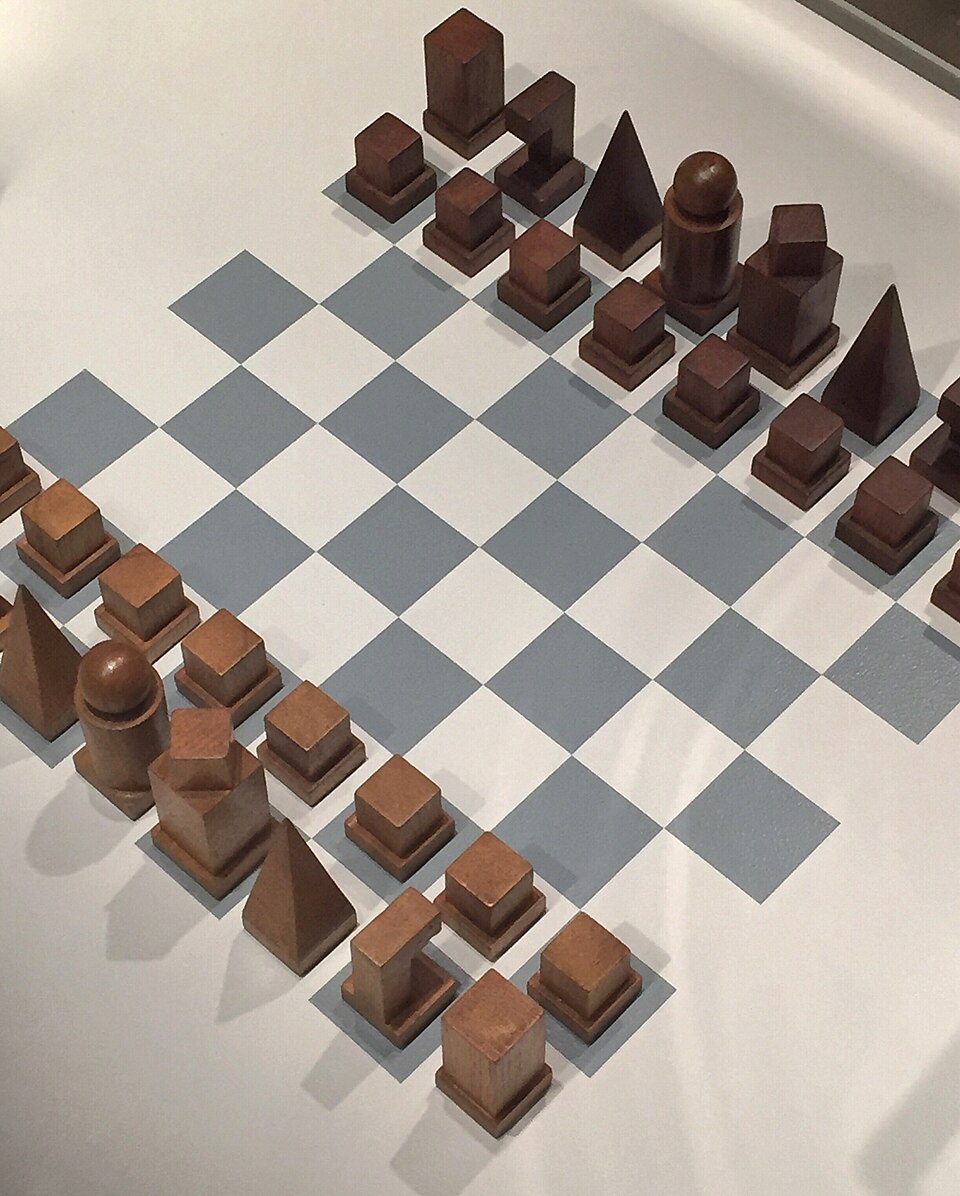
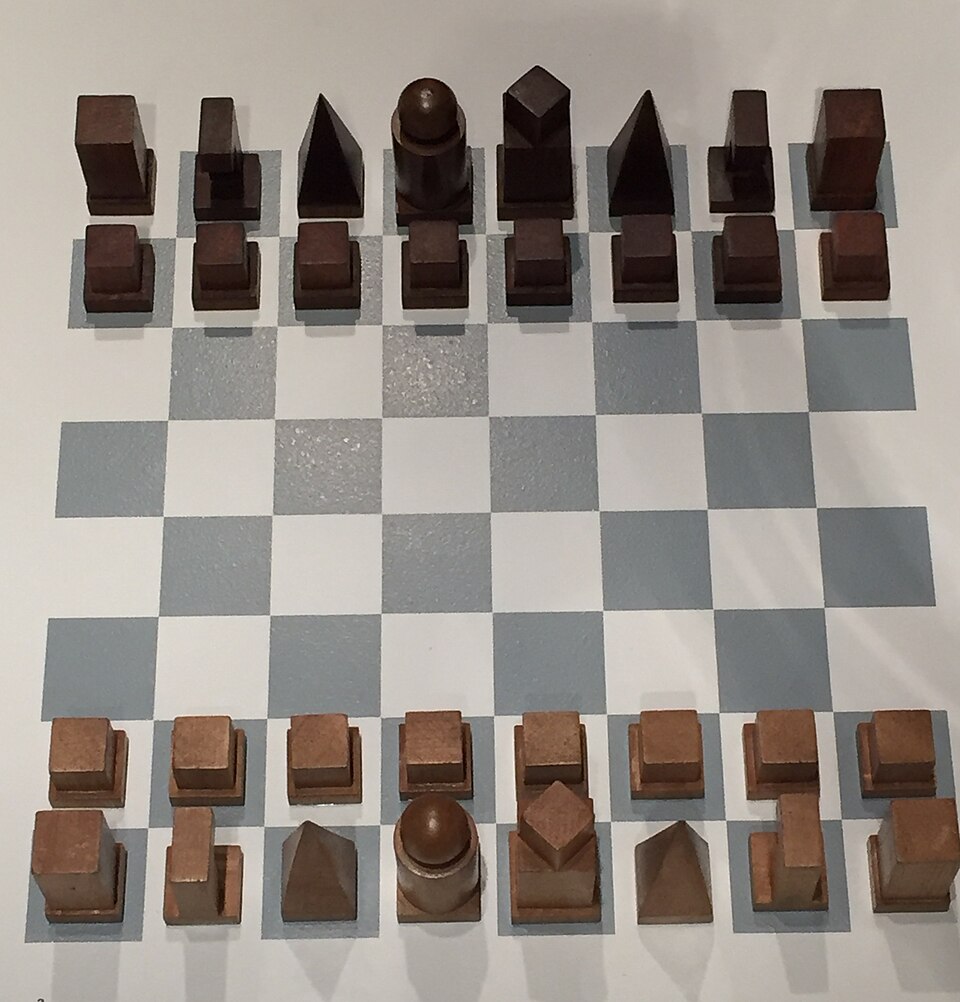
Bauhaus Chess Set (Model XVI)
Josef Hartwig
Pear WoodBauhaus / ModernismWeimar, Germany
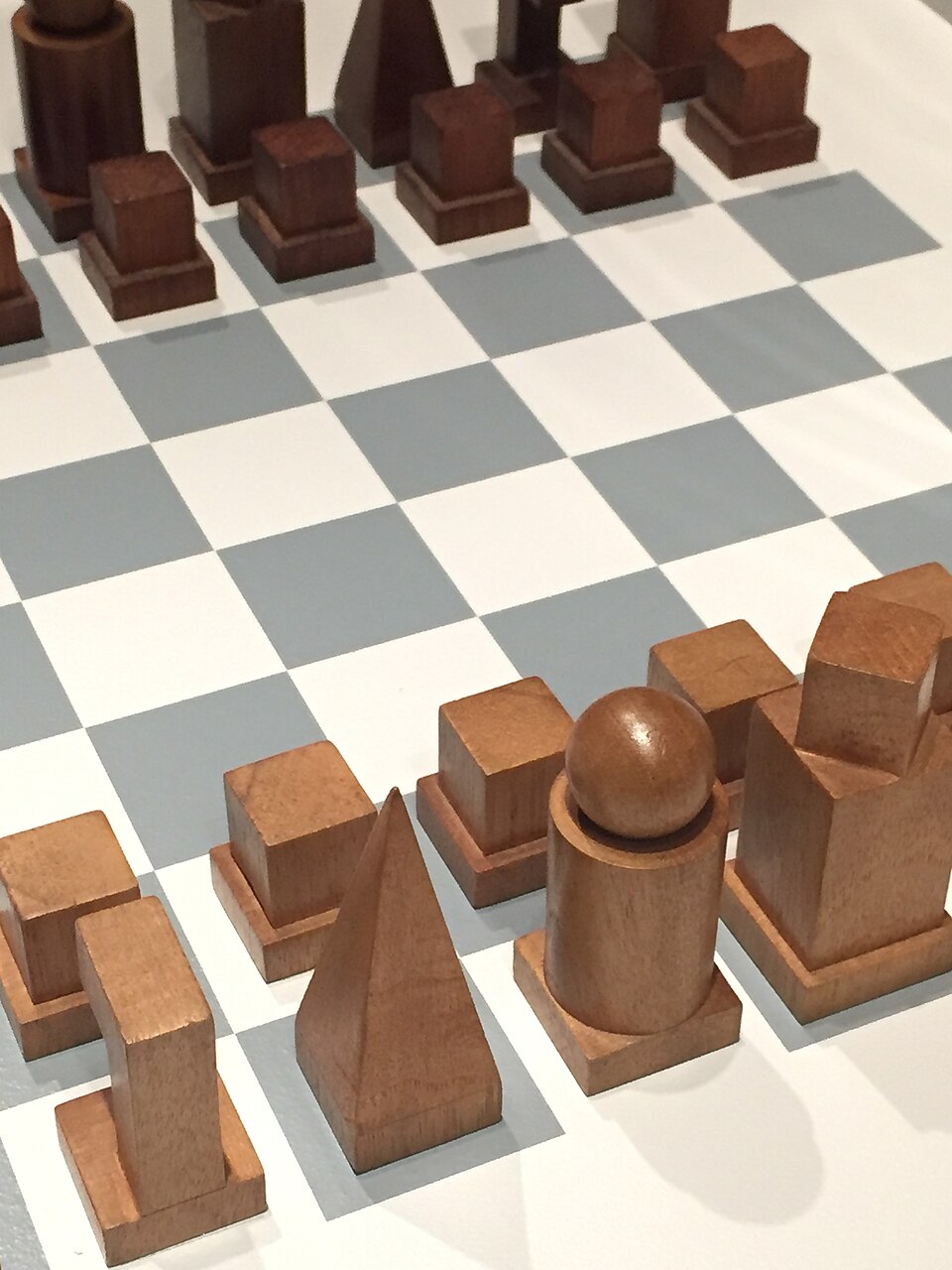
One of the most celebrated products of the Bauhaus school. Designed while Hartwig was foreman of the wood and sculpture workshop at the Weimar Bauhaus. Reduced chess pieces to pure geometric forms — cubes, cylinders, and spheres — where each shape directly communicates its movement on the board. The bishop is an X (diagonal movement); the queen is a sphere (moves anywhere); the king is a cube (moves on axes); knights are L-shaped. Originally sculpted from pear wood. Embodies the Bauhaus principle that objects must be practical, durable, inexpensive, and beautiful. In the collections of MoMA and the Metropolitan Museum of Art.
Hartwig's geometric piecesWalker Art Gallery collectionMovement encoded in formCube, cylinder, sphereComplete set arrangement
1944
Max Ernst Chess Set
Max Ernst
Carved WoodSurrealismImagery of Chess Exhibition
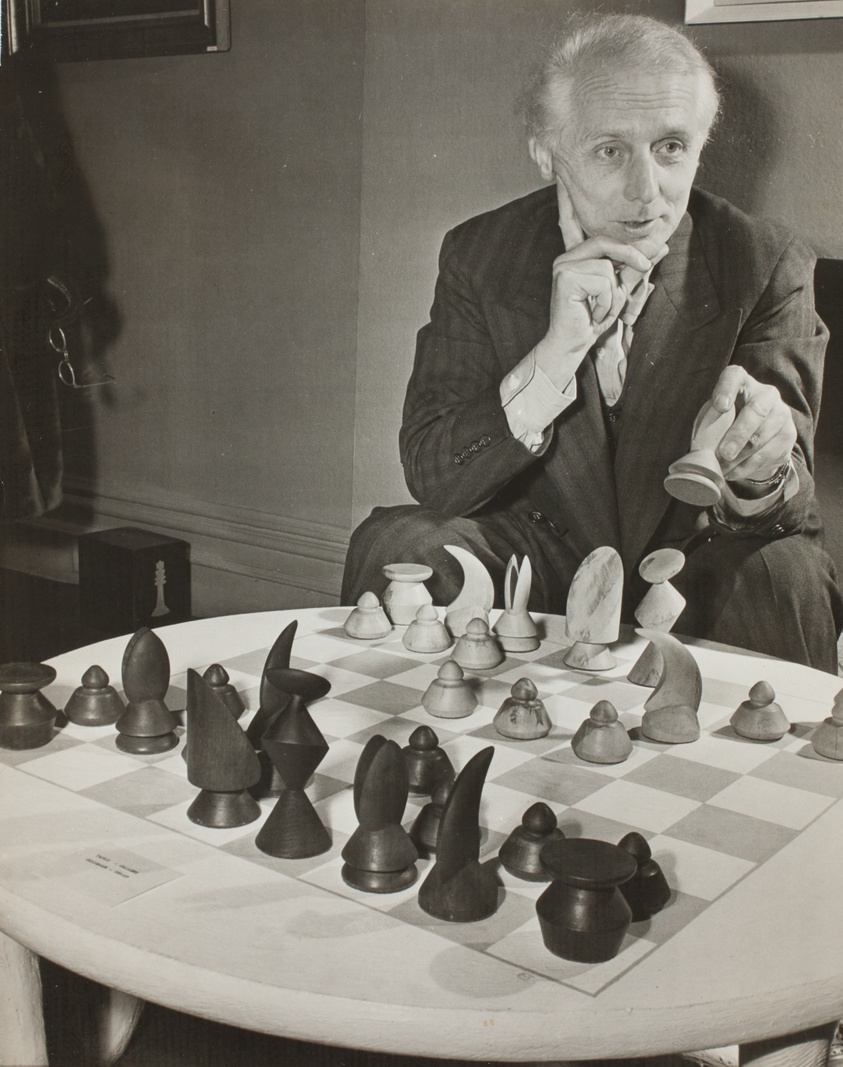
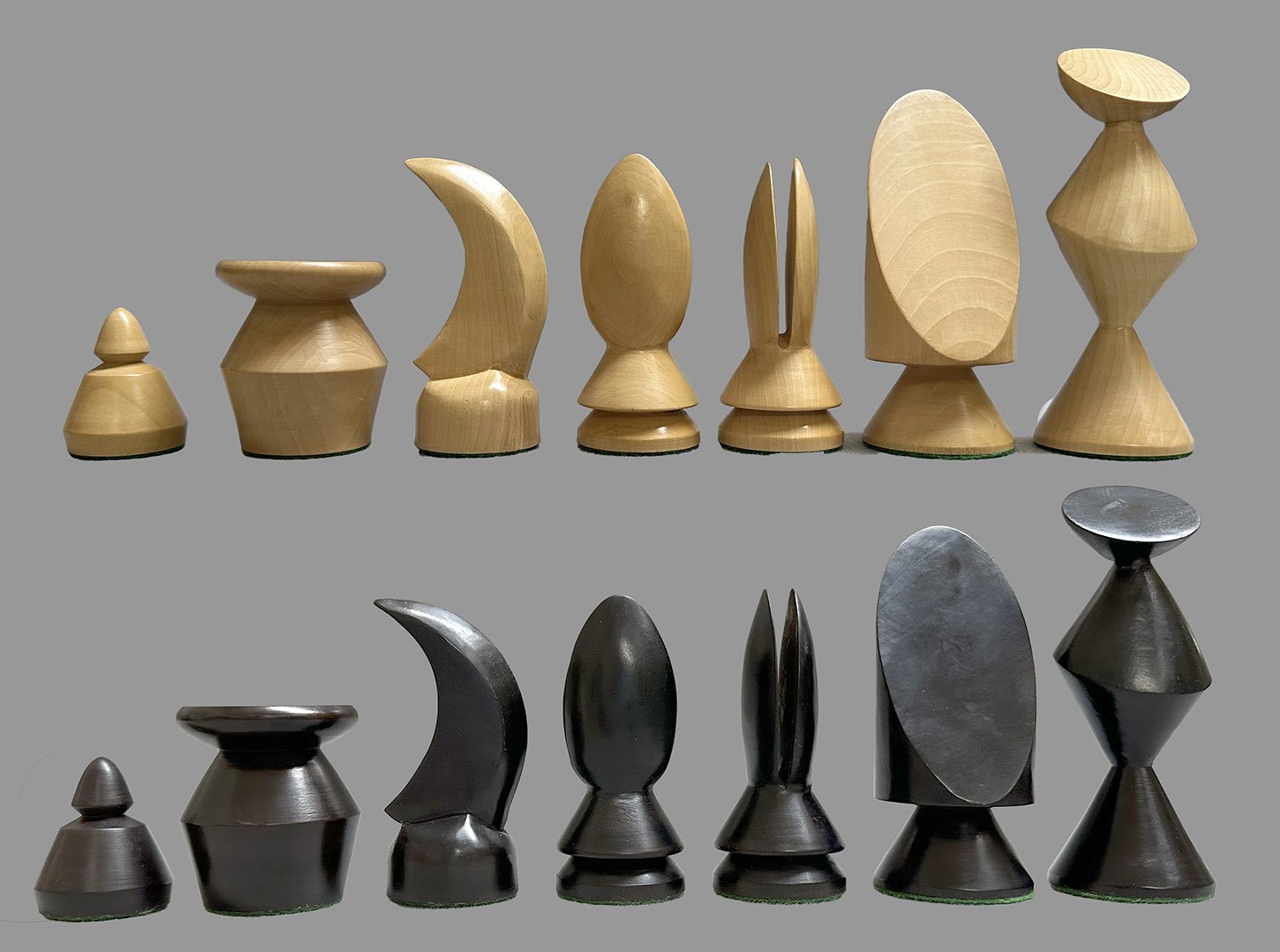
Created for the landmark 1944 "Imagery of Chess" exhibition at the Julien Levy Gallery, New York. Three wooden sets with Brancusi-like semi-abstract totemic forms influenced by primitive art and ancient civilizations. Notably breaks convention — Ernst's queen is taller than the king. Each piece went through dozens of clay studies. His related bronze sculpture The King Playing with the Queen sold for $24.43 million at Christie's in 2022. Set acquired by MoMA.
Ernst at the Imagery of Chess, 1944Totemic wood carvings
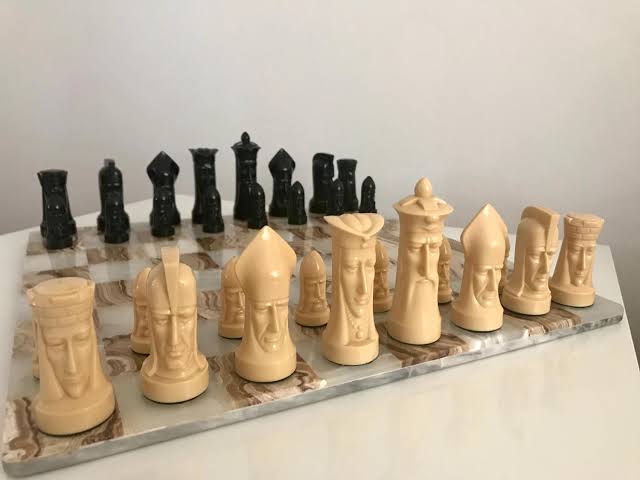
Georgian-Russian-American sculptor who introduced "the first major change of design for chess sets in more than a century" by giving human faces to chess pieces. Originally crafted in ceramics by Brayton Laguna Pottery, later mass-produced in red and black Bakelite. Featured in Life magazine. The "Classic" set (model no. 1494) became one of the most recognizable props in television history when it was used for the three-dimensional chess boards of Star Trek: The Original Series.
The pieces of Kirk and Spock
c. 1990–2000
Michael Graves Postmodern Chess Set
Michael Graves
Maple / ResinPostmodernism / Memphis GroupUSA
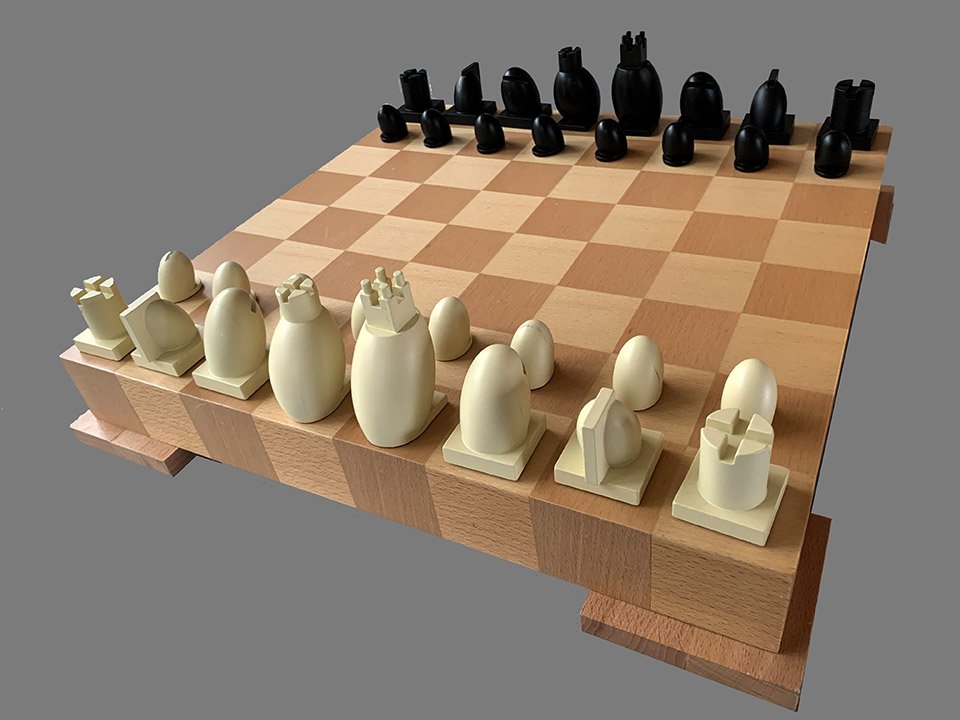
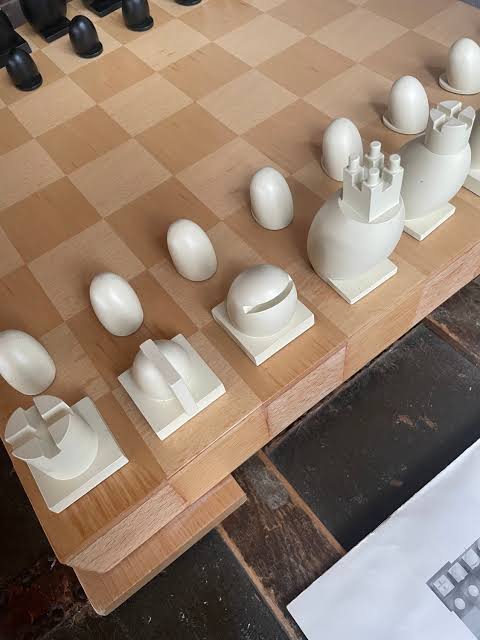
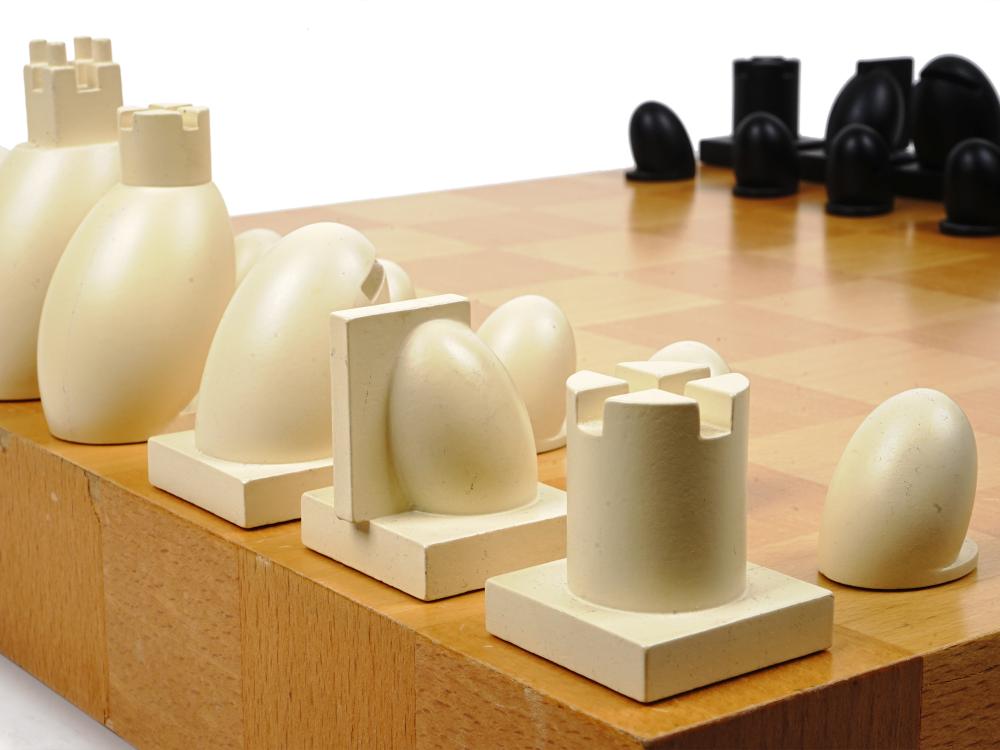
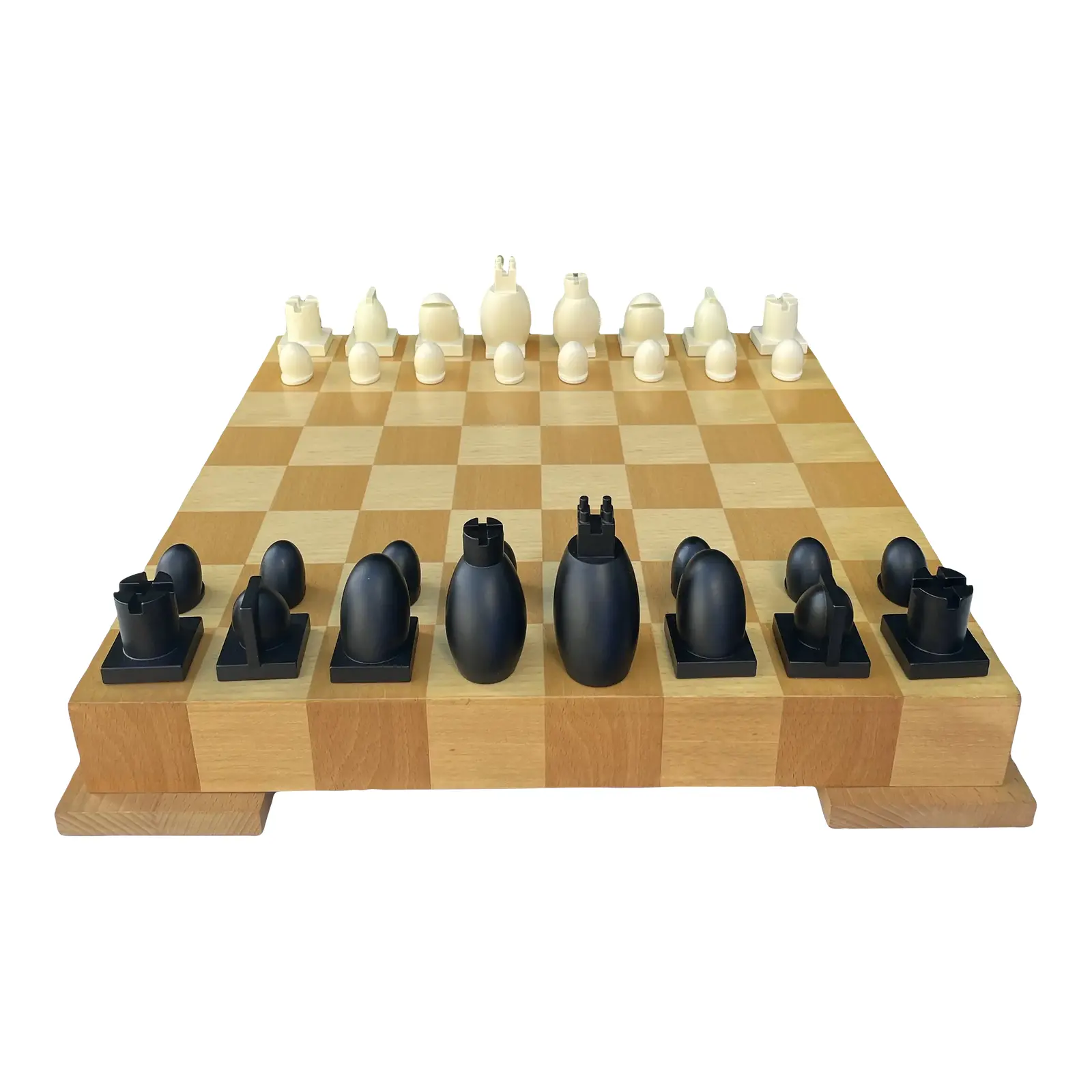
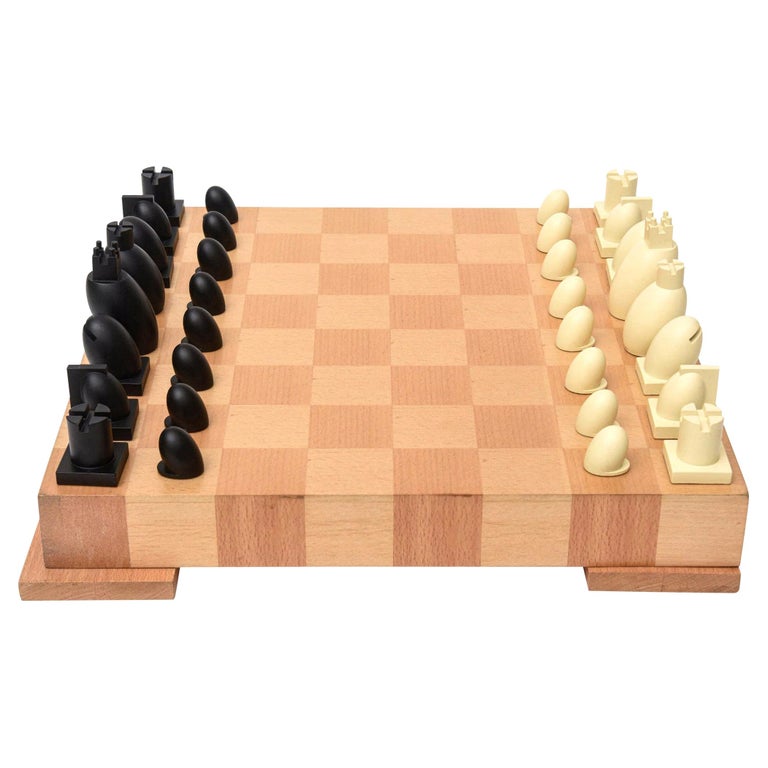
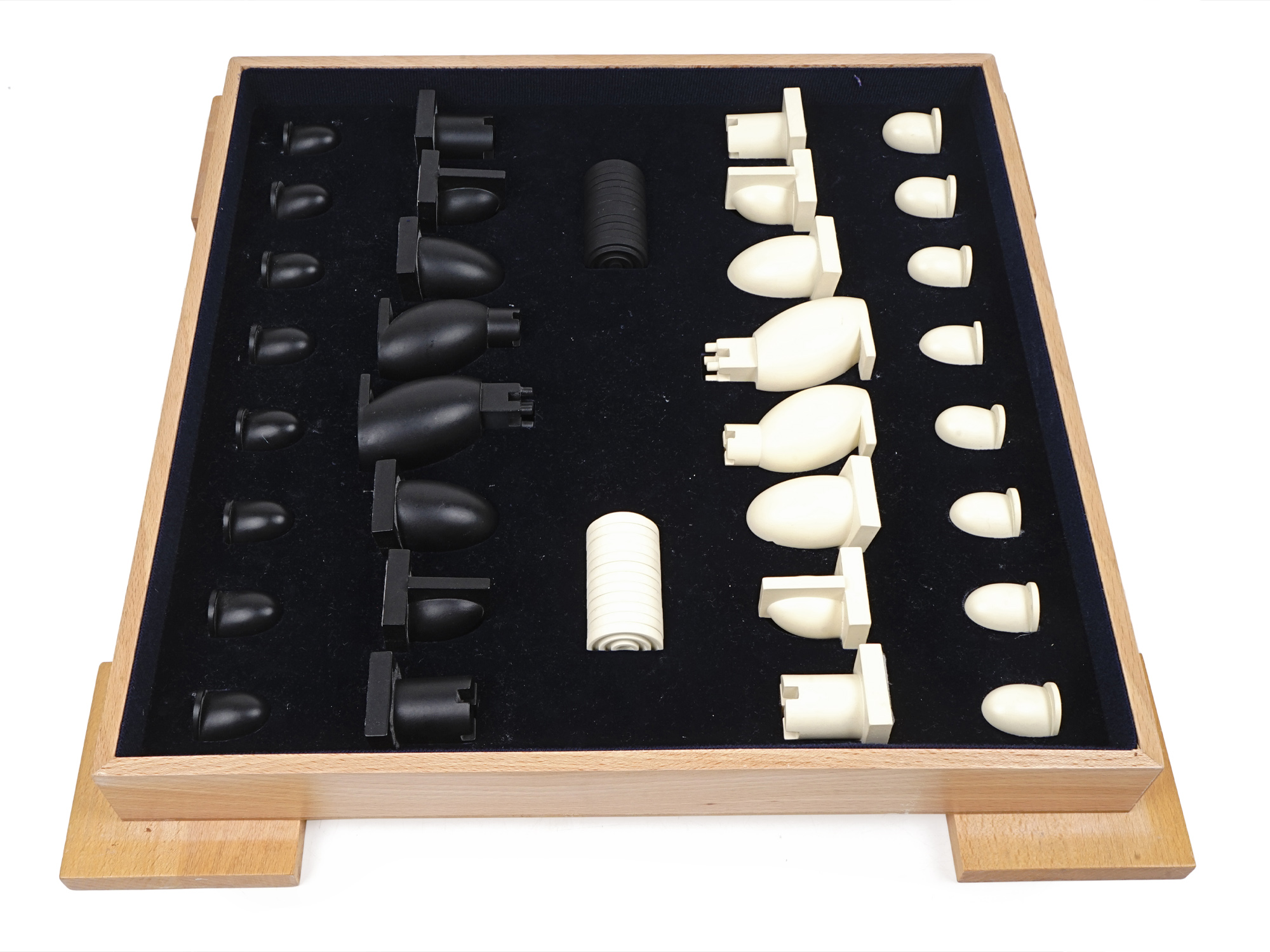
Designed by the celebrated postmodern architect and Memphis Group member. The 1990s version features a mosaic-inlaid maple board with resin pieces in faux ebony and faux ivory, each signed "Graves." Characteristically corpulent, egg-based shapes. A more accessible version was produced for Target stores in 2000 as part of Graves' pioneering mass-market design line. Embodied the playful eclecticism of postmodernism against the severity of modernism.
Postmodern corpulent geometryEgg-based formsMosaic-inlaid maple boardSigned “Graves” piecesBoard and piecesComplete set
Material Cluster
Ceramic & Porcelain
From the earliest intact Persian sets to Meissen court chess to contemporary ceramicists. Fire-transformed earth.
c. 12th Century
Persian Ceramic Chess Set
Unknown — Iranian potters
Glazed CeramicIslamic AbstractIran
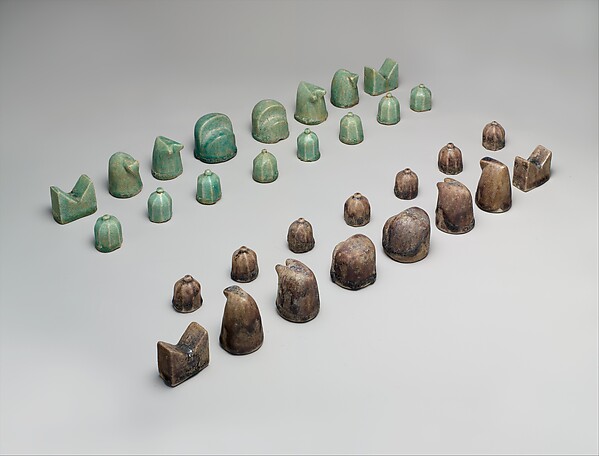
One of the earliest intact chess sets in the world. Glazed ceramic pieces with abstracted forms following Islamic aniconic traditions — each piece represents a familiar cultural figure through geometric suggestion rather than figural depiction. The bishop/elephant features hinted-at protruding tusks. A key artifact showing how Islamic culture adapted Indian chess forms into its own aesthetic vocabulary.
Chess set, Metropolitan MuseumRook piece, MetBishop piece, MetKing piece, Met
1717–1930s
Meissen Porcelain Chess Sets
Meissen Manufactory — various designers including J.J. Kändler and Max Esser
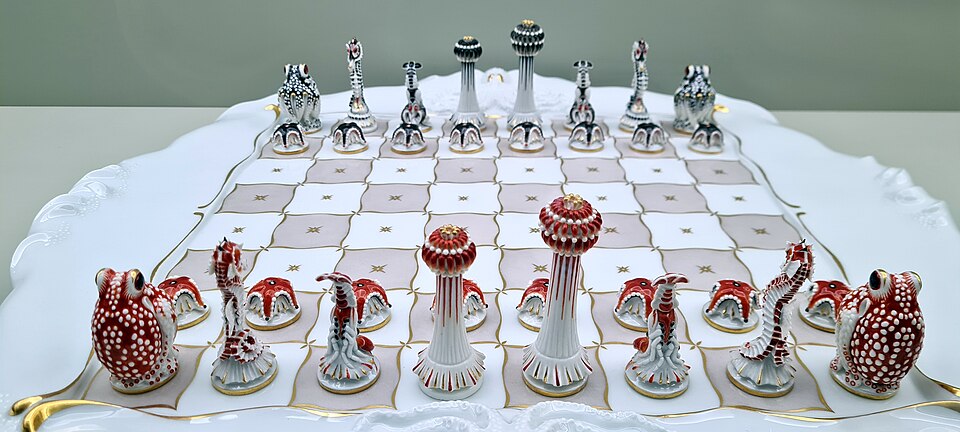
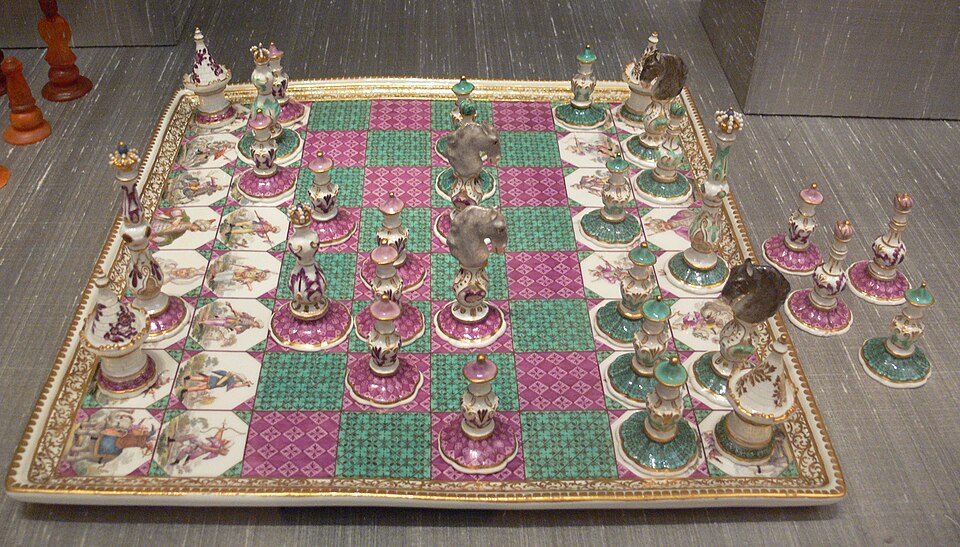
Chess sets have been produced at Meissen since the earliest days of the factory (from 1717), making them among the first porcelain chess pieces in Europe. Created for a court society that played chess with great gusto. The most coveted remain those by J.J. Kändler and successors. Max Esser designed an exquisite set transforming pearly Meissen porcelain into tiny sculptures of sea creatures, set on a board resembling ocean wave foam. Modern re-editions pit dark matt Böttger Stoneware against gleaming white porcelain — "the very first material perfected at Meissen." One precious set was obtained from the Munich Residenz for the electoral court.
Max Esser's “Seetiere” marine setKändler chess board, Bayerisches Nationalmuseum
c. 1780s–1900s
Wedgwood & British Porcelain Chess
Wedgwood, Royal Doulton, and other British potteries
Jasperware / PorcelainNeoclassicalEngland
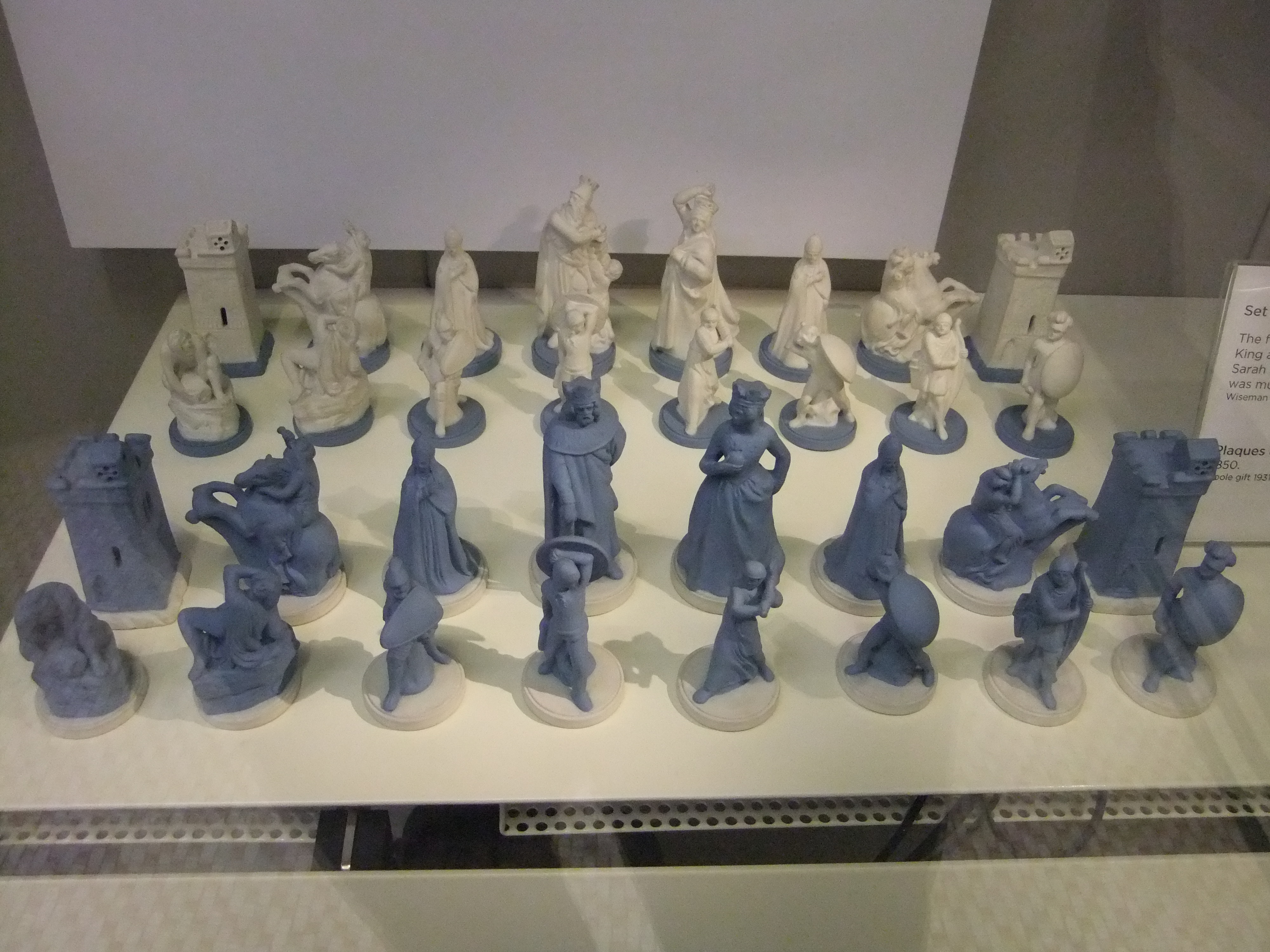
Practically every porcelain manufacture of renown produced chess sets as a matter of personal pride. Wedgwood's jasperware chess pieces in blue and white exemplify neoclassical refinement. European factories including Limoges, Herend, Meissen, Wedgwood, and Royal Doulton employed designers to create themed chess sets based on historical narratives and mythological stories.
Neoclassical blue & white
Material Cluster
Metal
Silver and gold, bronze and steel. From Dali's cast fingers to Zaha Hadid's architectural towers. Metal as permanence, metal as luxury.
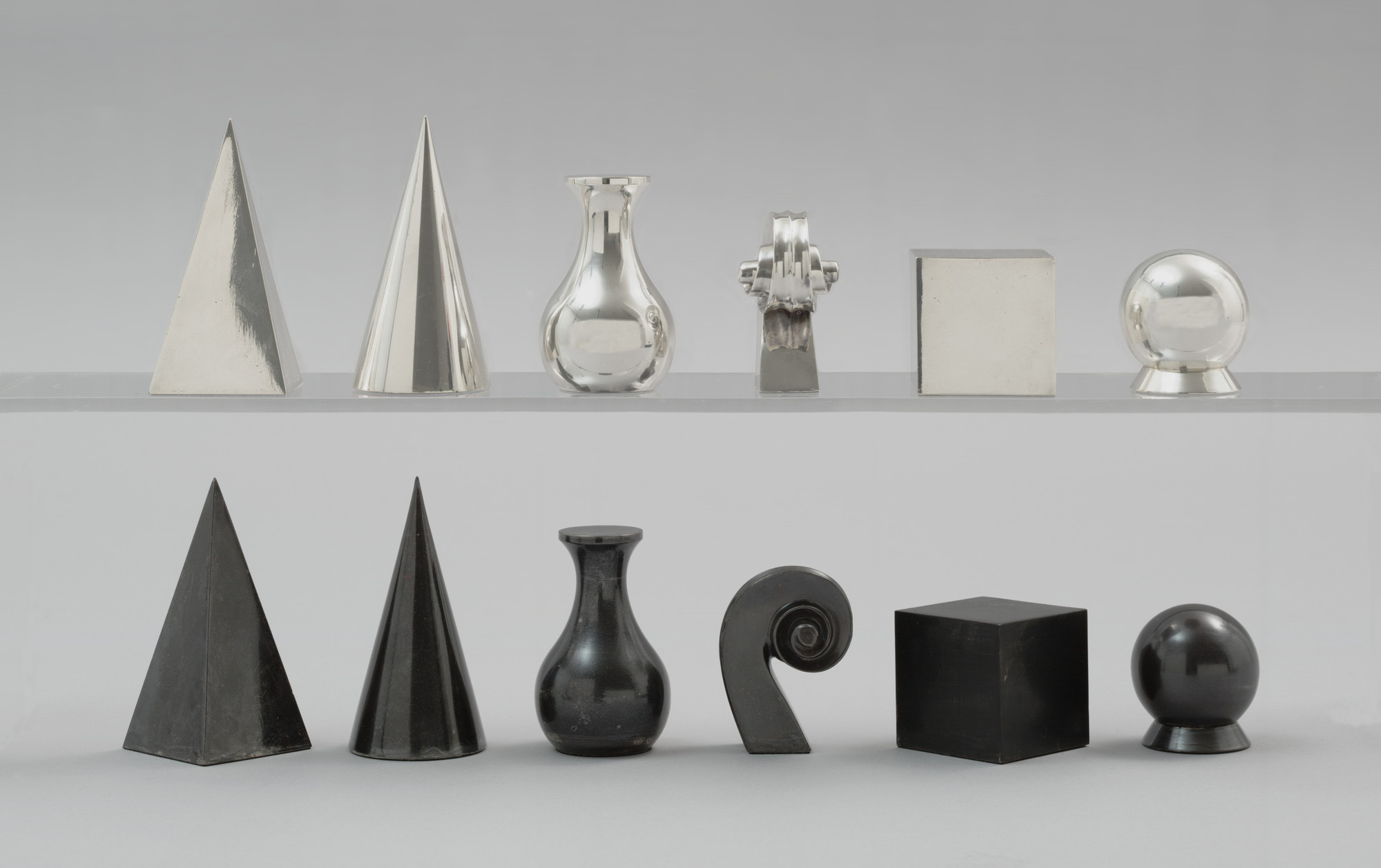
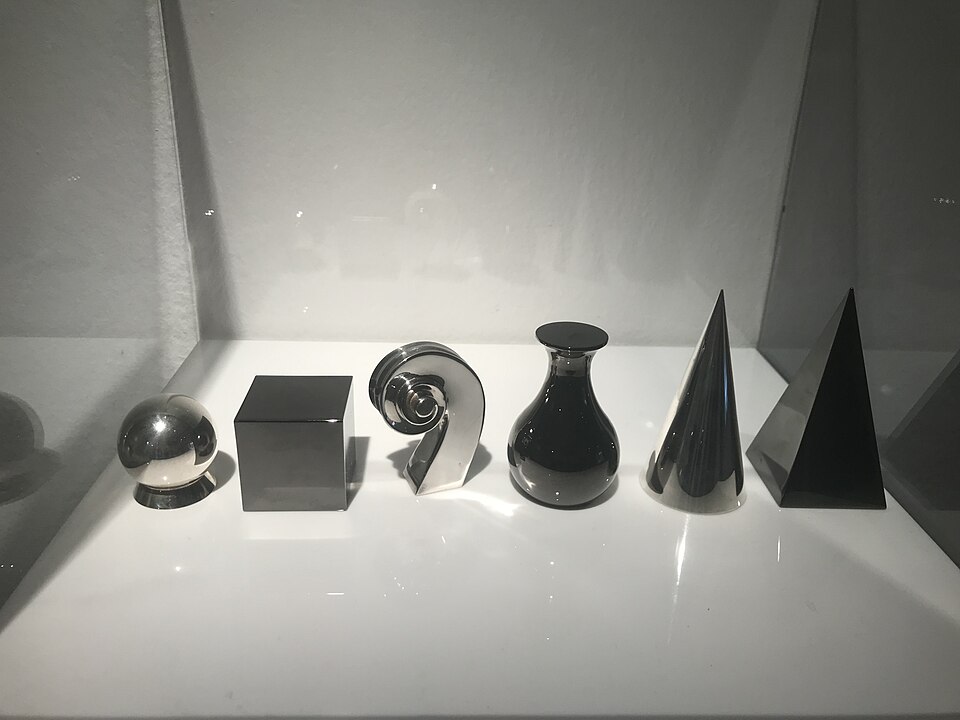
The first modern chess set composed entirely of abstract geometric forms inspired by found objects from Man Ray's studio. The king is an Egyptian pyramid; the queen, a cone; the rook, a cube; the bishop, a flask/bottle; the knight, a violin scroll (referencing his famous Le Violon d'Ingres); the pawn, an elegant sphere. Created in the context of his deep friendship with Marcel Duchamp. A silver and gold version was sold to the Maharajah of Indore in 1926. In the collection of MoMA (silver-plated brass version).
Silver-plated brass, MoMA collectionWood version
c. 1944
Alexander Calder Chess Set
Alexander Calder
Painted Wood & MetalModernism / SculptureImagery of Chess Exhibition
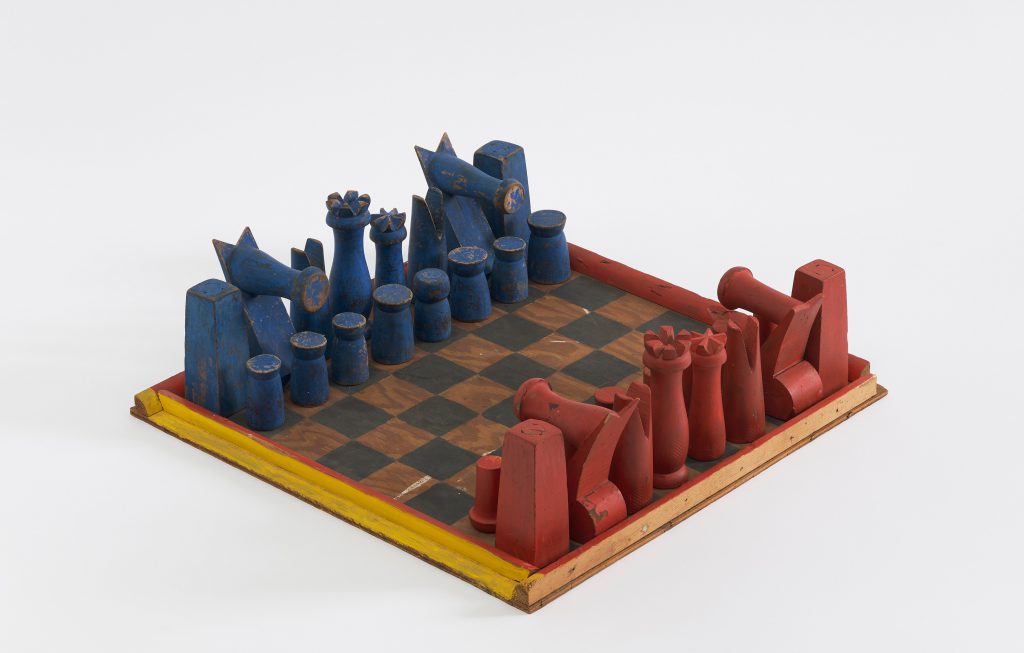
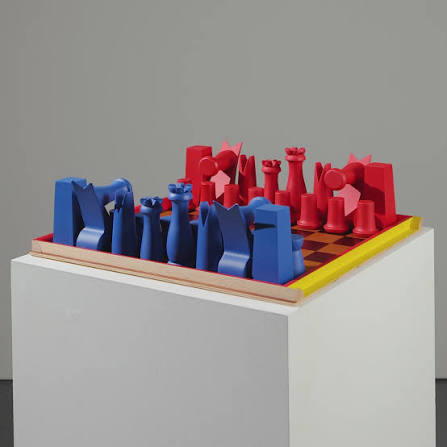
Created for the 1944 "Imagery of Chess" exhibition. Calder exhibited two chess sets made of painted wood. His design breaks with convention: the queen is larger than the king (reflecting matriarchal values); the color scheme uses red and blue instead of black and white, rejecting binary opposition. Of three sets designed in the 1940s, this was the one he kept for personal use at his Roxbury, Connecticut home. In the 2020s, Cahiers d'Art and the Calder Foundation produced a collector's edition of 750 sets using 3D scans of the original handmade pieces.
Red & blue, queen larger than kingHandcrafted wire and wood
1964–1968
Salvador Dalí “Fingers” Chess Set
Salvador Dalí
Sterling Silver & GoldSurrealismCast Body Parts
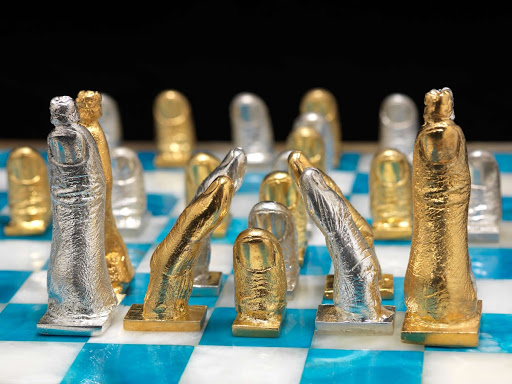
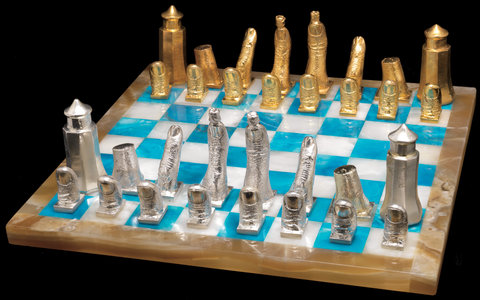
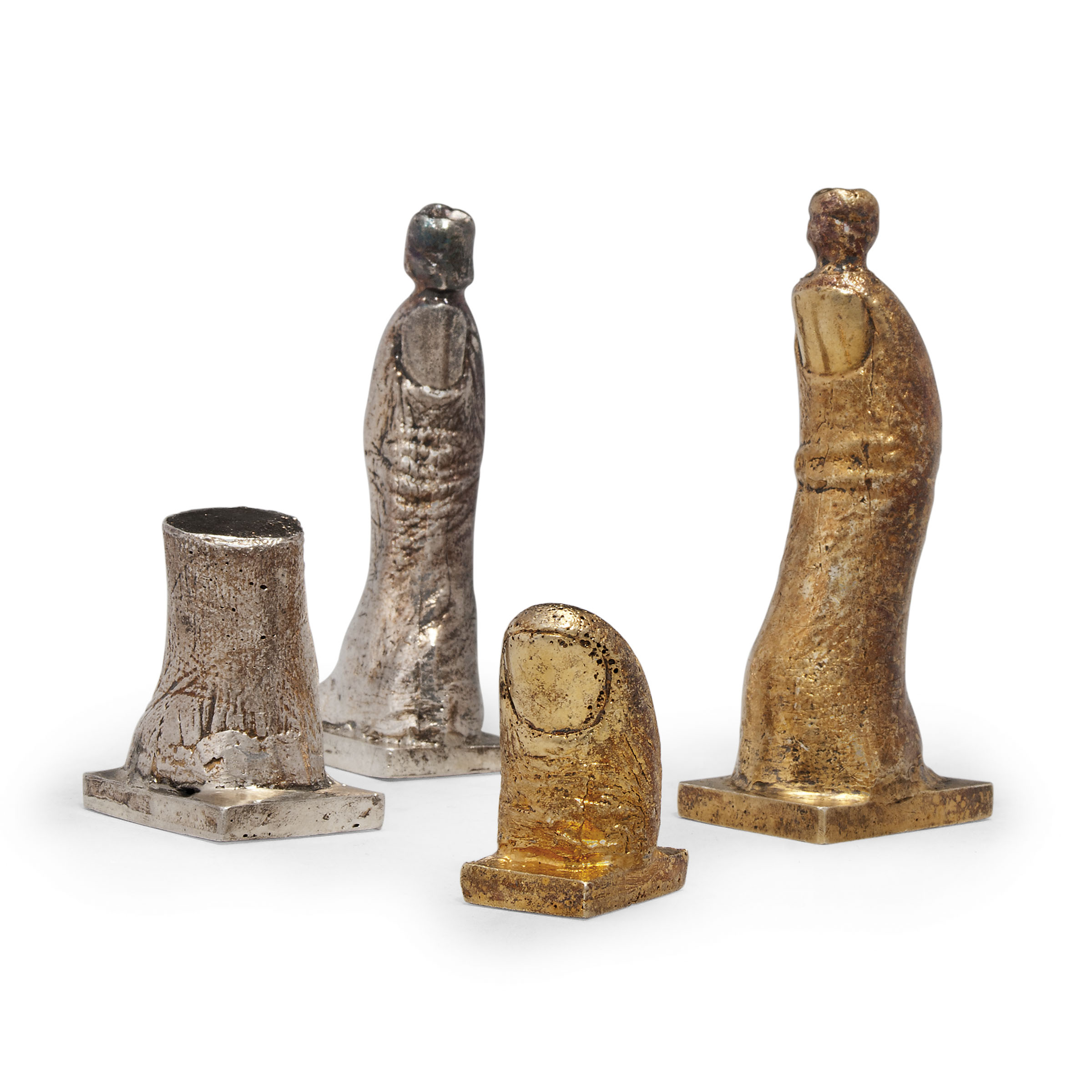
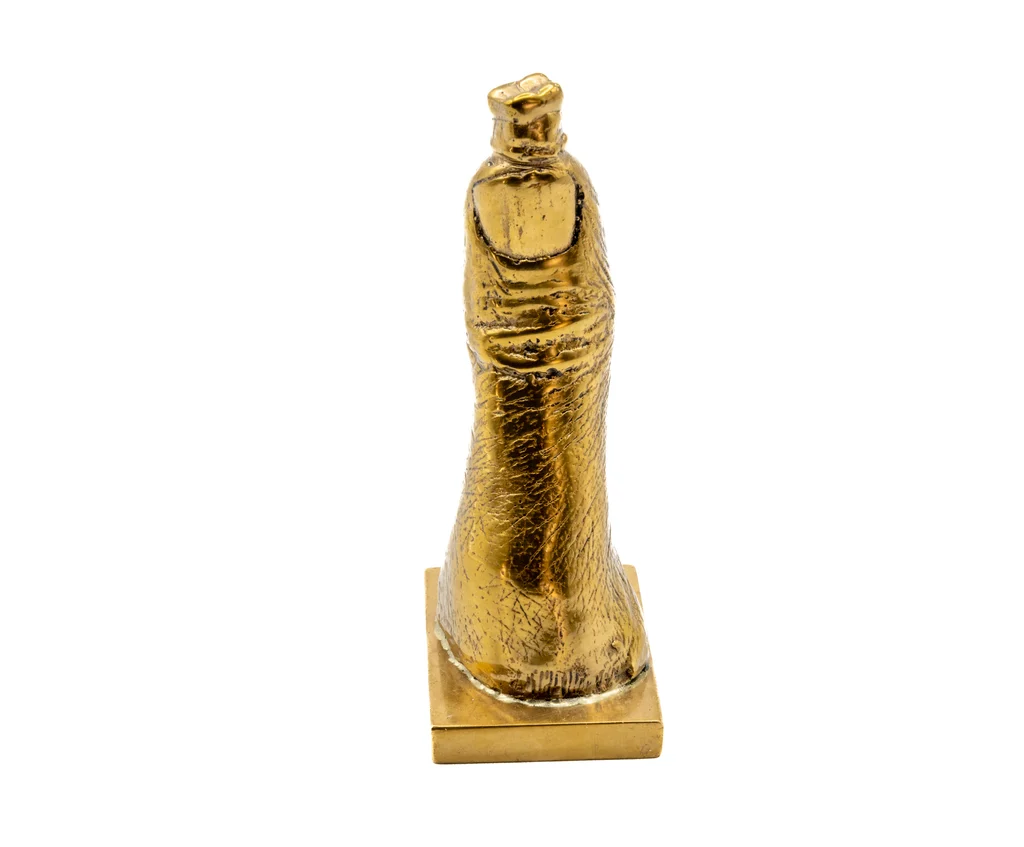
Created at Marcel Duchamp's invitation for the American Chess Foundation. Most pieces are cast from Dalí's own fingers: pawns from the upper thumb, knights from the lower thumb, bishops from his pinkie. The king is Dalí's entire thumb; the queen is cast from wife Gala's thumb. Both are crowned with a cast of Dalí's baby tooth. Rooks are cast from salt and pepper shakers from the St. Regis Hotel in New York, topped with a mold of Dalí's nipple. Recast in silver and gold by F.J. Cooper Jewelers, Philadelphia. Only 13 sets known to exist. At the Salvador Dalí Museum (St. Petersburg, FL) and Montreal Museum of Art.
Silver & gold cast fingers, 1 of 13Complete set on boardCast finger pieces detailIndividual piece close-up
1972
Fischer-Spassky World Championship Set
Jaques of London (model #50040)
Boxwood & EbonyLead-WeightedCold War IconReykjavík
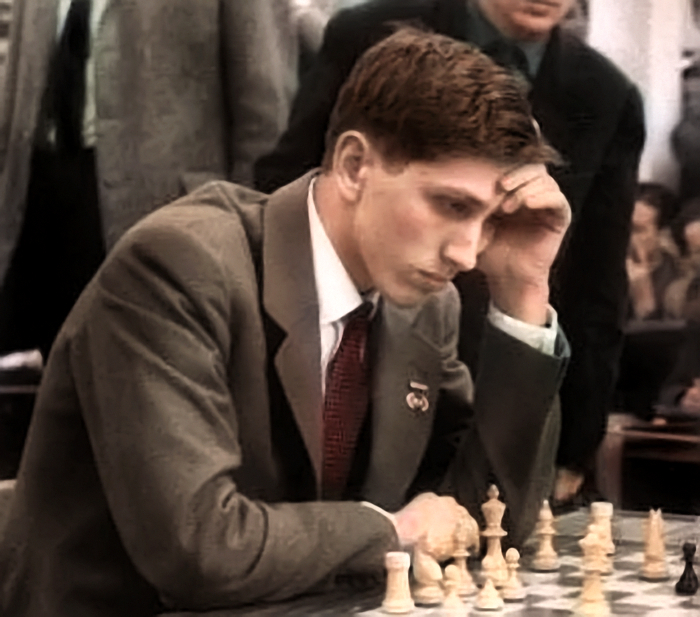
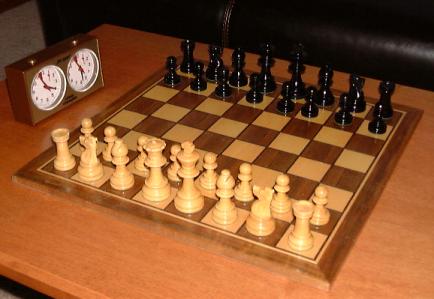
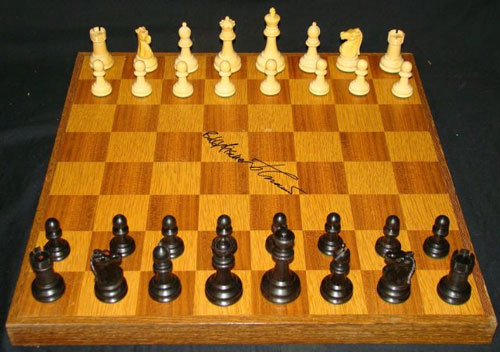
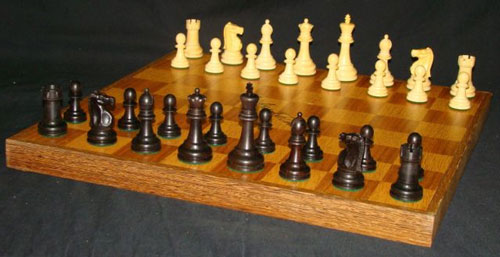
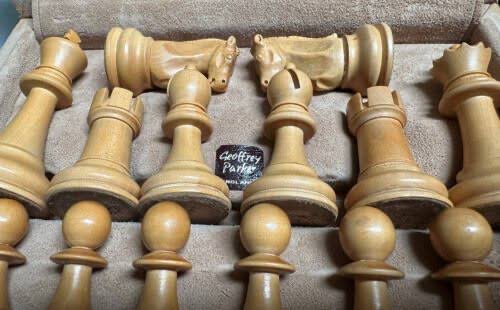
The chess set used in the "Match of the Century" between Bobby Fischer and Boris Spassky in Reykjavík. A refined Staunton-pattern set from Jaques of London, heavily weighted, with the king standing 3.75 inches tall. The board by Geoffrey Parker Games featured distinctive green and white squares. Two sets were used during the match; one sold for $76,275 at auction. The match elevated chess to global cultural prominence during the Cold War.
Bobby Fischer, 1972Fischer at the board, 1960Tournament Staunton setThe championship setMatch pieces detailJaques of London model #50040
2003
Damien Hirst — Mental Escapology
Damien Hirst — for RS&A “The Art of Chess”
Glass / Crystal / Medicine BottlesContemporary ArtArt of Chess Exhibition
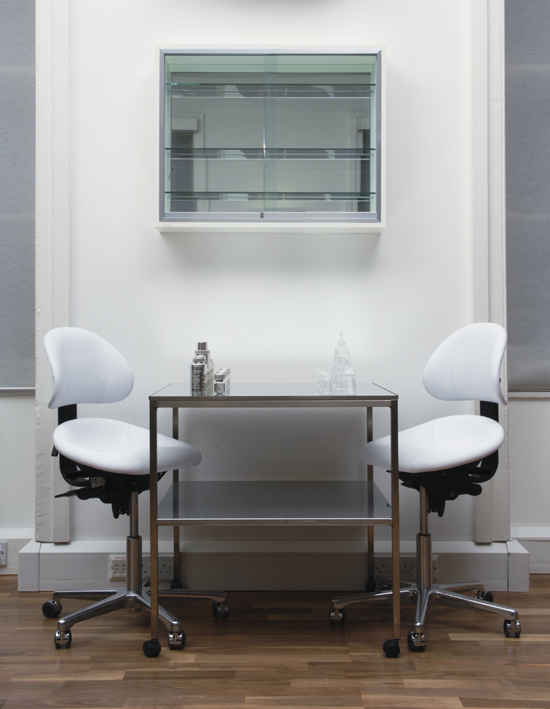
Pieces made from medicine bottles and pharmaceutical packaging, reflecting Hirst's obsession with pharmacology and mortality. Created for RS&A Ltd's "The Art of Chess" exhibition, inspired by Duchamp's 1944 show. 16 contemporary artists each created a unique chess set. Hirst's set sold at auction for £112,500. All 16 sets were displayed together at the Saatchi Gallery.
Pharmacy as chessMedicine bottle pieces
2012
Official FIDE World Championship Set
Daniel Weil / Pentagram — for World Chess
BoxwoodDGT ElectronicFIDE Official
Designed in 2012 by Daniel Weil of Pentagram for World Chess. Draws inspiration from classical Greek architecture while remaining rooted in the Staunton style. Magnus Carlsen, Vladimir Kramnik, and other chess stars tested numerous versions for ergonomic comfort. Premiered at the Candidates Tournament in London 2013, then used when Carlsen defeated Anand to become World Champion in Chennai. Now the standard for all official FIDE Championship matches.
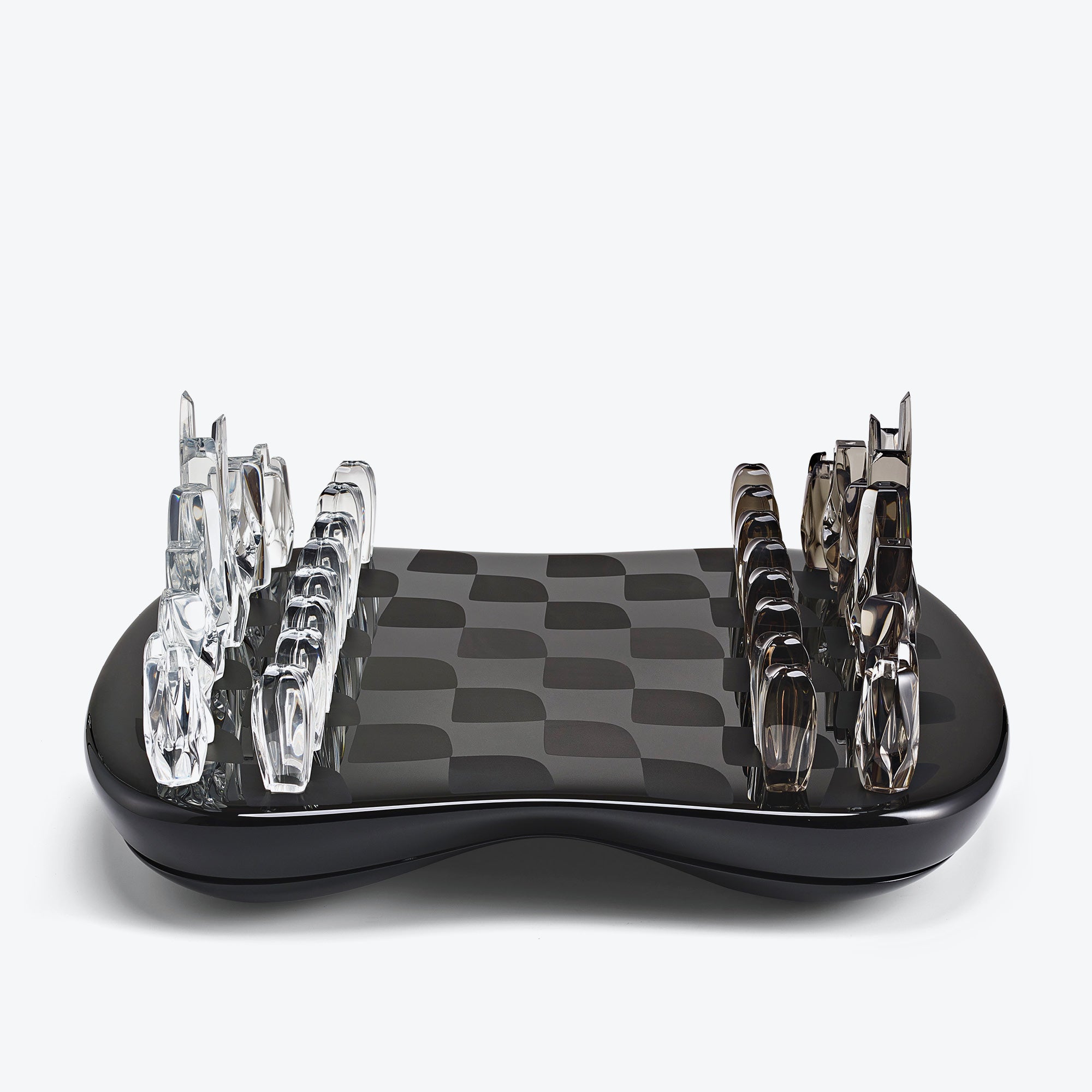
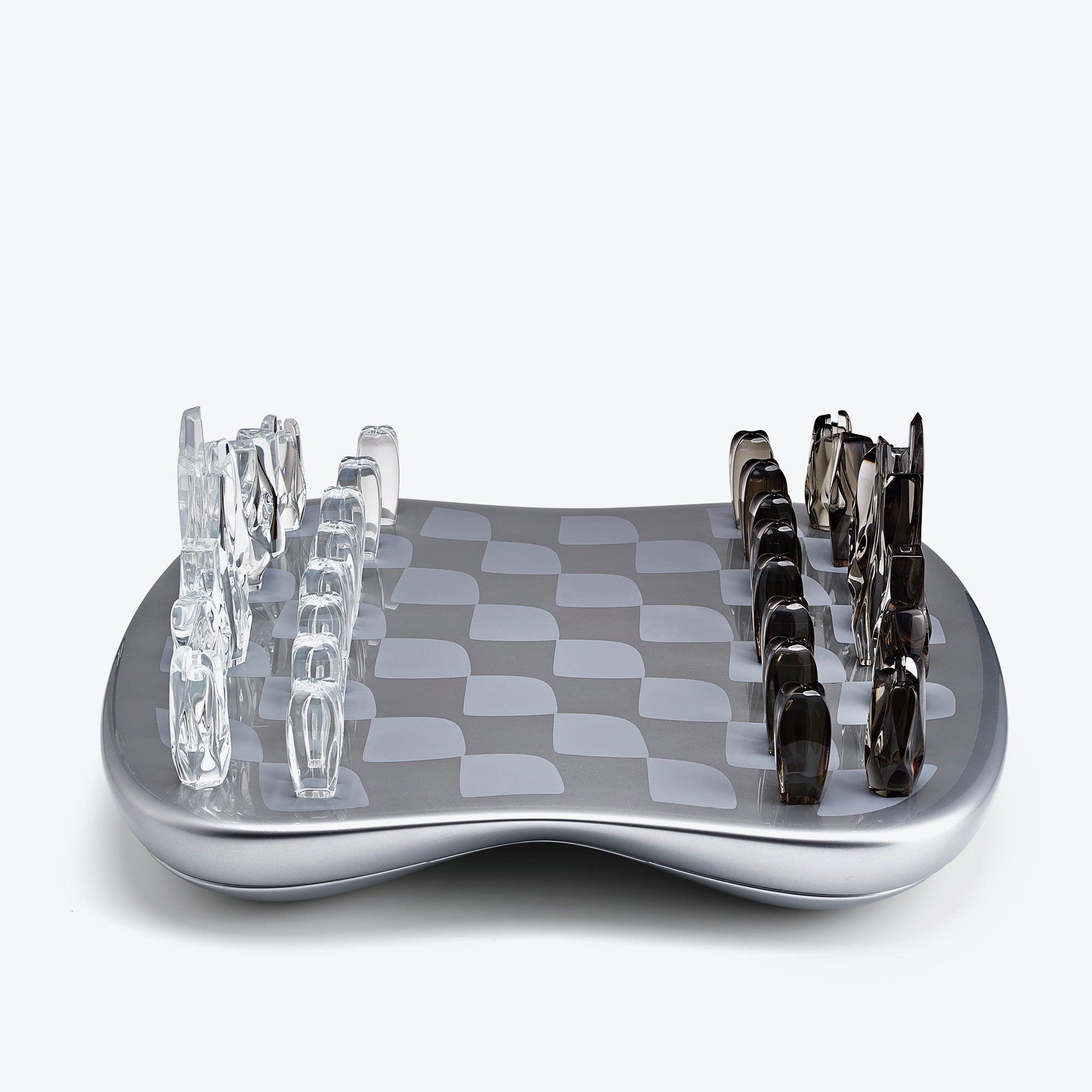
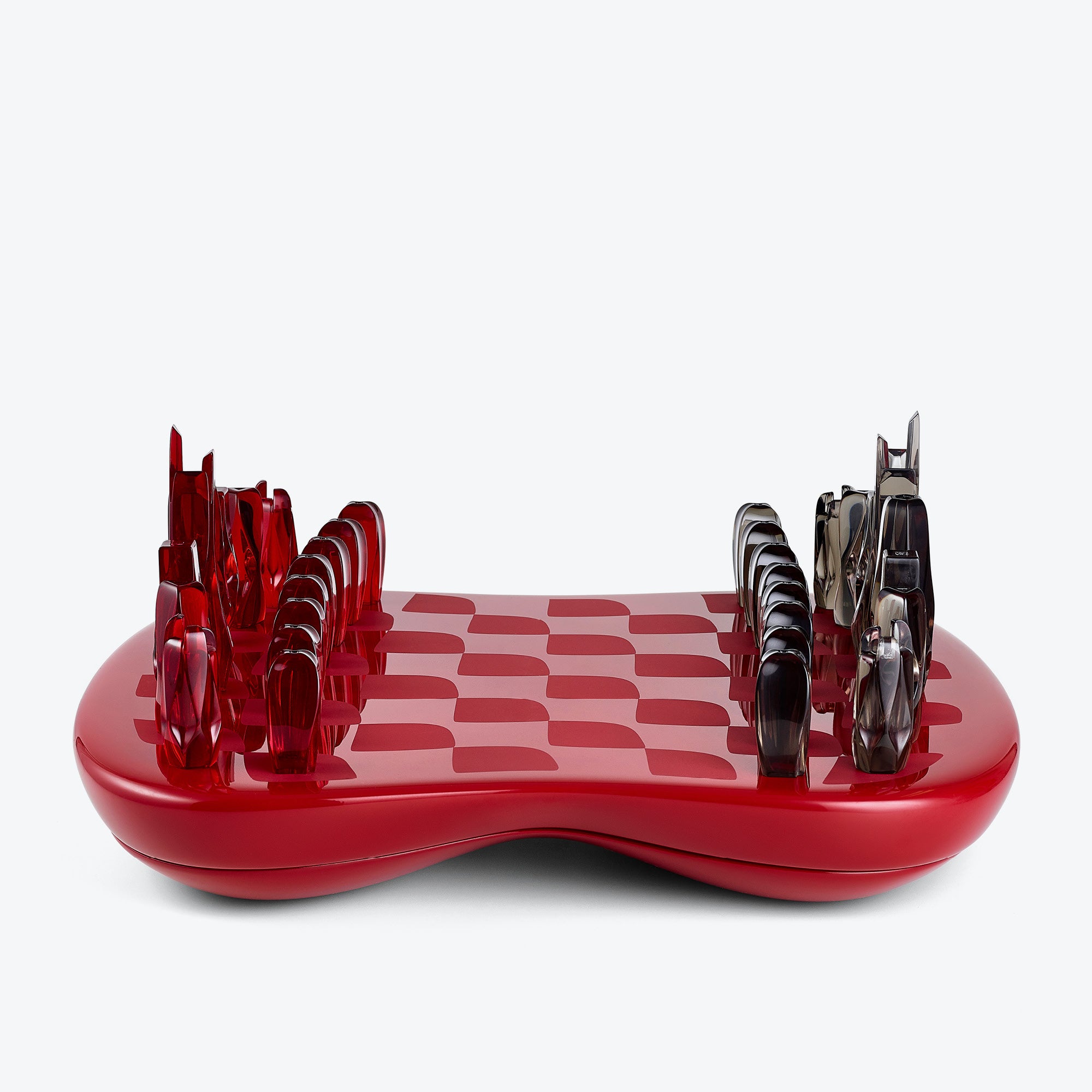
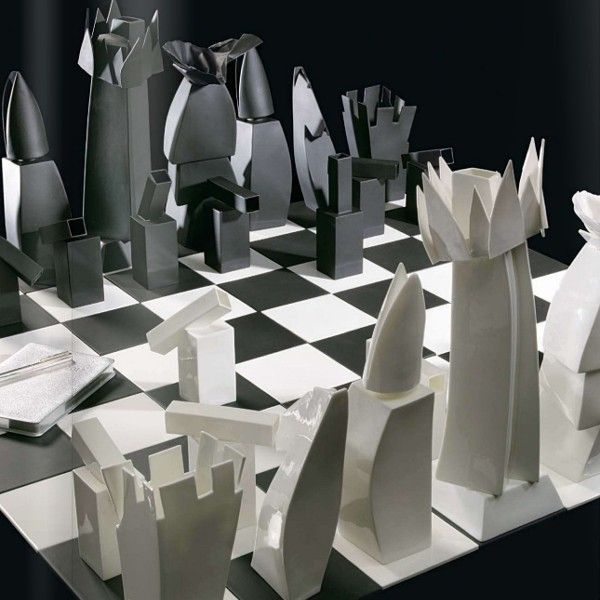
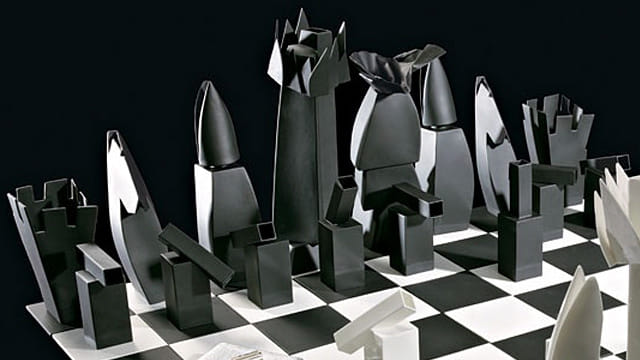
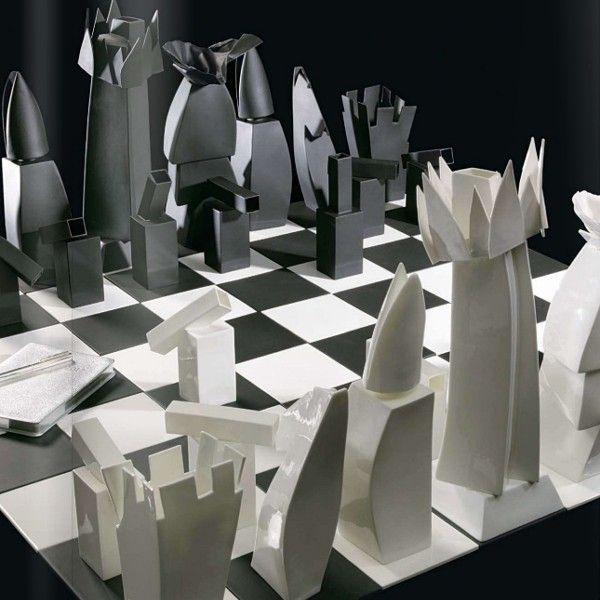
Pieces inspired by the conceptual experimentation of Zaha Hadid. Designed to look like towers — viewed as a whole, the board becomes a cityscape. Carved in resin with highly polished finish; the board is lacquered and polished with silk-screen printed grid. No 90-degree angles anywhere. Limited edition of 100 sets. The Silver edition retails at $15,819. A chess set as a parametric city.
Parametric cityscape, no right anglesSilver editionRed edition
2012
Frank Gehry Chess Set for Tiffany & Co.
Frank Gehry
Fine Bone ChinaDeconstructivismTiffany & Co.
Commissioned by Tiffany & Co. Instead of buildings from his portfolio, Gehry designed pieces based on their role in the game — soft queen curves contrast the king's sharp angles; pawns are equipped with cannons. Made from fine bone china, available only as a special order from Tiffany for $25,000. A miniature architectural marvel that reads as a deconstructivist cityscape.
$25,000 deconstructivist setBone china piecesDeconstructivist formsArchitectural pieces
2016–present
Skyline Chess
Ian Flood & Chris Prosser
Stainless Steel / BronzeArchitectureLondon / New York / Dubai
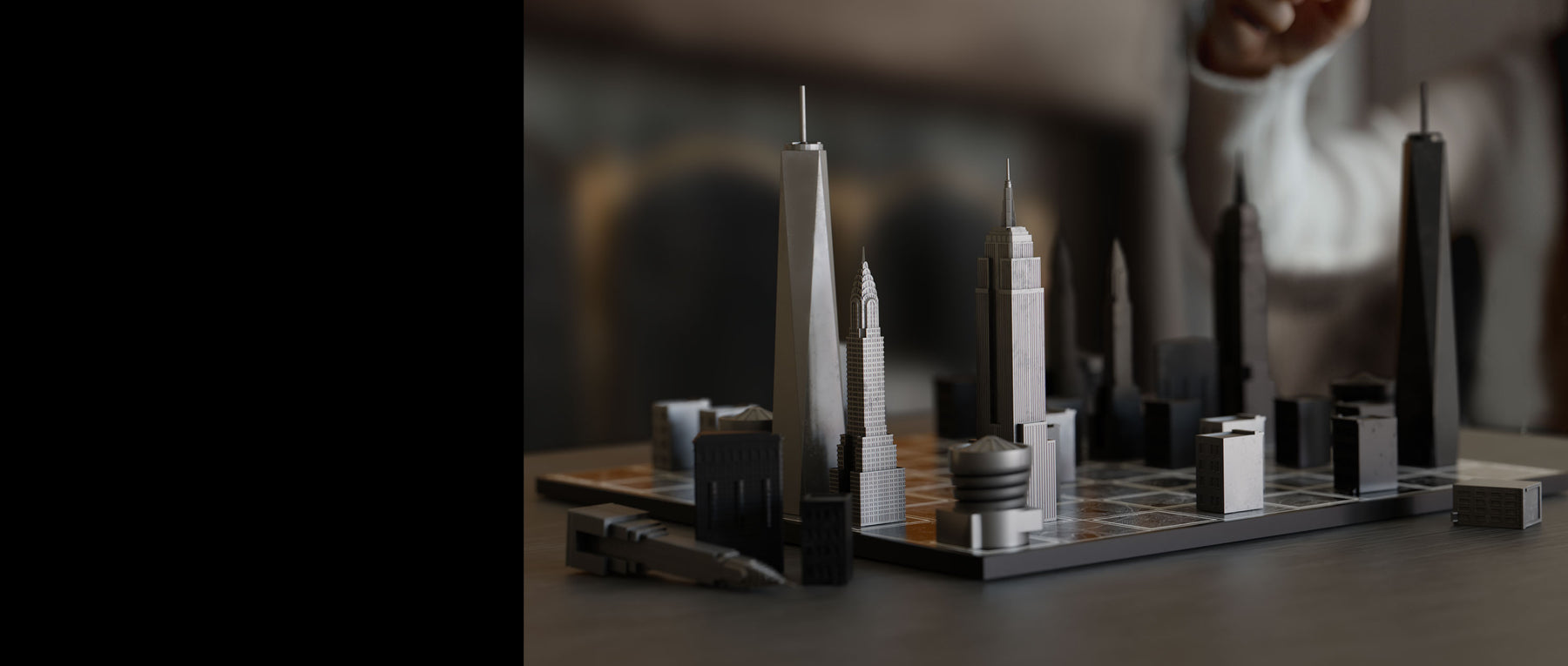
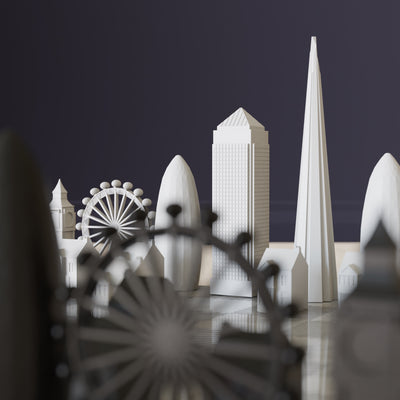
Founded by two London-based architectural designers who played chess in the evenings and imagined architectural skylines competing on the board. Each city edition uses famous building silhouettes as chess pieces: the Empire State Building as Queen, Chrysler Building as Bishop, Guggenheim as Rook, Flatiron as Knight. The London vs. New York edition pits Big Ben against One World Trade. Handcrafted in stainless steel, bronze, and marble. Now stocked at the Guggenheim, MoMA, the British National Gallery, and the Southbank Centre.
Architecture as chess piecesPremium metal & marble
Material Cluster
Crystal & Glass
Transparent. Refractive. From Venetian furnaces to Baccarat anniversaries. Chess as captured light.
1944
Isamu Noguchi Chess Set
Isamu Noguchi
PlexiglassModernism / SculptureImagery of Chess Exhibition
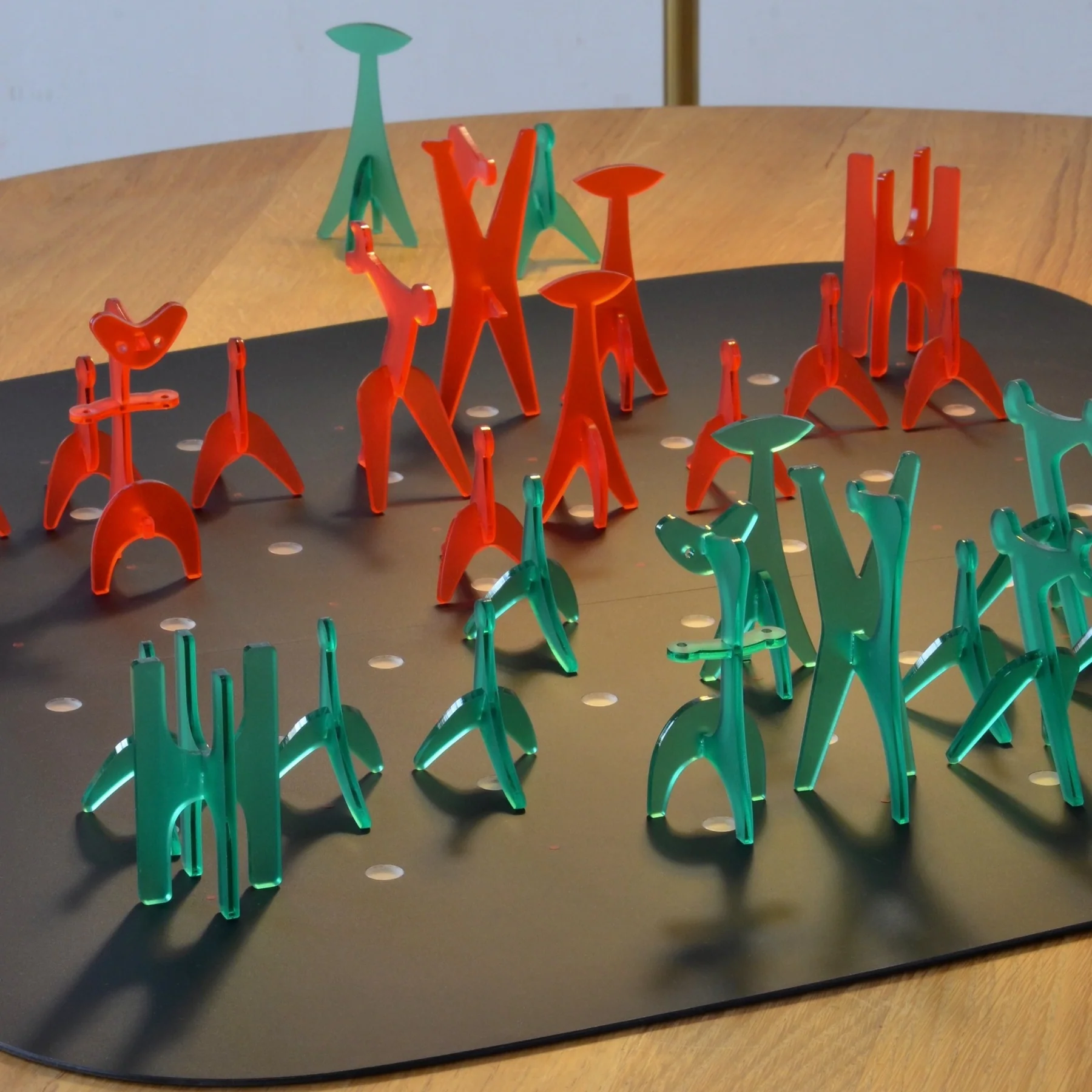
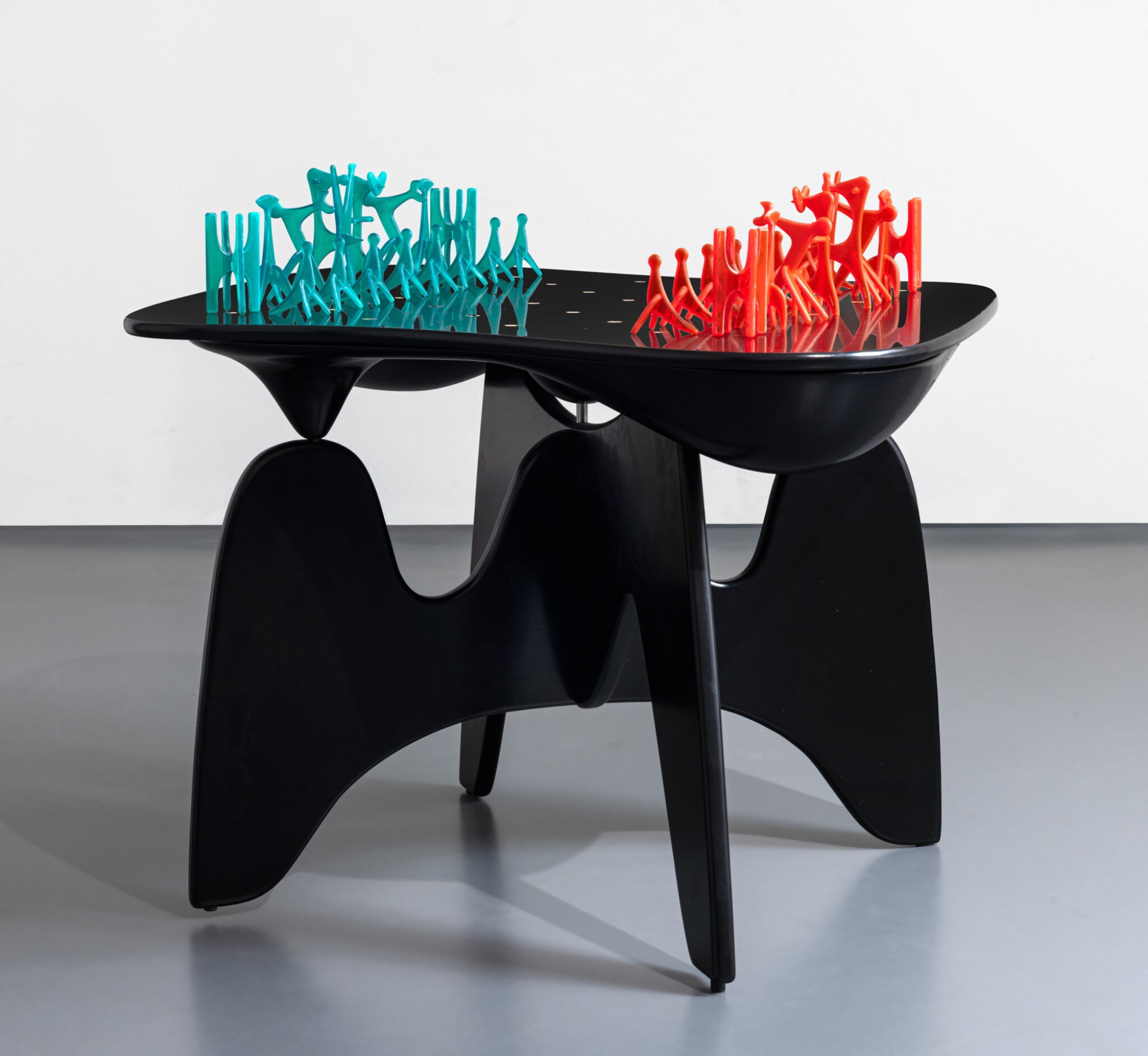
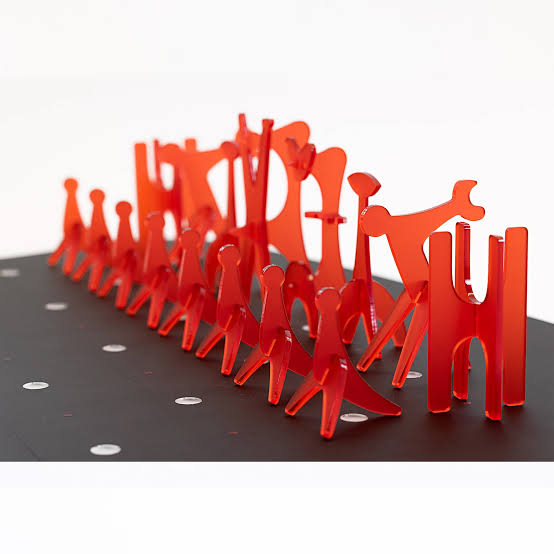
Created for the 1944 "Imagery of Chess" exhibition. Noguchi used Plexiglass — a new experimental wartime material developed for aircraft canopies — and devised an ingenious system of notching together thin contoured planes to create 3D forms with minimal material. Pieces are translucent red and green (echoing rubies and emeralds from Persian and Indian chess traditions) rather than black and white. The board features a black ebonized surface with circular white inlays instead of squares, inspired by Indian and Persian lacquered boards. The original pieces were lost; a replica debuted in 2005 at "Imagery of Chess Revisited." The Noguchi Museum later produced an authorized re-edition.
Red translucent, notched planesComplete set with boardChess table with circular inlaysInterlocking Lucite pieces
1984–2007
Swarovski Crystal Chess Set
Swarovski
Crystal GlassMinimalist LuxuryAustria
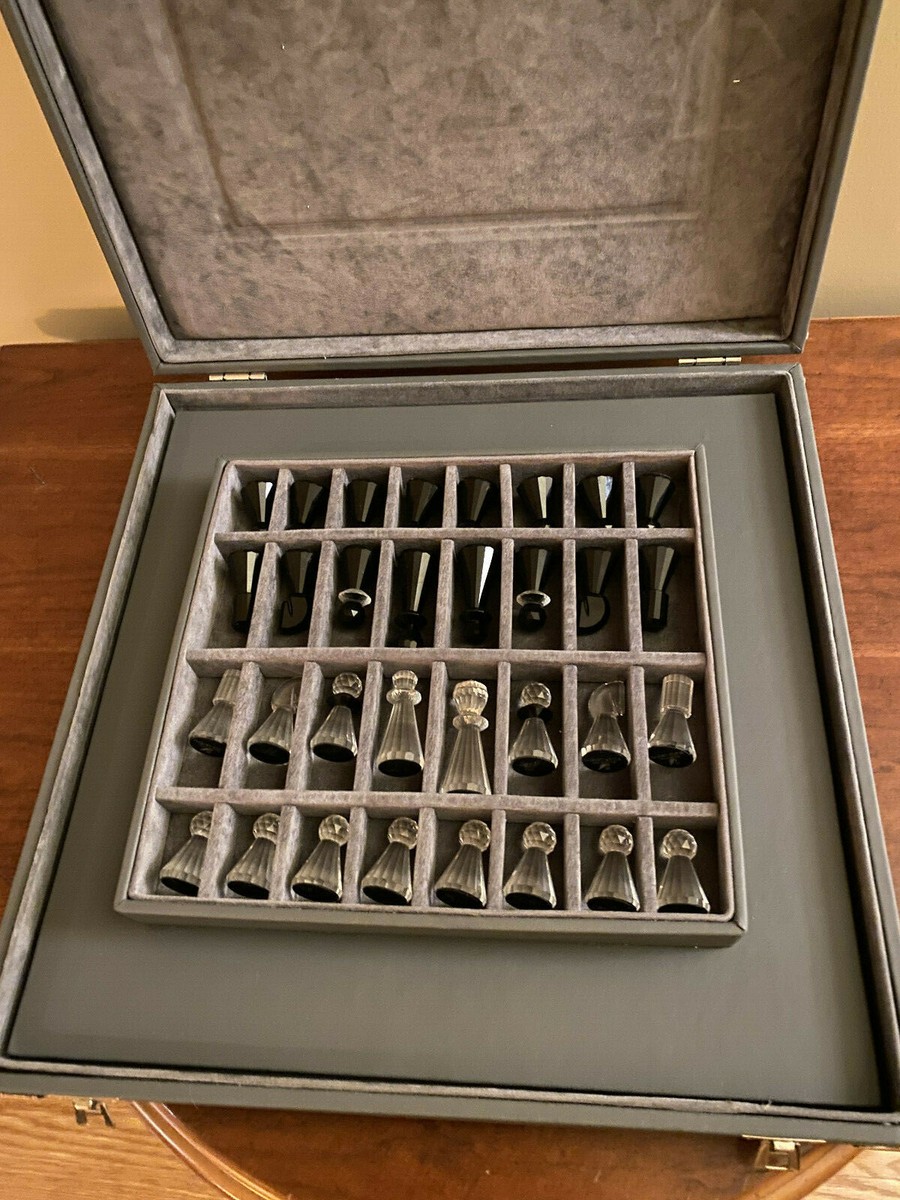
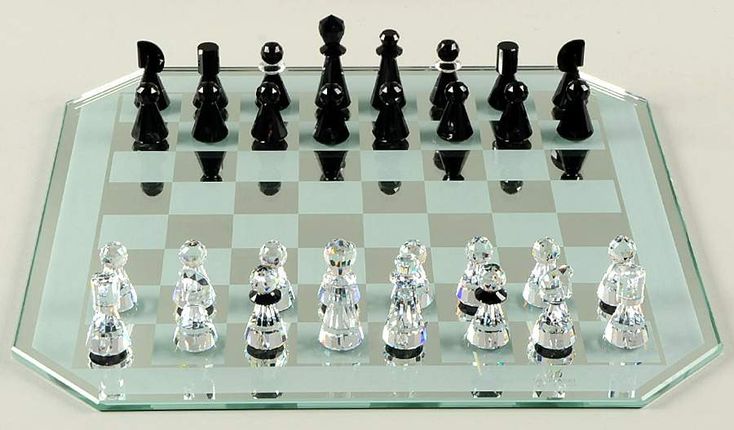
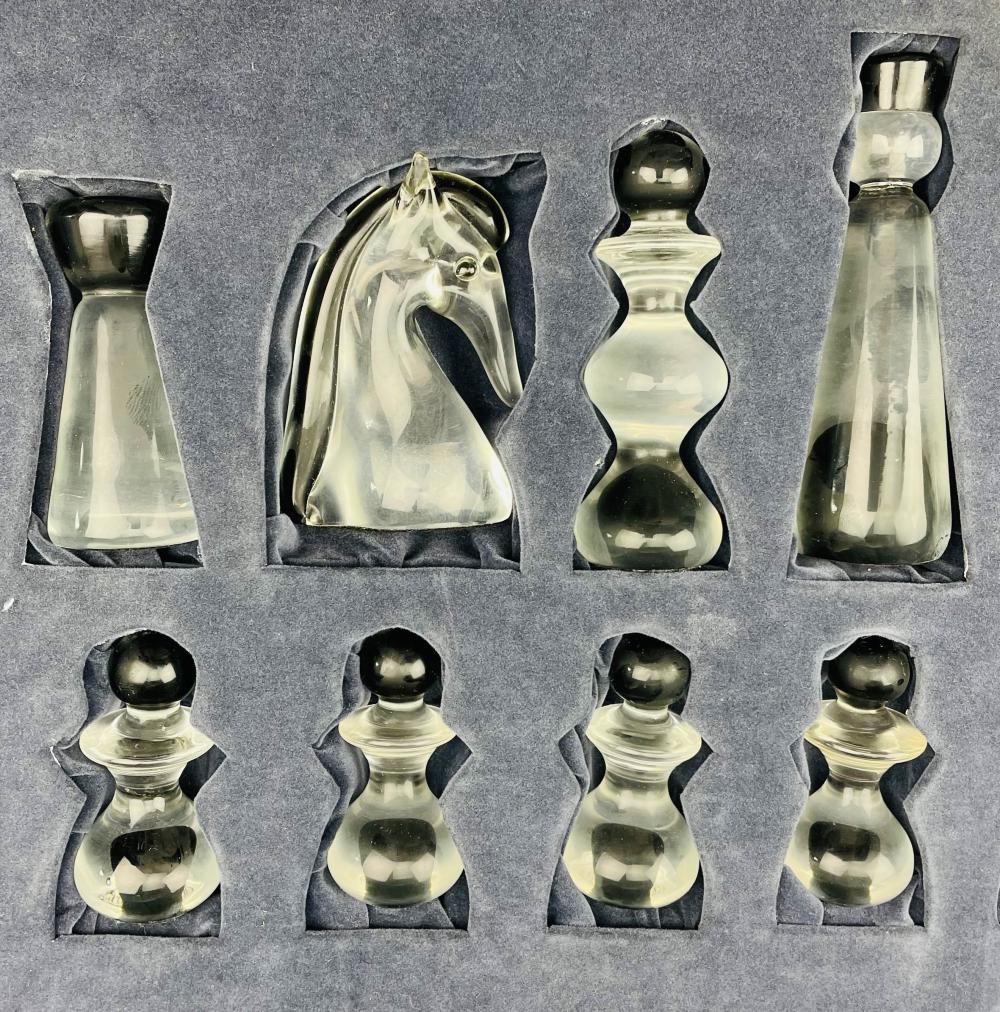
Manufactured from 1984 to 2007. Jet-black and transparent crystal pieces on a mirror-matte board — at once minimalist and extravagant. The pieces have felt bottoms for actual gameplay, though the mirror board and transparent material make distinguishing sides a genuine challenge. Strass crystal parts are glued together to form exquisite pictures of light and reflection. A chess set that is simultaneously functional and nearly impossible to play.
Crystal glass chess setCrystal pieces detail
1960s–present
Murano Glass Chess Sets
Venetian master glassblowers — including Gino Cenedese
Blown Glass24K Gold InfusionVenice, Italy
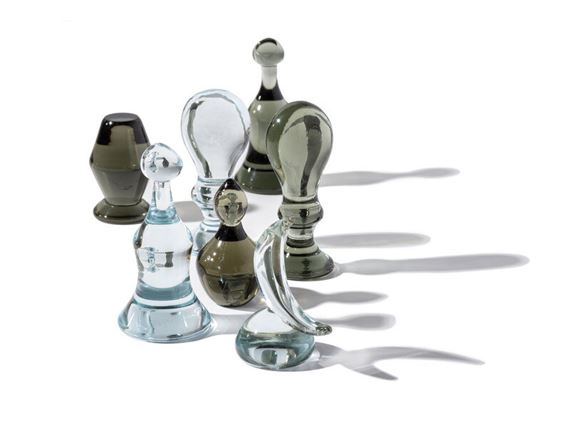
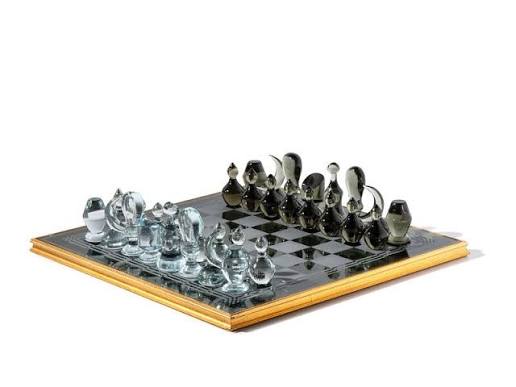
Handcrafted in the historic kilns of Murano, Venice, using centuries-old Venetian glassblowing techniques. Each piece is a blown glass sculpture infused with flecks of 24-karat gold. Available in classic black and white, rich amber, vibrant aquamarine, elegant pure white, and deep brown. Gino Cenedese produced an ultra-rare set in the 1960s. Each piece displays unparalleled attention to detail — no two are exactly alike. Certificates of authenticity accompany every set.
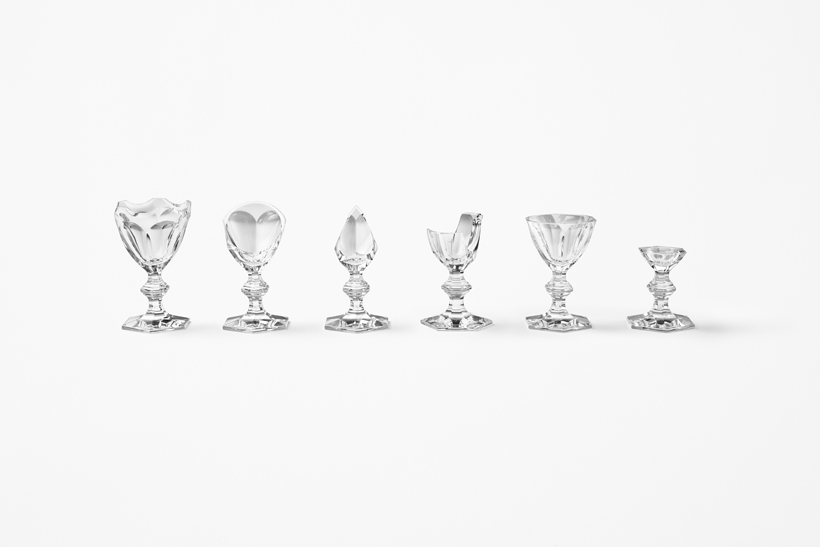
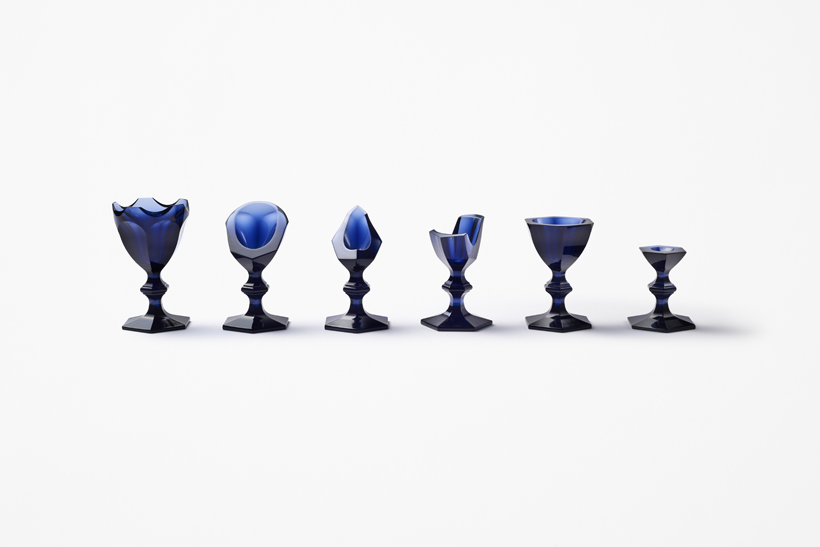
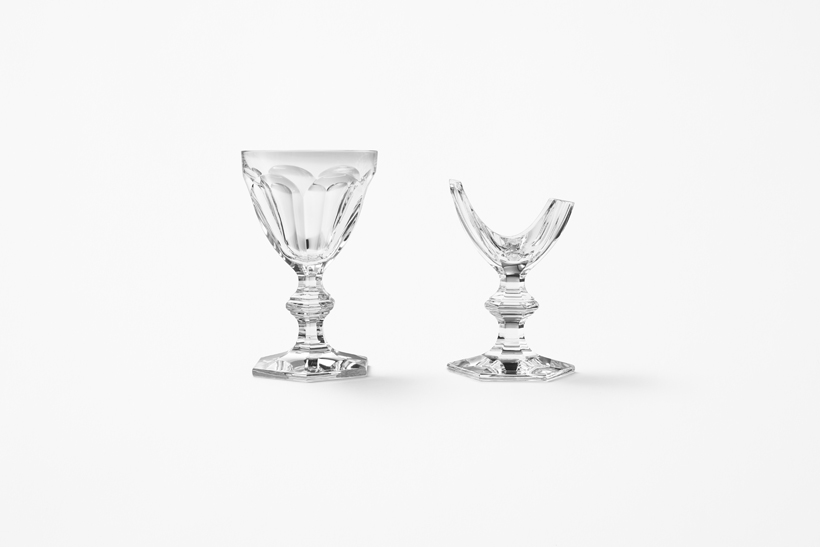
Created for Baccarat's 250th anniversary celebrations. 32 hand-cut crystal pieces in clear and midnight blue, shaped by isolating six distinct elements from the iconic Harcourt glass pattern — the king's crown, the hem of the queen's robes, the bishop's mitre. Each individual set requires over 200 hours of cutting alone. Only 50 sets were produced. An exercise in restraint: Nendo added nothing to Harcourt, only subtracted to reveal the chess piece within the wine glass.
200 hours of cutting per set, edition of 50Clear and midnight blue crystalHarcourt glass forms revealed
Material Cluster
Mixed & Conceptual
When the material is the message. All-white anti-war statements, polka-dot universes, dollhouse furniture, and the dissolution of the game itself.
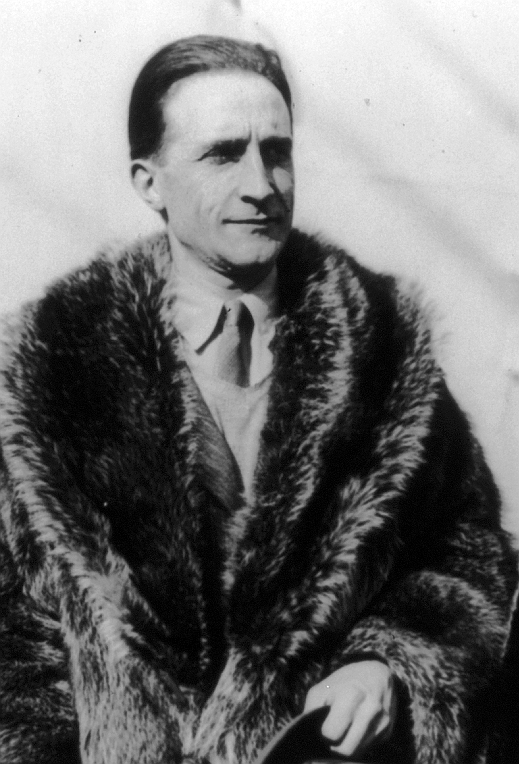
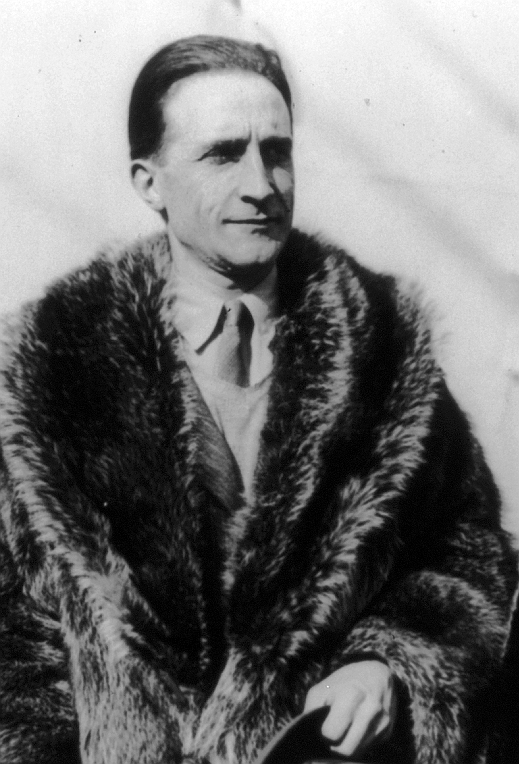
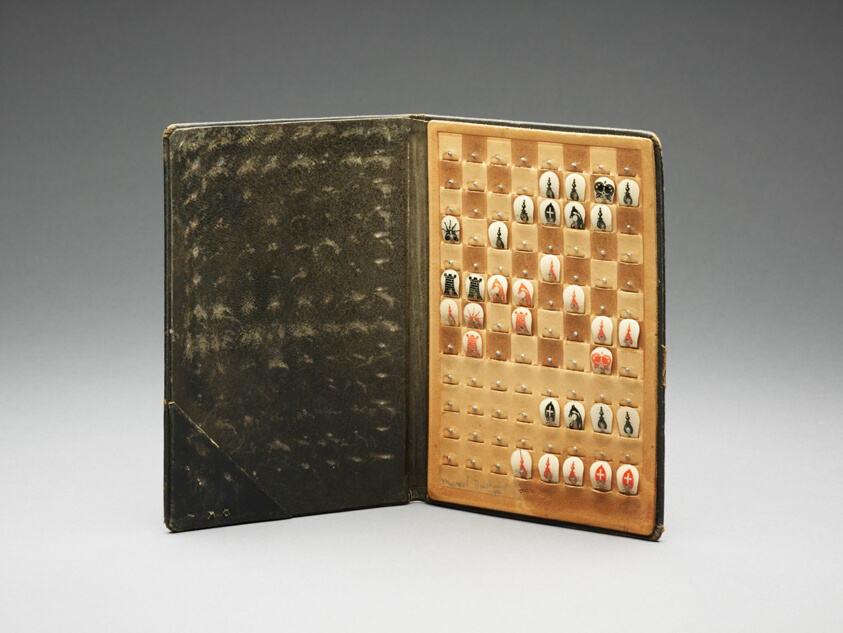
Created shortly after Duchamp fled wartime France to New York. A portable travel chess set: leather pocket chessboard, celluloid pieces, and small pins to hold pieces in place (magnetic technology was unavailable). Measures just 6.5 × 4.5 × 0.5 inches, housed in a black leather wallet. At least 25 were assembled in 1943–44. Duchamp planned to market them commercially and exhibited one (with an added rubber glove) at the 1944 "Imagery of Chess" exhibition he co-organized. Held at the Philadelphia Museum of Art, Yale University Art Gallery, and the Art Institute of Chicago.
Marcel Duchamp, chess devoteeDuchamp playing chessPocket chess set
1966
Yoko Ono — Play It By Trust
Yoko Ono
All WhiteFluxus / Conceptual ArtAnti-War Statement
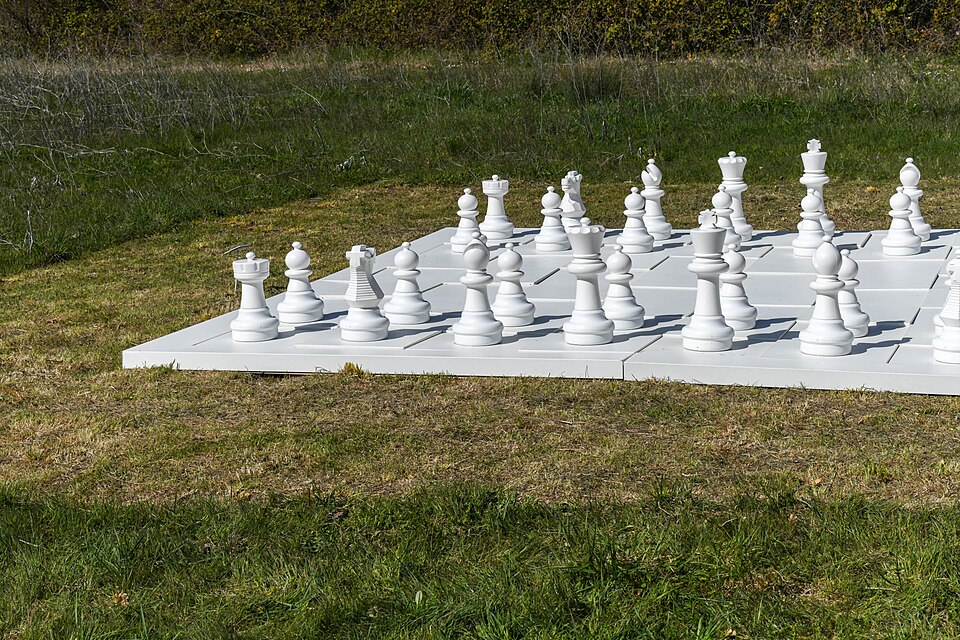
A conceptual artwork and anti-war statement. An entirely all-white chess set — white pieces, white board, white squares. As the game progresses, players lose track of which pieces belong to whom, making competitive play impossible. The title instructs players to "play it by trust." First exhibited at the Indica Gallery, London, 1966. Ono: "Life is not all black and white — you don't know what is yours and what is theirs." A metaphor for the futility of war and the unity of humanity. Held at M+ Museum (Hong Kong), Ludwig Museum (Budapest).
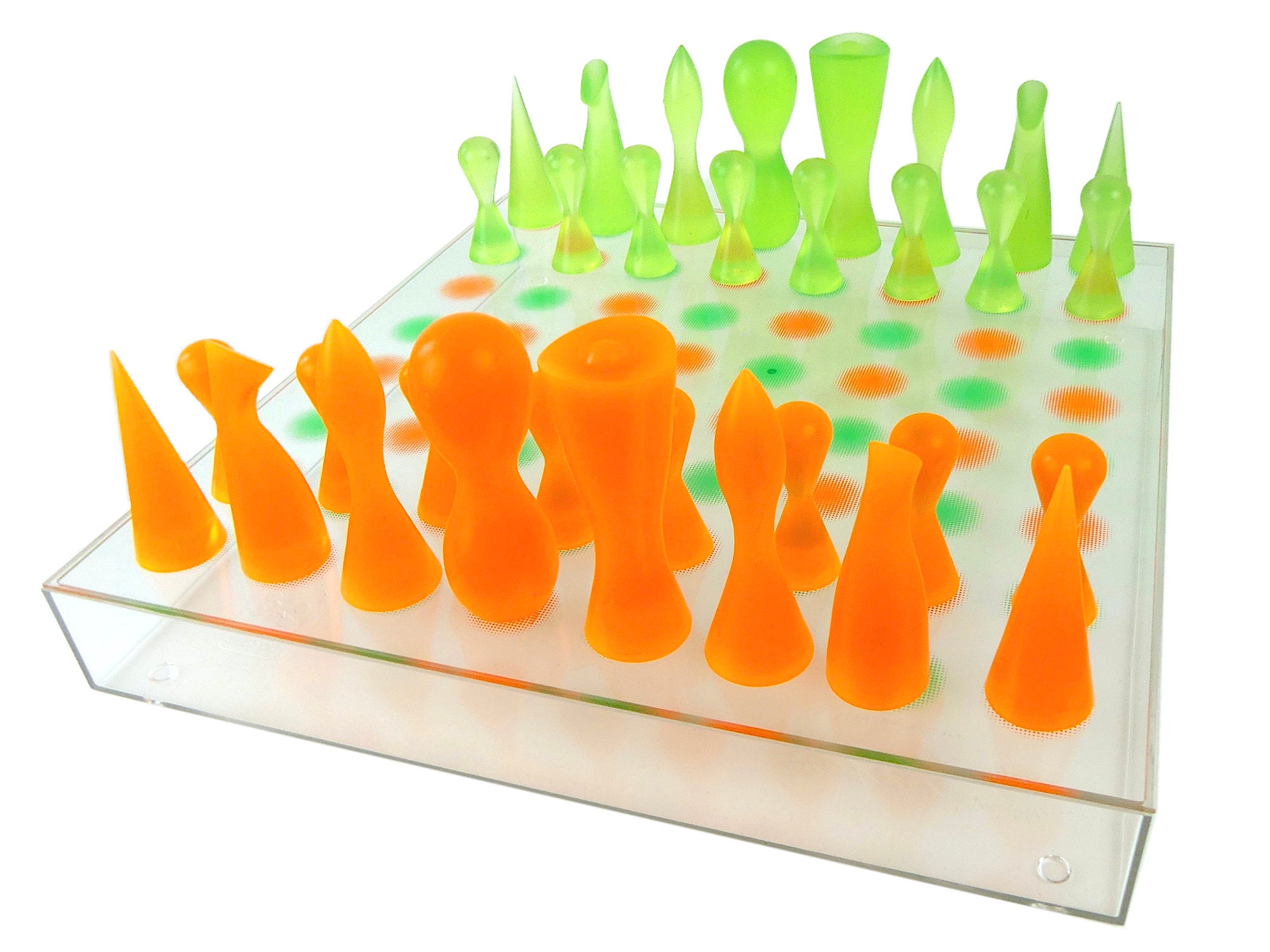
A Y2K-era futurist chess set made from translucent, flexible thermoplastic rubber. Pieces are Rashid's signature "blobject" curvilinear forms — soft, luminescent, and pleasant to the touch. The board is clear acrylic with silk-screened mottled circles replacing traditional squares. Available in orange/green and black/white. Stores flat inside the acrylic board. The intersection of industrial design, pop culture, and game design at the turn of the millennium.
Translucent rubber, stores flatBlobject curvilinear forms
2003
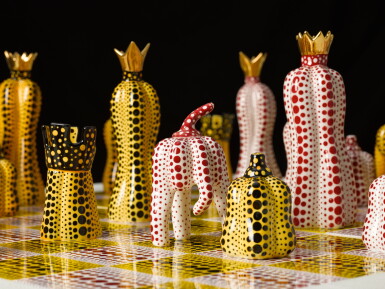
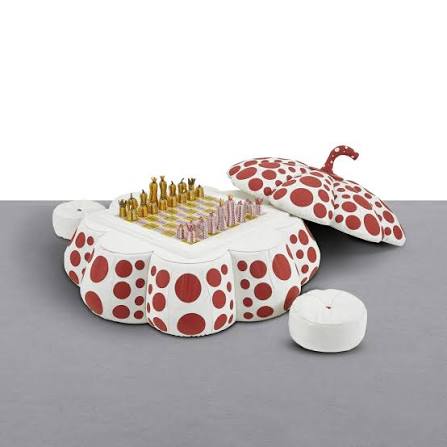
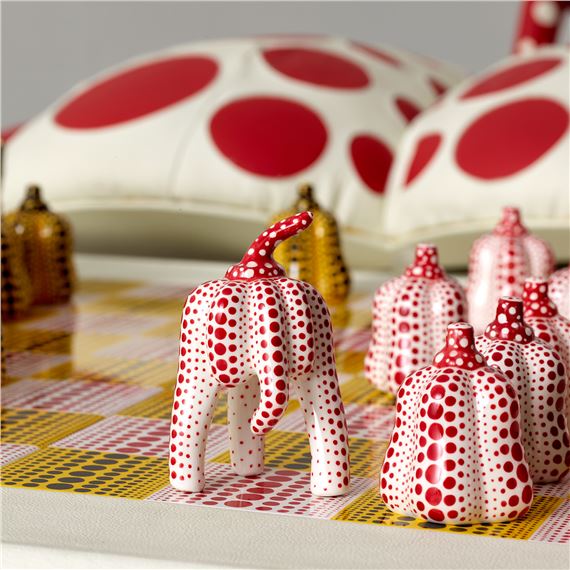
Yayoi Kusama — Pumpkin Chess
Yayoi Kusama — for RS&A “The Art of Chess”
Mixed MediaPolka DotsInfinity Obsession
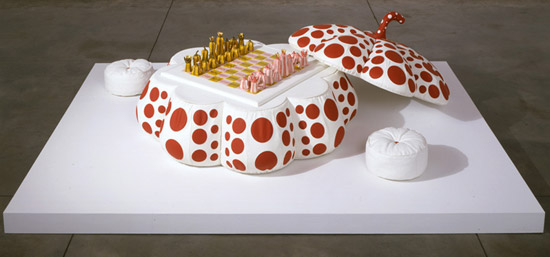
Created for the RS&A "Art of Chess" exhibition. Splendidly dotted mushroomy shapes covered in Kusama's signature polka dots. Each piece transforms the chess board into a miniature Kusama universe — the same obsessive infinity that fills her rooms and pumpkins, compressed into 32 playing pieces. Part of the 16-artist exhibition shown at the Saatchi Gallery.
Infinity on the chessboardPolka-dot pieces detailMushroomy dotted formsKusama universe in miniature
2003
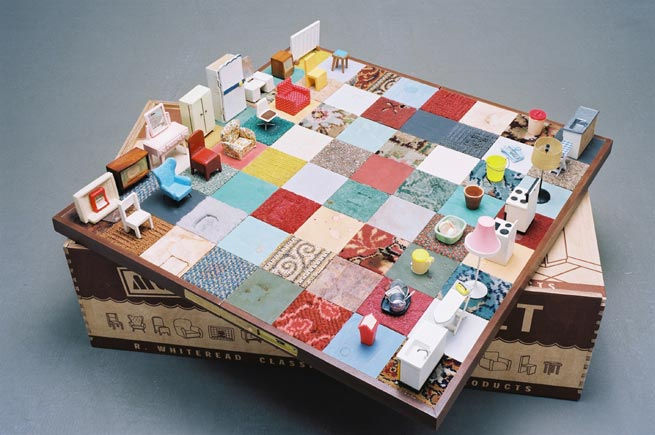
Rachel Whiteread — Modern Chess Set
Rachel Whiteread — for RS&A “The Art of Chess”
Dollhouse FurnitureSculpture / CastingDomestic Space
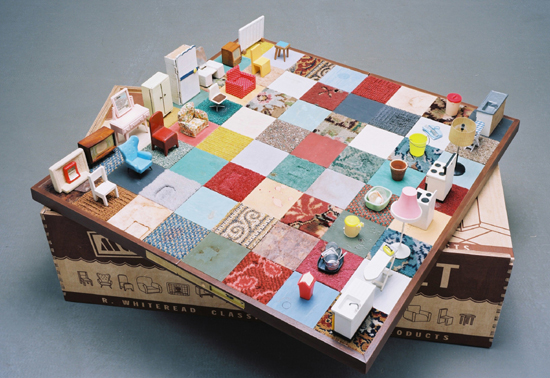
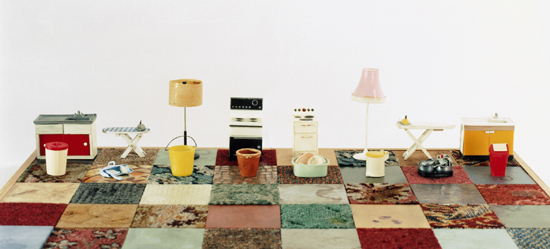
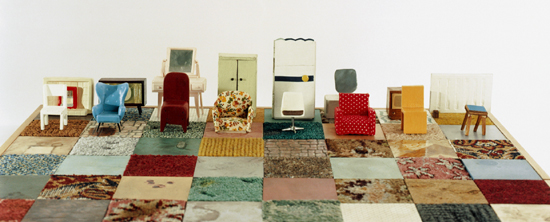
Transposes the logic of the game onto the scale of domestic architecture, transforming chess pieces into miniature items of dollhouse furniture. A bed for a king, a chair for a bishop. Whiteread — known for casting the negative space of domestic objects — brings the same conceptual precision to chess: the home as battlefield, furniture as army.
Dollhouse furniture as chess piecesKitchen piecesLiving room pieces
2003
Barbara Kruger Chess Set
Barbara Kruger — for RS&A “The Art of Chess”
Mixed Media / ElectronicText Art / PoliticalSound-Equipped
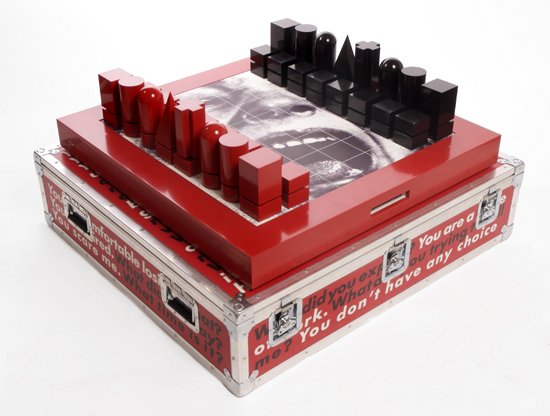
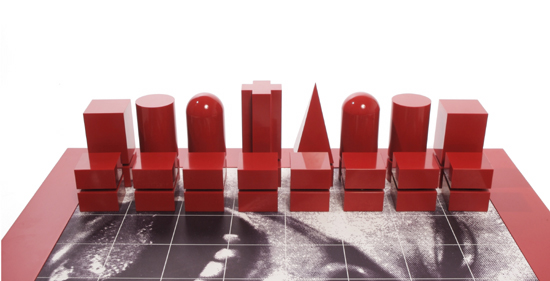
Pieces programmed to audibly ask questions or make statements when moved. Kruger — known for her bold red-and-white text works interrogating power and consumerism — transforms each chess move into a verbal provocation. The game becomes a dialogue, each capture a confrontation of language.
Pieces that ask questions when movedDetail of speaking pieces
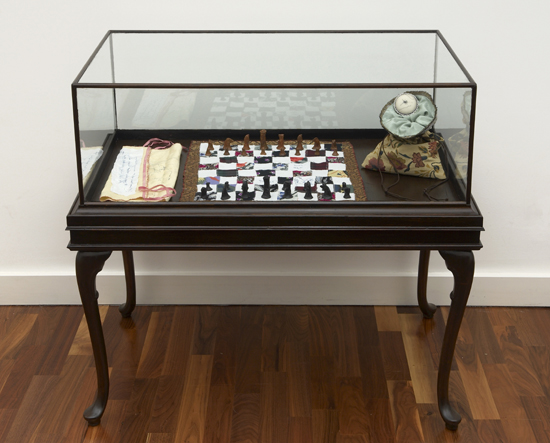
A soft, sewn traveling chess set with embroidered pouch, referencing 18th-century French noble travel chess boards. Emin's signature confessional intimacy applied to the game: chess as something you carry close to your body, pieces that yield to touch rather than standing rigid. Textile as warmth against the cold logic of the game.
Sewn, embroidered, carried
2011–present
Hermès Chess Sets
Hermès Design Studio
Leather / Wood / MetalLuxury CraftParis, France
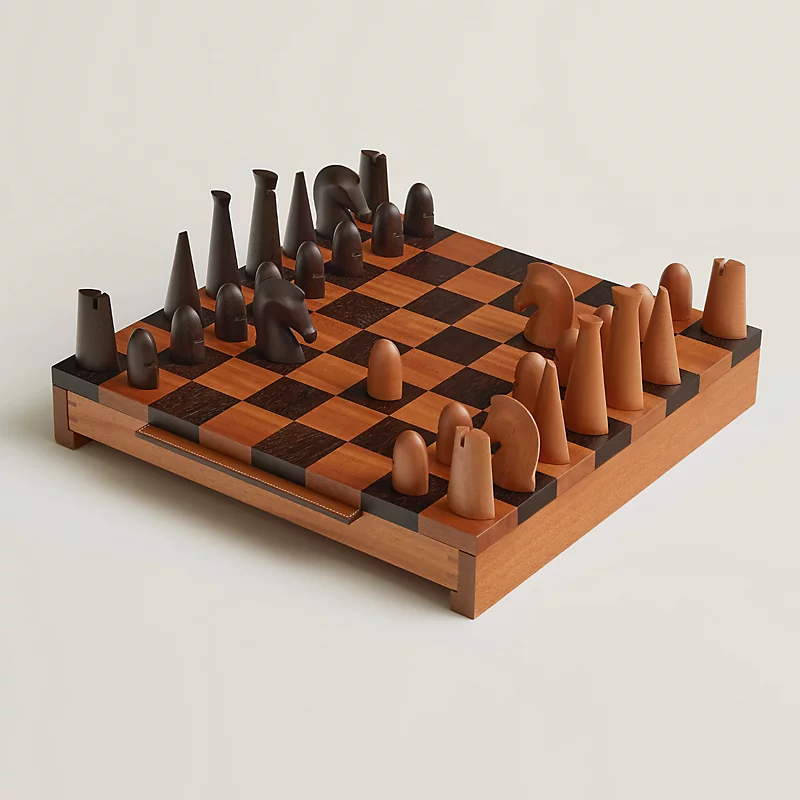
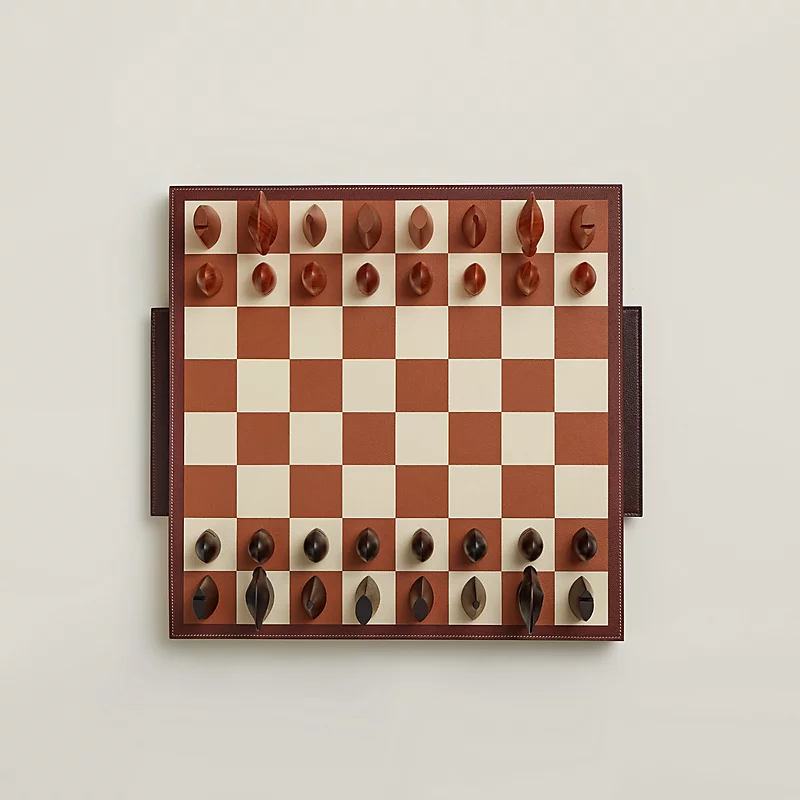
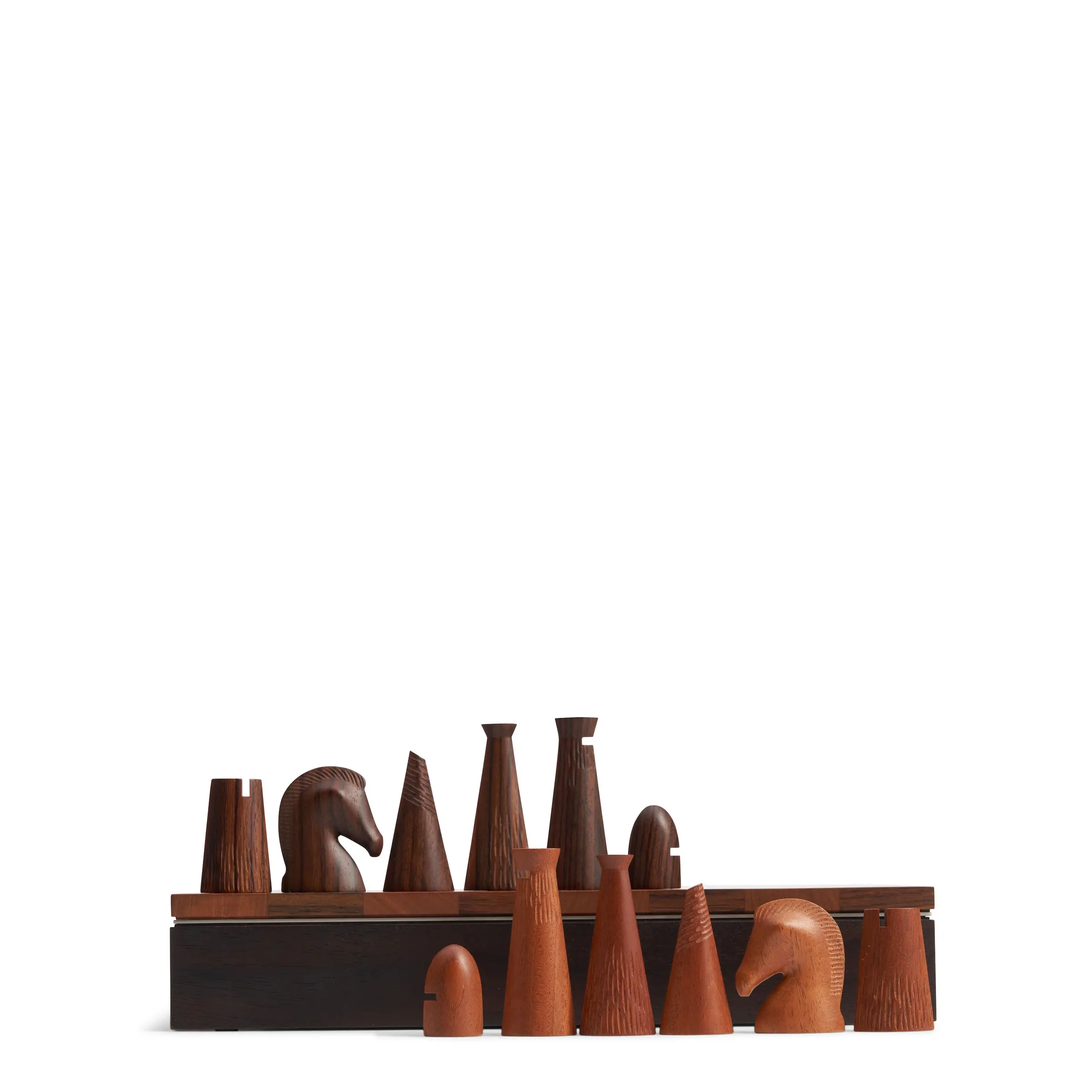
Hermès has produced several chess sets reflecting the maison's obsession with materials and craft. The Samarcande set features pieces in natural Sycamore and Palissander wood on a folding leather board, while the Horsecut set reimagines each piece in lacquered wood with equestrian-inspired silhouettes. The brand also created an ultra-luxurious travel chess set in Swift calfskin and Palladium-plated brass. Prices range from several thousand to over $75,000. Chess as an object of absolute refinement — saddle-stitched, hand-finished, stamped with the Hermès logotype.
Luxury leather and woodHermès craftsmanshipSaddle-stitched, hand-finished
2012–present
LEGO Chess Sets
LEGO Group
ABS Plastic BricksModular / BuildableDenmark
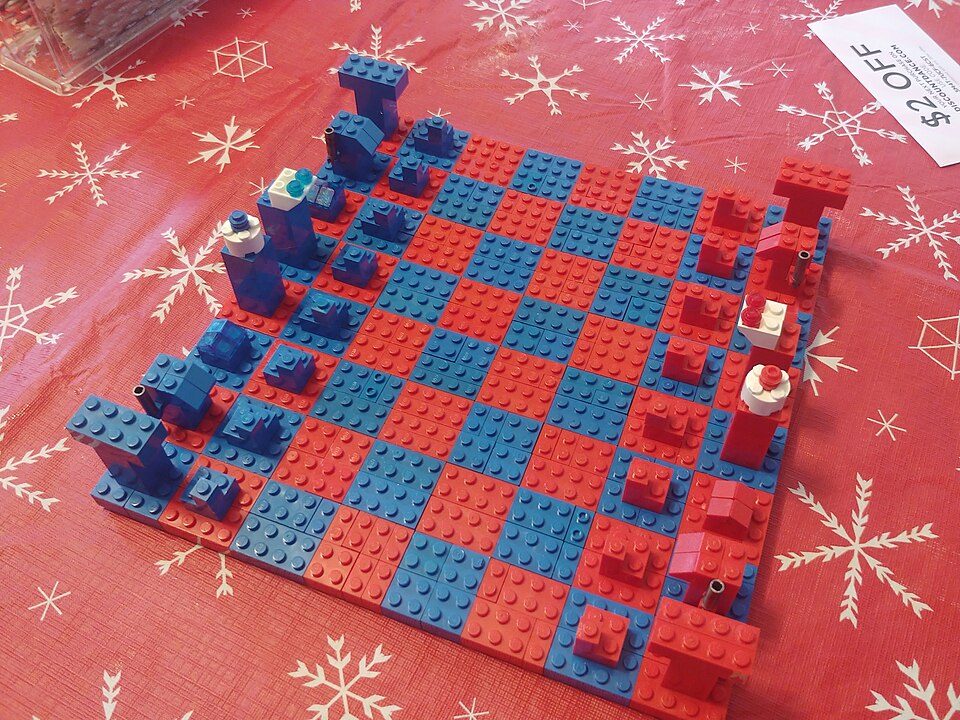
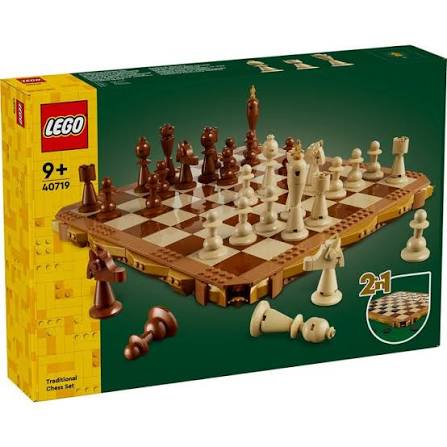
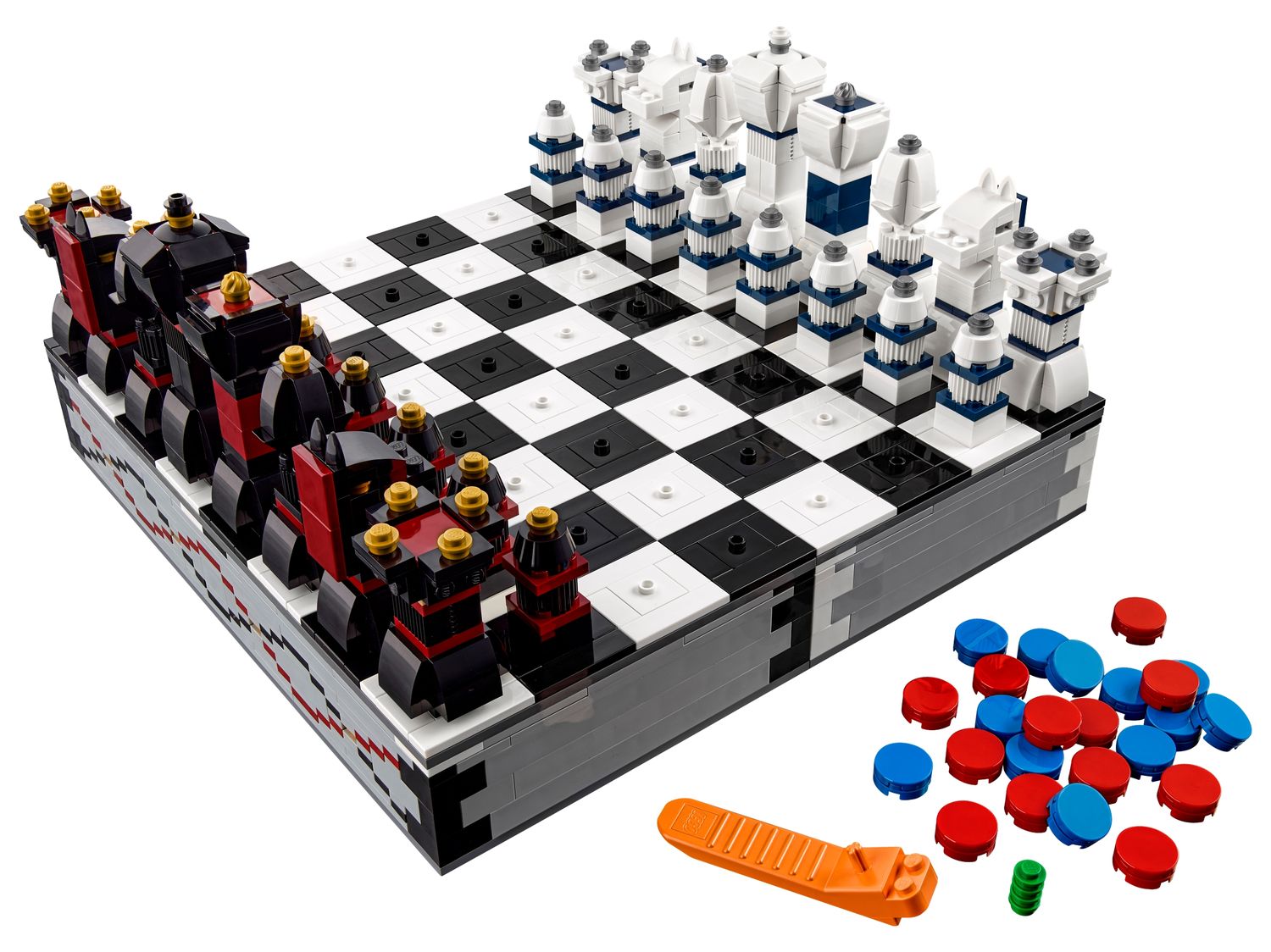
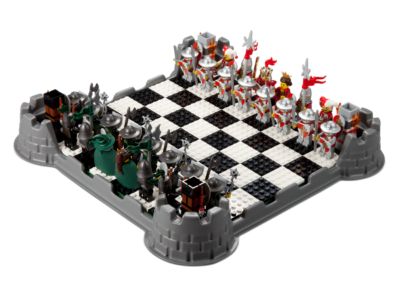
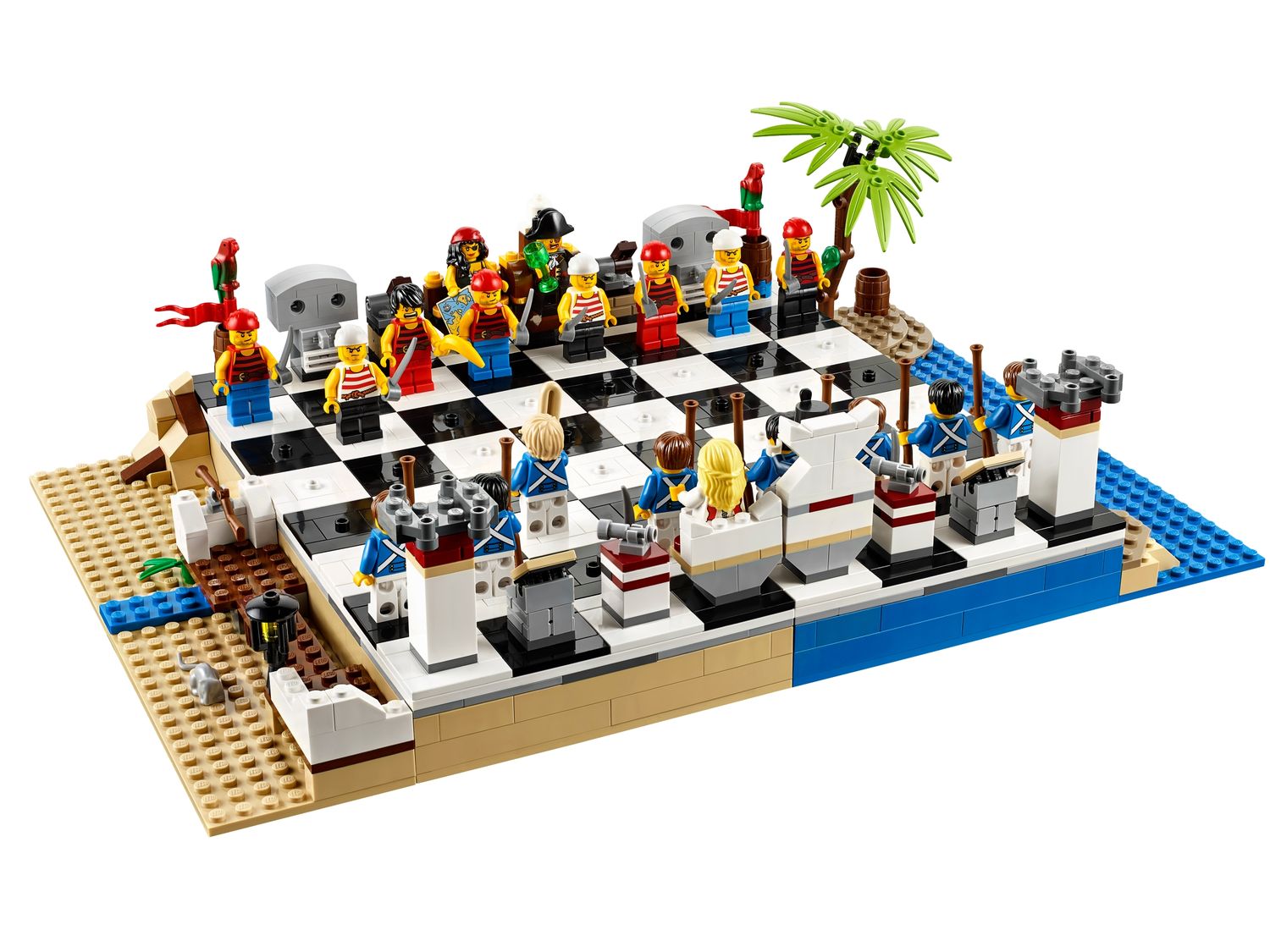
LEGO has released multiple chess sets over the years, from the Pirates Chess Set (2009) to the Iconic Chess Set (#40174). Each piece is built from LEGO bricks and minifigures rather than carved or cast — chess as construction kit. The modular nature means players can customize or redesign their pieces. The Kingdom Chess Set featured medieval knights and castle themes. A perfect entry point for younger players and a beloved crossover between two of the world's most enduring games.
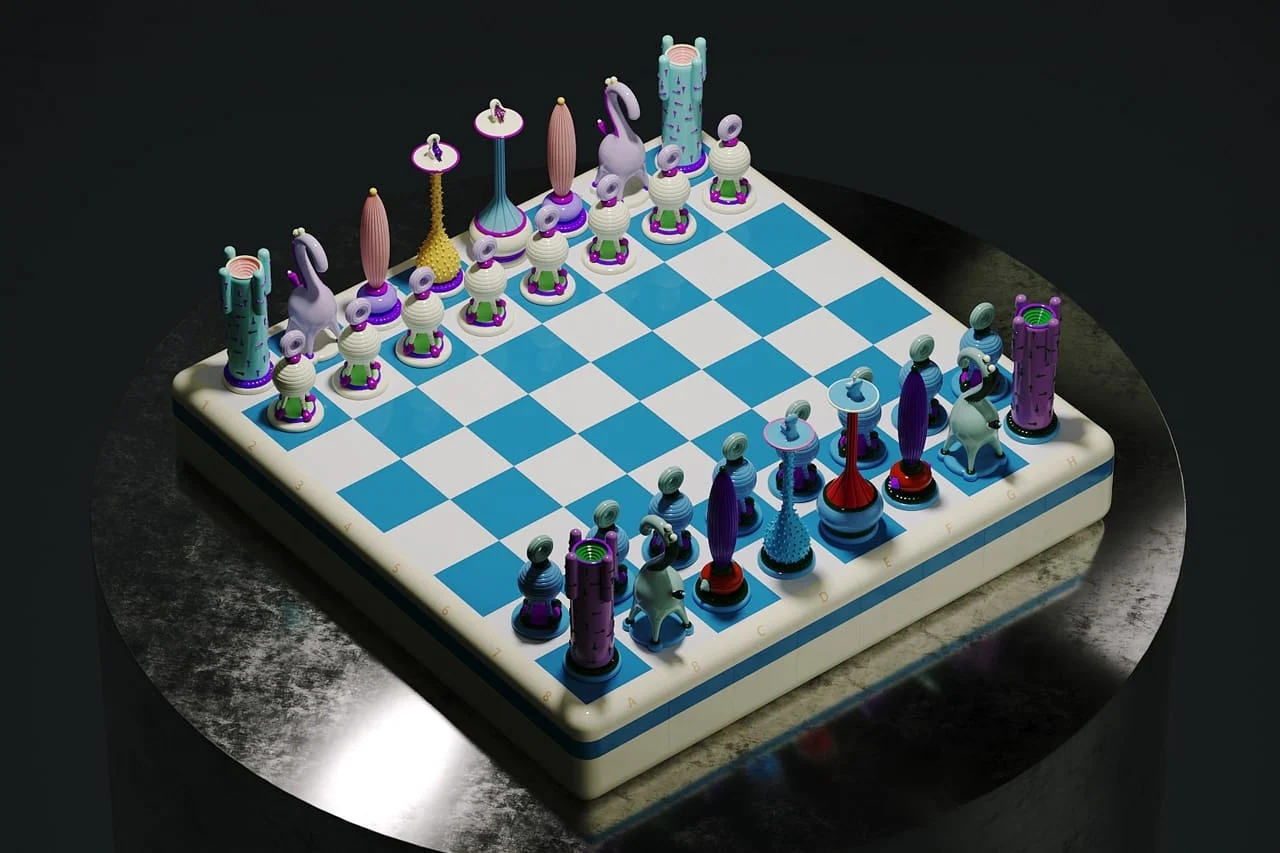
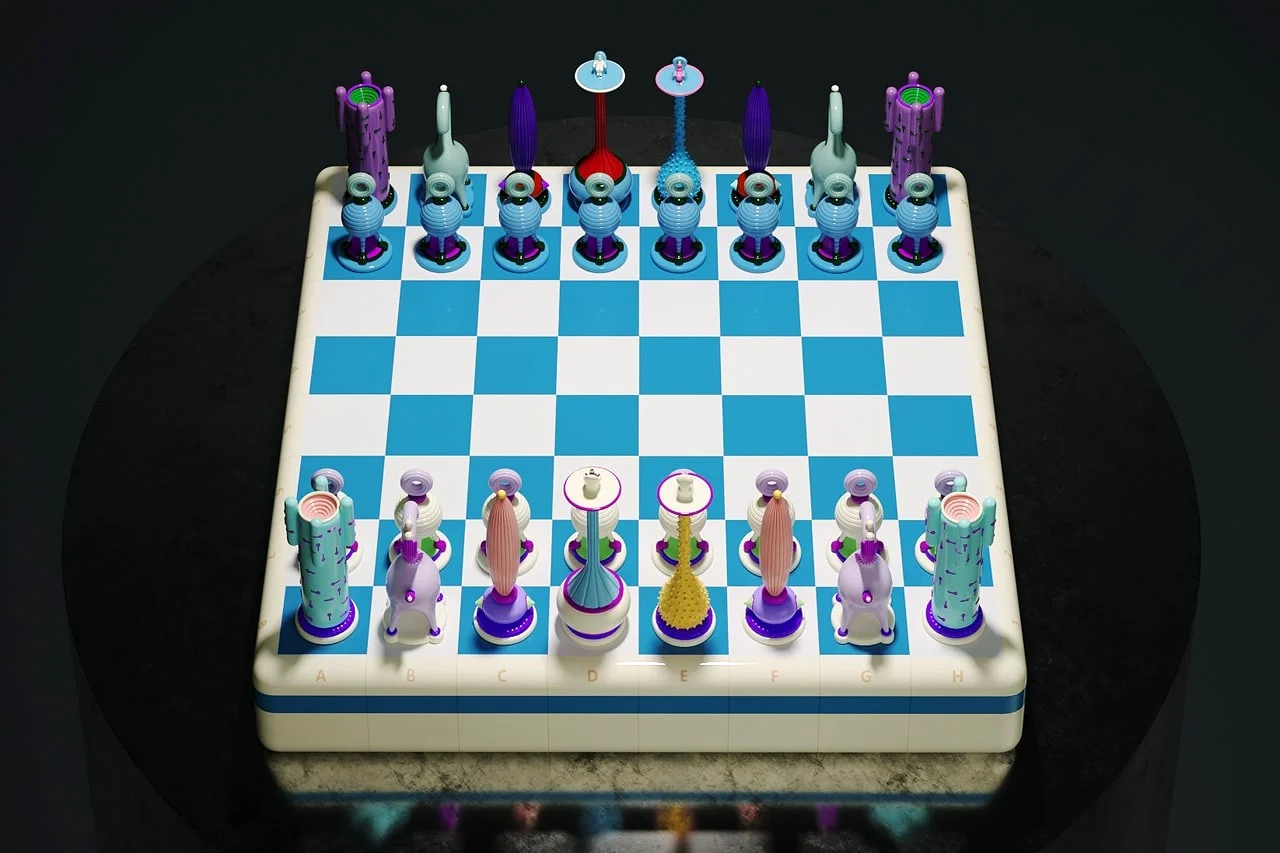
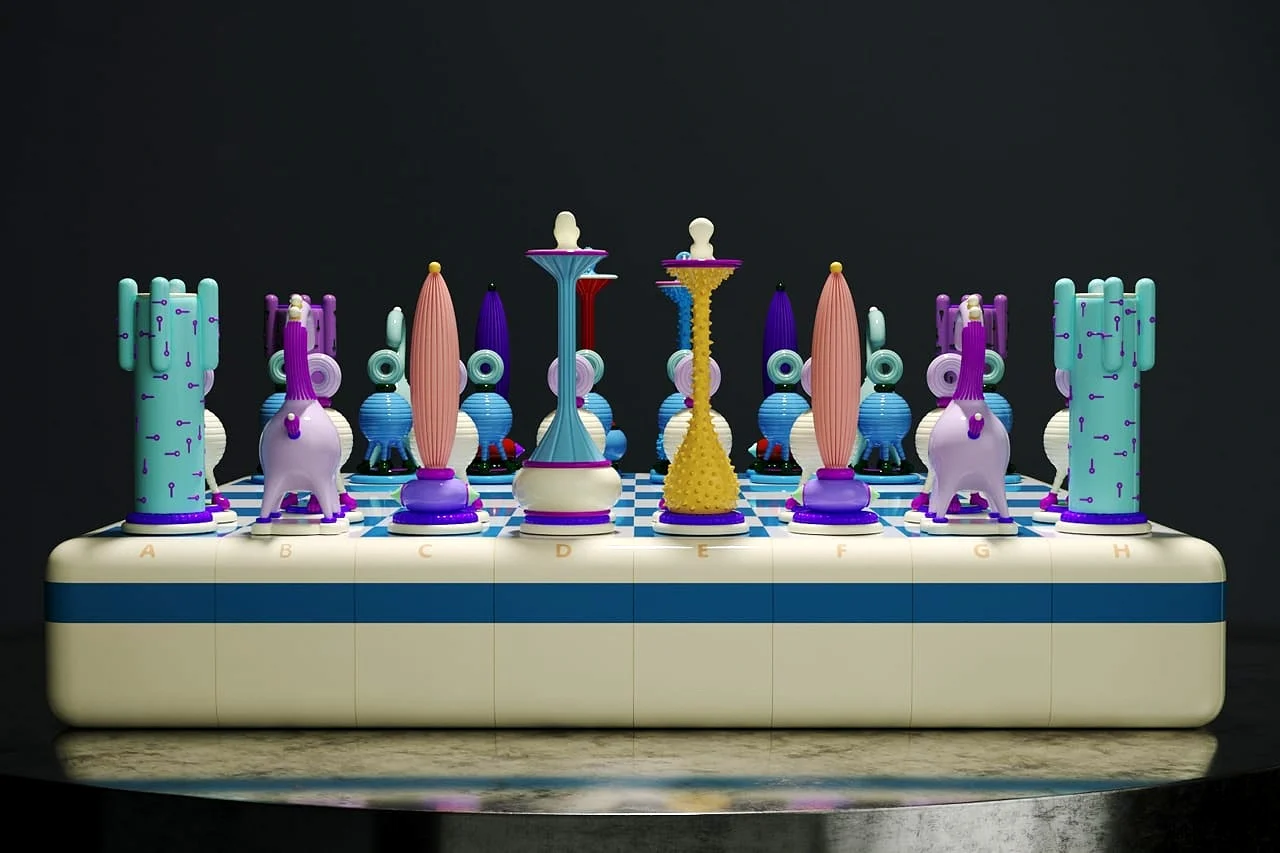
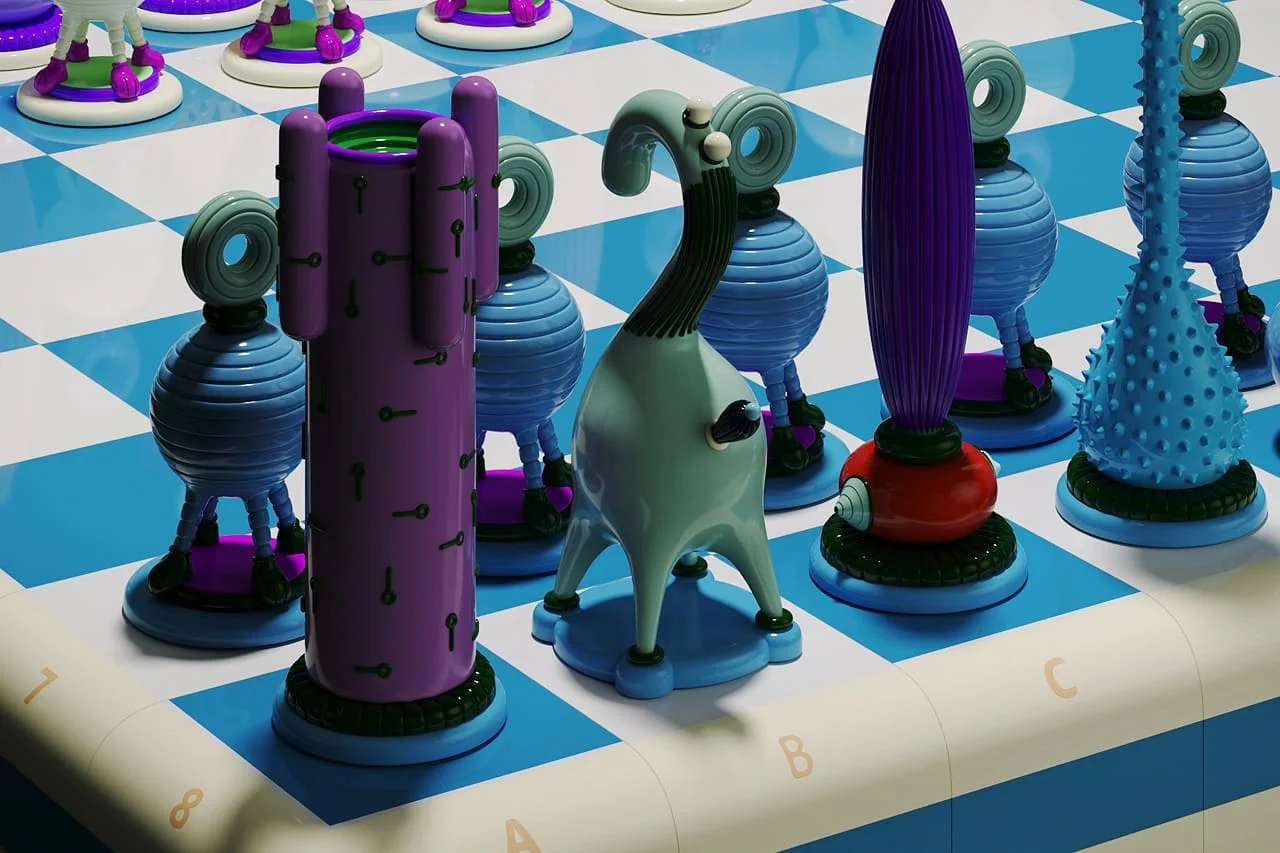
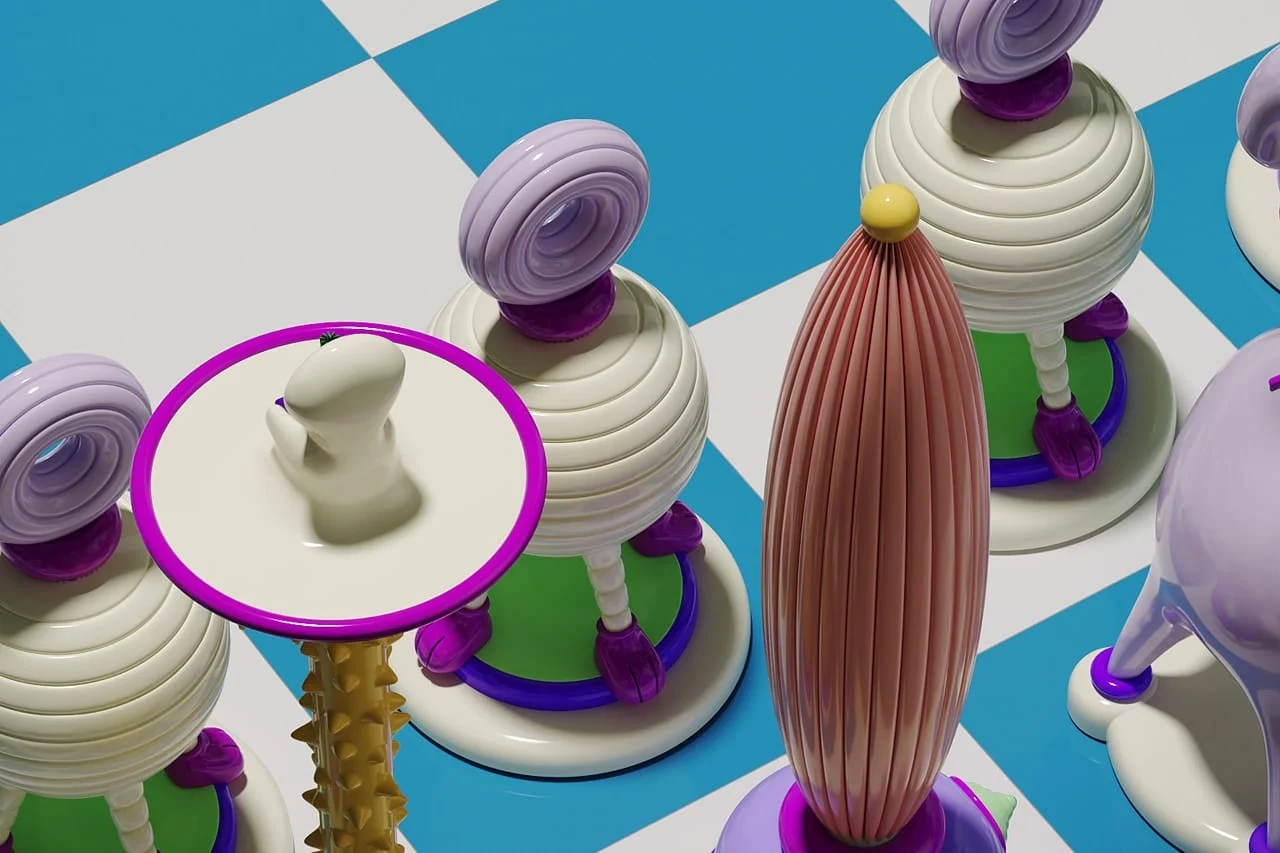
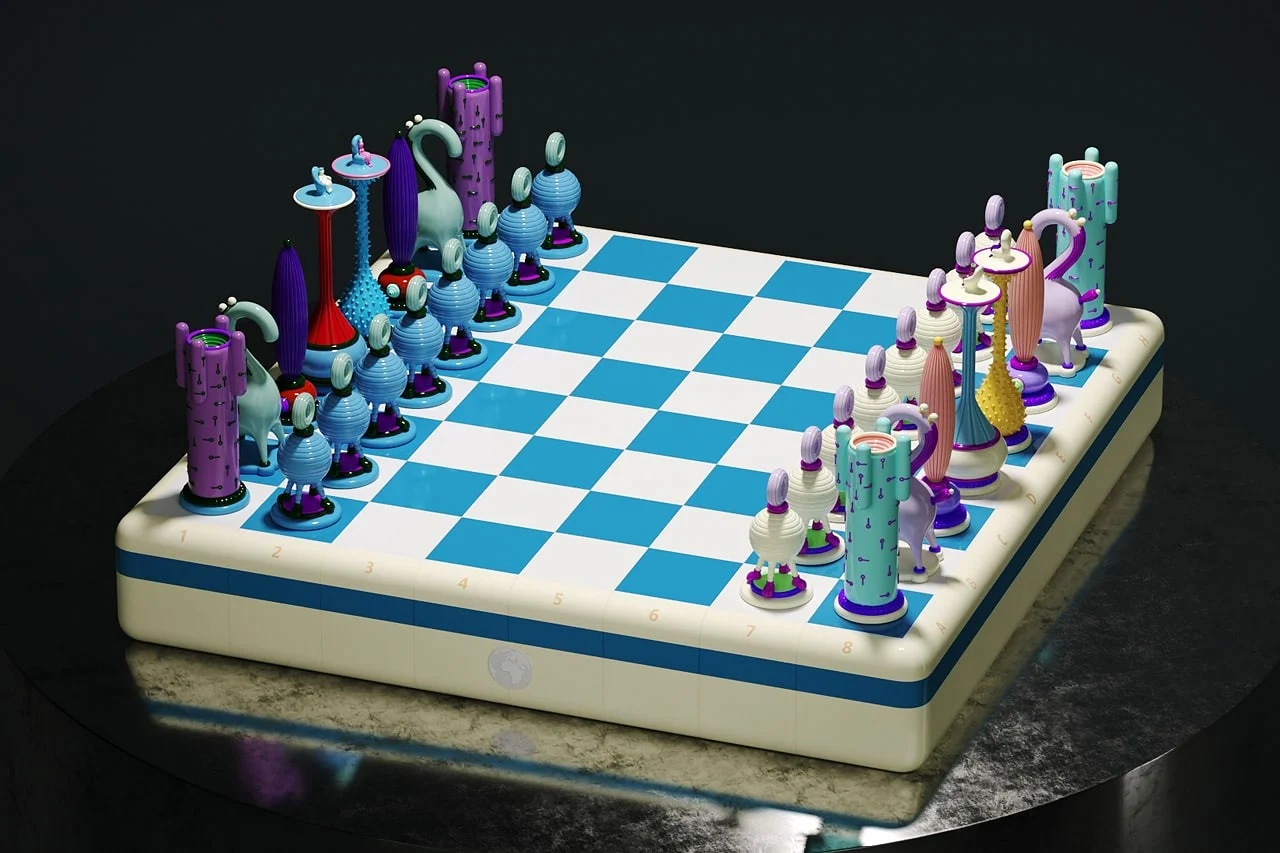
A chess set that reimagines the game as a story of truce rather than war. Two kingdoms — rendered in soft pastels and blues — declare peace, with a shared pocket-watch artifact at the center of the board. Each of the 32 pieces is 3D-printed in photopolymer plastic and finished with acrylic, metal, silicone, and wood details. Limited to 21 numbered sets, each NFC-chipped for authentication. The board itself becomes a stage for Yoom's fictional narrative universe.
Two kingdoms on the board3D-printed photopolymer piecesPastel kingdom piecesBlue kingdom piecesBoard and pocket-watch detailLimited edition, 1 of 21
Sources & References
Where to see them
Museums: British Museum (Lewis Chessmen) · BnF Cabinet des Médailles (Charlemagne) · State Museum of Samarkand (Afrasiab) · MoMA (Bauhaus, Man Ray, Ernst) · Met (Hartwig) · Philadelphia Museum of Art (Duchamp) · Salvador Dalí Museum (Fingers) · M+ Hong Kong (Yoko Ono) · Noguchi Museum · Calder Foundation
Exhibitions: "The Imagery of Chess" (1944, Julien Levy Gallery) · "The Art of Chess" (2003–2012, RS&A / Saatchi Gallery) · "Imagery of Chess Revisited" (2005, Noguchi Museum)
Books:Chess Design (Art of Play) — chronicles nearly 300 artistic chess sets · The Imagery of Chess Revisited (Larry List & Ingrid Schaffner, George Braziller)